

Economía 5.0 · NOTA-ECO-106
De la política fútil a la política útil (Cap. I)
Por Carlos J. Pérez Pulido · ISHEA Institute ·
Primer capítulo: del latín futilis, el vaso que no puede sostener lo que contiene. Con la miel como metáfora, la pieza explica por qué ambos bandos fracasan y por qué seguimos aceptándolo.
Nota de divulgación — Escrito breve publicado en abierto. Pensamiento en curso, no resultado.
Pieza original en inglés.
🏛️ FROM FUTILE TO USEFUL POLITICS , cap-I
>Why both sides keep failing — and why we keep accepting it
"Before we talk about politics, let's talk about honey".
🍯 !FUTILE! comes from Latin *futilis*: a vessel that leaks.
Imagine pouring honey into a cracked jar.
Sweet promises go in — drain right out.
Nothing stays. Nothing accumulates.
!USEFUL! comes from *utilis*: capable of being used.
A vessel that holds. That delivers.
🎭 BOTH SIDES SELL CRACKED JARS
**Government pours honey:**
"We'll transform the country."
Applause. The jar leaks. Nothing remains.
**Opposition pours darker honey:**
"They failed! We'll stop them!"
But their goal isn't to fix the jar.
It's to replace one cracked jar with another.
❌ Not to solve problems
❌ Not to demand useful governance
✅ To wait their turn to pour
✅ To sell their own sweetness
Two teams. Two cracked jars. No intact vessel.
🔄 THE CYCLE
• Government promises → jar leaks → trust collapses
• Opposition points → promises again → jar leaks too
• Voters rotate sellers. Nothing accumulates.
**Why both leak?**
Politics became merchandise:
• Marketing over problem-solving
• Slogans over systems
• 4-year theater over 20-year building
Fixing the system ends the game.
Winning within it keeps it alive.
⚠️ THE COST
**When both sides leak:**
❌ No accountability — everyone blames, no one fixes
❌ Theater replaces governance — outrage wins
❌ Demolition replaces construction — voters elect wreckers who break more jars, bring no vessel
🔧 BREAKING THE CYCLE
**Useful politics = intact jars on BOTH sides:**
✅ **Government:** Deliver, don't just promise
✅ **Opposition:** Demand integrity, not just obstruction
*RIGHT ACTION FOR STATE, not position for party*
✅ **Citizens:** Reject ALL cracked jars — vote builders, not sellers
✅ **Media:** Track delivery, not performance
💡 ISHEA VIEW
**Governance is an intact vessel:**
**I**nformation — truth over loyalty
**S**ystems — built to retain
**H**umans — educated to reject futility
**E**nergy — invested in state, not party
**A**ctivation — demand delivery from everyone
The trap: thinking *our side* has the intact jar.
Both leak.
🔥 THE REAL QUESTION
Not: "Who pours sweeter honey?"
But: "Why accept leaking jars from BOTH sides?"
Until we demand intact vessels from everyone:
Sweet promises → Nothing delivered → Frustration → New seller → Same leak.
🍯 **Stop buying honey from cracked jars.**
**Demand vessels that hold.**
**On BOTH sides.**
From merchandise to governance.
From showmen to statesmen.
From futile to useful.
“When politics is futile, the damage is not abstract. It manifests in the biology of the system.”
#FutileToUseful #ShowmenToStatesmen #UsefulPolitics #ISHEA #BothSidesLeak #RightActionForState #SystemsThinking #IntactVessels #ISHEABio #WreckItPolicy
En la misma sala — Economía 5.0
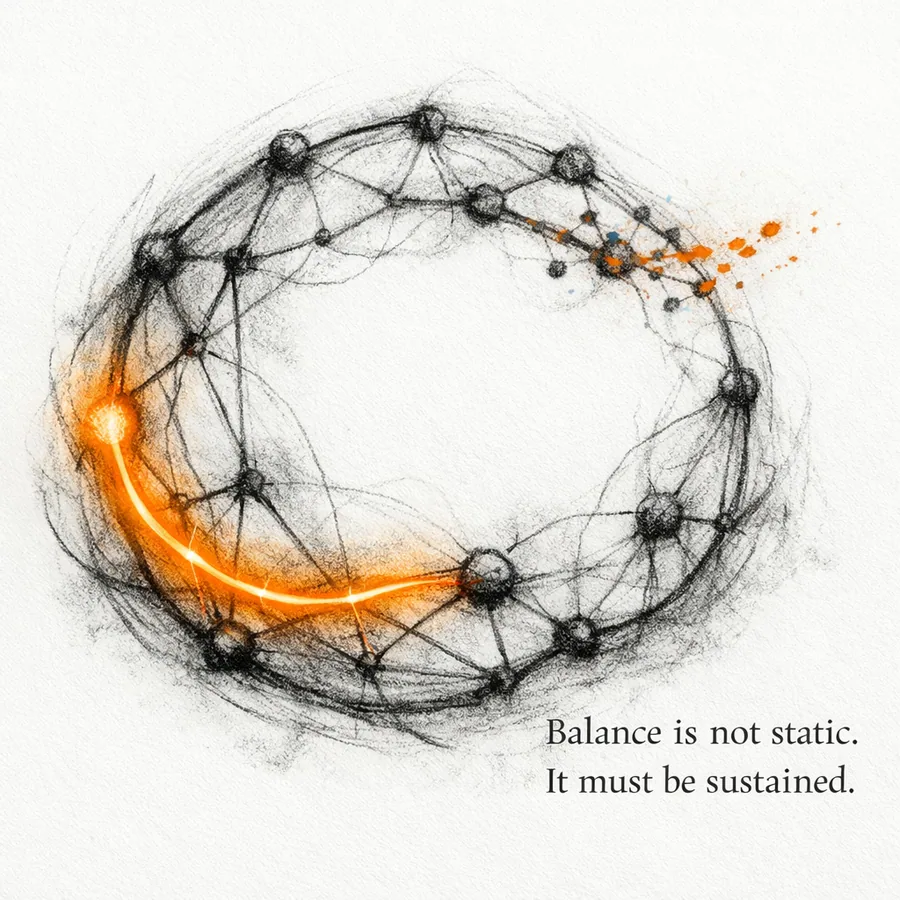
SN-ECO-001 · Economía 5.0
La economía circular debe empezar en el diseño: una perspectiva ISHEA sobre Economy 5.0
El próximo paso de la economía circular no es recuperar más, sino diseñar para perder menos. Economy 5.0 une gemelos digitales, gestión biofísica, diseño circular y finanzas sostenibles para preservar el valor sistémico.
SN-ECO-002 · Economía 5.0
Economy 5.0: más allá de la energía y el carbono, hacia la coherencia sistémica
La propuesta de ISHEA para Economy 5.0: un marco económico centrado en las personas que, más allá de la energía y el carbono, examina la coherencia sistémica, las capacidades humanas y la resiliencia.
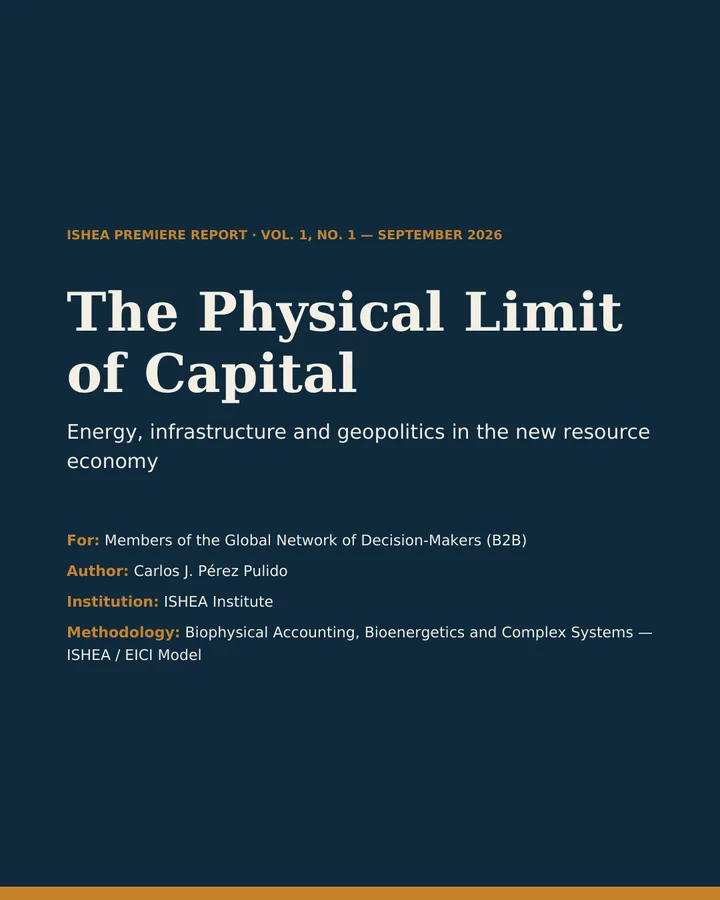
OSF-ECO-003 · Economía 5.0
El límite físico del capital: energía, infraestructura y geopolítica
Primer informe del ISHEA Institute: analiza cómo la infraestructura de IA, las cadenas de energía y minerales y los corredores marítimos fijan cuánto capital financiero puede convertirse en economía real.