

Bioenergetica · OSF-BIO-079
Reti convergenti di energia e informazione nel neurosviluppo: analisi ISHEA-TACC
Di Carlos J. Pérez Pulido · ISHEA Institute ·
Integra dati genetici, bioenergetici e trascrizionali di 36 varianti ad alta priorità e individua FOXP2 come nodo centrale fra sinapsi, plasticità e metabolismo energetico.
Preprint — Manoscritto depositato su OSF. Senza revisione paritaria.
Opera originale in inglese.
This study integrates genetic, bioenergetic, and transcriptional data to reveal convergent pathways underlying neurodevelopmental disorders. Using a curated set of 36 high-priority variants associated with autism and related conditions, the analysis demonstrates significant enrichment across synaptic signaling, mitochondrial oxidative phosphorylation, and FOXP2-mediated transcriptional regulation. Protein–protein interaction modeling identifies FOXP2 as a central hub, linking synaptic, plasticity, and energy modules. These results support the ISHEA-TACC hypothesis that systemic failures in energy–information transfer, rather than isolated lesions, drive functional deficits. The framework also establishes a basis for digital biomarkers and non-pharmacological interventions targeting real-time network fidelity.
Wiki-style Summary:
The ISHEA-TACC framework (Knowledge–Transfer–Assimilation–Creative Action–Resilience) models biological systems as integrated information-energy networks. In this study, a set of 36 high-impact variants related to neurodevelopment was analyzed for enrichment and network topology. The genes were significantly associated with three convergent axes: synaptic signaling, mitochondrial function, and FOXP2 transcriptional regulation. Protein–protein interaction networks revealed highly interconnected modules, with FOXP2 as a central hub linking multiple functional domains. The findings highlight a systemic mechanism of neurological disorder, emphasizing energy–information convergence over single-gene pathogenicity. The framework also informs digital phenotyping approaches and microhabit-based interventions to restore bioenergetic and genetic coherence.
Overview
The ISHEA-TACC study investigates the systemic mechanisms underlying neurodevelopmental disorders using a curated set of 36 high-priority genetic variants associated with conditions such as autism spectrum disorder (ASD). The study applies a framework called ISHEA-TACC (Knowledge–Transfer–Assimilation–Creative Action–Resilience), which models biological systems as integrated networks that transmit genetic information under energetic constraints.
Methods
Genes were analyzed for gene ontology (GO) and pathway enrichment, protein–protein interaction (PPI) network topology, and convergence across three biological axes: synaptic signaling, mitochondrial oxidative phosphorylation, and FOXP2-mediated transcriptional regulation. Network analysis used high-confidence STRING interactions and MCL clustering to identify functional modules and hub genes.
Findings
The analysis revealed significant enrichment of the 36 variants in synaptic, mitochondrial, and transcriptional pathways. FOXP2 emerged as a central hub linking synaptic structure (e.g., SHANK3), plasticity (e.g., BDNF), and energy regulation (e.g., NDUFS1, MT-ATP6). These results support a systemic model of neurodevelopmental dysfunction, emphasizing energy–information convergence rather than single-gene effects.
Implications
The ISHEA-TACC framework offers a unified perspective on neurodevelopmental disorders, linking genetic potential, bioenergetic availability, and adaptive behavior. The findings provide a foundation for digital biomarker development, microhabit-based interventions, and non-pharmacological strategies to enhance resilience and restore functional network coherence.
References
Picard M, McEwen BS (2018) Psychological stress and mitochondria: A systematic review. Psychosom Med 80(2):141–153.
Han J, et al. (2019) FOX family in neurodevelopmental disorders. Mol Genet Genomic Med 7(8):e789.
Frye RE, et al. (2016) Mitochondrial dysfunction in autism spectrum disorders: a systematic review and meta-analysis. Mol Autism 7(1):55.
Gandal MJ, et al. (2022) Transcriptomic convergence across autism, schizophrenia, and bipolar disorder. Science 367(6483):eaat8127.
Nella stessa sala — Bioenergetica
NOTA-BIO-001 · Bioenergetica
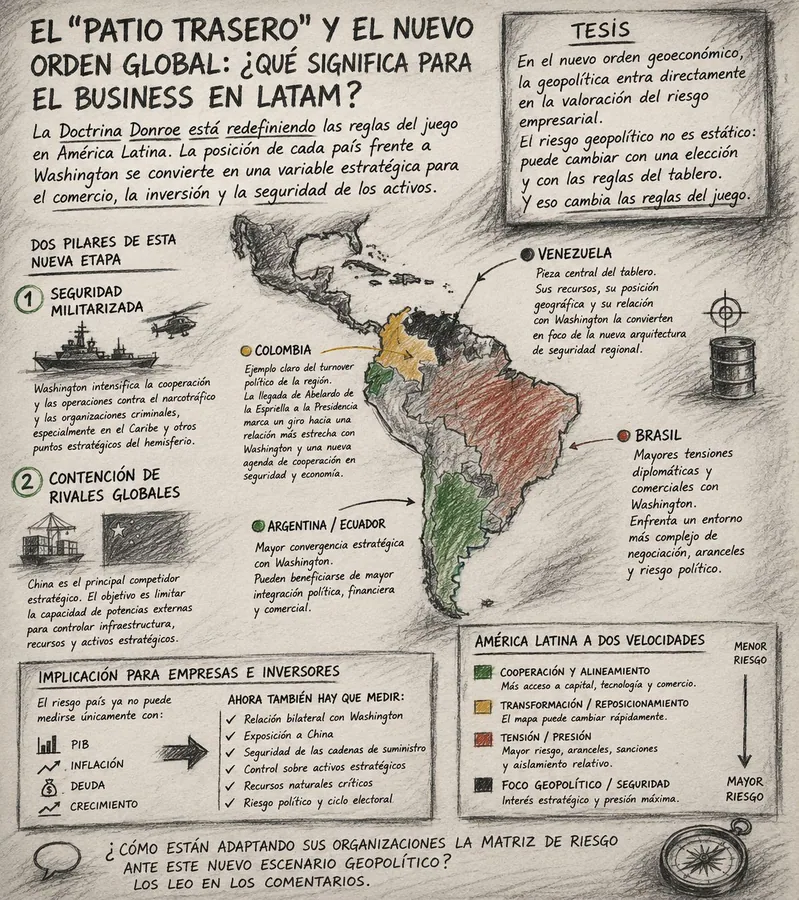
Il «cortile di casa» e il nuovo ordine globale: cosa significa per il business plan in LatAm?
Un'analisi di come la cosiddetta Dottrina Donroe abbia trasformato in politica esplicita la metafora del «cortile di casa» e di ciò che questa svolta comporta per ogni business plan in America Latina.

NOTA-BIO-002 · Bioenergetica
Perché i lavoratori più efficienti rallentano a metà giornata?
Per direttori operativi e responsabili della logistica: una lettura bioenergetica del perché i lavoratori migliori perdono produttività a metà giornata, un fenomeno che molti notano e pochi spiegano.

NOTA-BIO-003 · Bioenergetica
Minaccia o opportunità? L’intelligenza artificiale e la nostra capacità creativa
Di fronte all’appello di Leone XIV a «disarmare l’IA», questo testo sostiene che il rischio non sta nella tecnologia ma nel sistema umano che la usa: ben progettata, può liberare capacità creativa.