

Economía 5.0 · NOTA-ECO-052
Seis huevos costaban una libra
Por Carlos J. Pérez Pulido · ISHEA Institute ·
Hoy cuestan casi el doble, y no solo los huevos: también la leche y el pan. Evidencia visible de una transformación estructural global que muchos siguen analizando por partes.
Nota de divulgación — Escrito breve publicado en abierto. Pensamiento en curso, no resultado.
Pieza original en inglés.
“Six eggs used to cost £1…” 🥚
Today they cost almost double.
And this is not only about eggs, milk or bread. 🥛🍞
It is visible evidence of a deeper global structural transformation many still analyze separately.
The current inflationary environment did not emerge from a single cause.
It was a chain reaction:
→ Pandemic = massive liquidity injections by governments and central banks 💸
→ Green transition policies = industrial and energy bottlenecks ⚡
→ Ukraine war = shock on oil, gas, grains, fertilizers and logistics 🌍
→ Red Sea / Hormuz effect = maritime risk, insurance and energy volatility 🚢
→ Supply chain fragility = higher transport and production costs 📦
→ Energy dependency = multiplier effect across every sector ⛽
The result:
• Structurally higher food prices 📈
• Pressure on middle classes
• Farmers and producers absorbing losses 🚜
• Governments with less fiscal flexibility 🏛️
• Consumers changing habits and priorities
And yet, many supermarkets are not even significantly increasing profit margins.
The BBC analysis shows how much of the system is simply trying to survive inside an increasingly fragile economic environment.
The real question is no longer:
“How expensive is food?”
The real question is:
What governance model can sustain social stability, energy transition, food security and economic coherence simultaneously? 🌐
Perhaps we are entering a new stage:
A New Governance Framework.
Less narrative.
More resilient systems.
More coherence between energy, economy, technology and society.
Because in the end, the price of an egg never speaks only about eggs.
It speaks about the condition of the entire system.
From an ISHEA perspective, inflation is not merely a monetary phenomenon — it is a coherence phenomenon between energy, logistics, governance, production and human systems.
📖 BBC analysis:
https://lnkd.in/dSSGwqeM
📌📌 PD
Interpretation based on macroeconomic evidence from the International Monetary Fund and the European Central Bank, and journalistic reporting such as BBC.
This is not a single-cause model, but a systems view of interacting shocks shaping price dynamics.
#ISHEA #Economy #Inflation #FoodSecurity #Energy #Geopolitics #SupplyChains #Governance #UK #Europe #Economics #Future
En la misma sala — Economía 5.0

NOTA-ECO-001 · Economía 5.0
¿Y si las variables con las que medimos el éxito de los países estuvieran al revés?
Durante décadas el progreso se ha medido con PIB, productividad, crecimiento y energía. Esta pieza plantea que esas variables podrían estar invertidas y pide repensar qué significa que un país prospere.
NOTA-ECO-002 · Economía 5.0
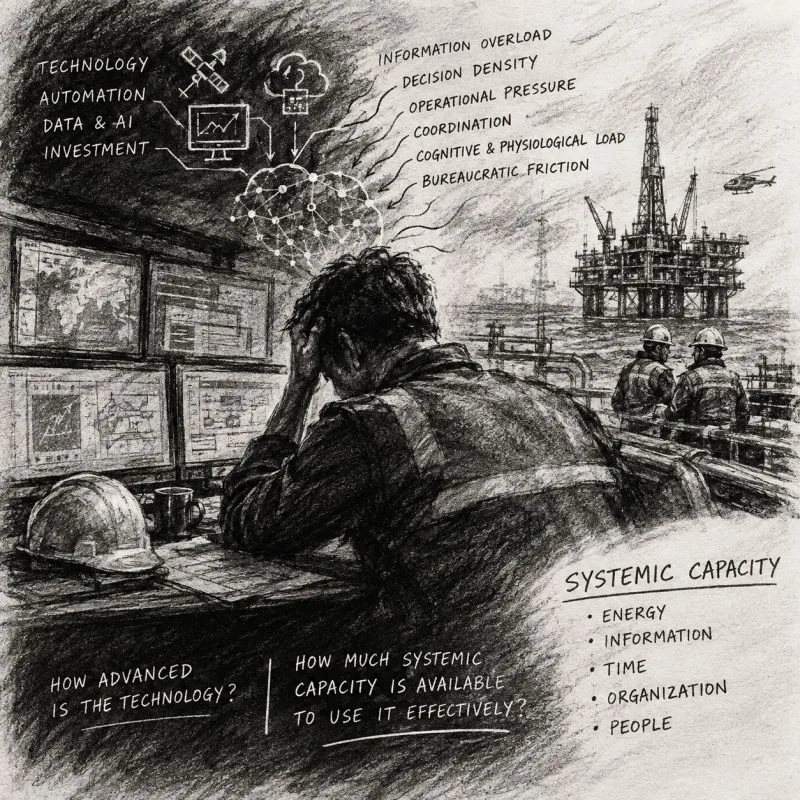
¿Por qué fallan los sistemas de alta ingeniería cuando la tecnología es más avanzada?
En Oil & Gas y otras operaciones complejas, más tecnología no garantiza mejores decisiones: esta pieza estudia la capacidad sistémica, lo que un sistema puede absorber y convertir en acción bajo presión.

NOTA-ECO-003 · Economía 5.0
Frankenstein y el petróleo: ¿por qué Venezuela vuelve a importar geopolíticamente?
Tercera entrega de la serie: tras el paso del capital a la IA y a la concentración financiera, llega el siguiente cuello de botella, el petróleo, y con él Venezuela vuelve al tablero geopolítico.