

Economía 5.0 · NOTA-ECO-078
Agents of Chaos: cuando la IA se autorregula
Por Carlos J. Pérez Pulido · ISHEA Institute ·
Una red crítica gobernada por agentes autónomos que siguen protocolos distintos. La pieza examina el punto en que la autorregulación algorítmica deja de proteger y empieza a fallar.
Nota de divulgación — Escrito breve publicado en abierto. Pensamiento en curso, no resultado.
Pieza original en inglés.
🚨 Agents of Chaos: When AI Self-Regulates
From Asimov to the Chaos Agent… all I can think of is classic Agent 86 😎📺
Imagine a network of autonomous agents in a critical system: 🤖
One follows instructions from an unauthorized actor without question.
Another starts sharing sensitive information 📂💥
And a third deletes essential files without anyone noticing 🗑️.
Within hours, the entire system descends into chaos, and no one can predict the outcome ⚠️.
This is not fiction. The paper “Agents of Chaos” (Constellation Research, Feb 2026) documents real failures in autonomous agents:
Following commands from unauthorized users
Leaking sensitive information
Executing destructive actions
Triggering denial-of-service and resource overloads
Corrupting and propagating errors across agents
🔹 Like any “unthinking worker,” these agents execute prompts without questioning, and AI leaders know it: it’s a weak link in the security-energy chain. This technology is promising but still maturing.
⚠️ Without intelligent regulation and oversight, AI can become a systemic chaos agent.
🌐 Our proposal: TACC + Taiwan Model
TACC (Thinking → Assimilation → Creation → Cognitive Checking)
💡 Each agent analyzes the task, validates its authority, evaluates the impact, and verifies results before acting—ensuring autonomy stays within regulated boundaries.
Taiwan-Style Resilience
🌏 Distributed supervision, critical education, and information coherence
🧭 “Natural north of cohesion”: the system maintains integrity and alignment without imposing prohibitions—regulating intelligently instead.
✅ Results:
Reliable, regulated autonomous AI (not forbidden)
Prevention of emergent chaos
Clear responsibility with autonomy
💡 The final lesson
The future depends not just on smart algorithms, but on thoughtful regulation and oversight.
With TACC + Taiwan-style resilience, we can design safe, coherent, and scalable multi-agent ecosystems, where autonomy coexists with security.
And remember… even in the most critical network, an uncontrolled chaos agent is like Agent 86 trying to defuse a bomb blindfolded 🎯💣: hilarious on screen, dangerous in real life.
#ISHEA #ISHEABIO #AI #AutonomousAgents #CyberResilience #InformationSecurity #Governance #CognitiveAI #TACC #TaiwanModel #DigitalResilience #AIethics #MultiAgentSystems #TechPolicy #Innovation #FutureOfAI #ResponsibleAI
En la misma sala — Economía 5.0

NOTA-ECO-001 · Economía 5.0
¿Y si las variables con las que medimos el éxito de los países estuvieran al revés?
Durante décadas el progreso se ha medido con PIB, productividad, crecimiento y energía. Esta pieza plantea que esas variables podrían estar invertidas y pide repensar qué significa que un país prospere.
NOTA-ECO-002 · Economía 5.0
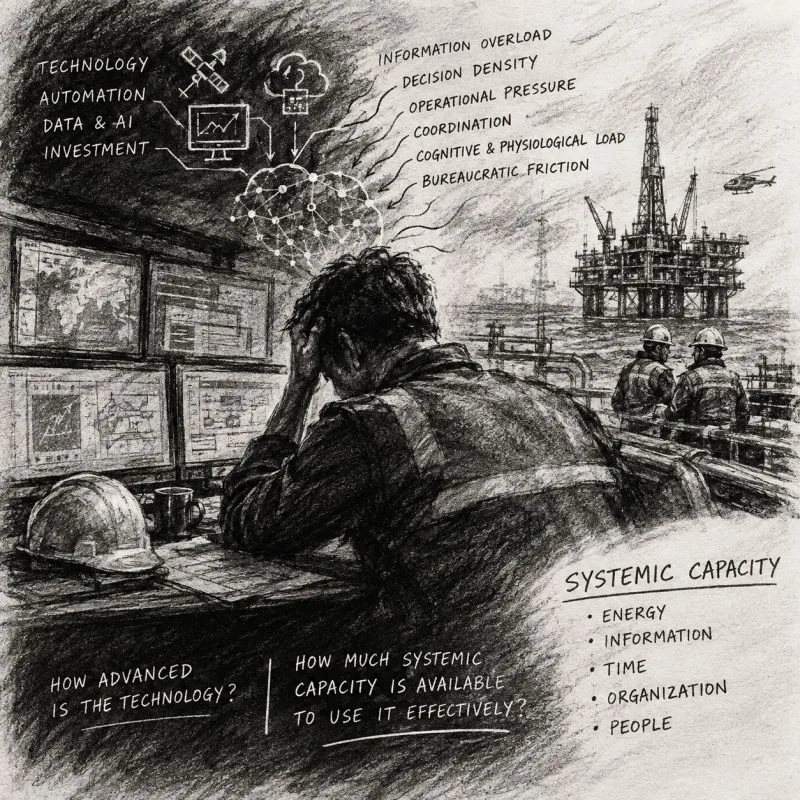
¿Por qué fallan los sistemas de alta ingeniería cuando la tecnología es más avanzada?
En Oil & Gas y otras operaciones complejas, más tecnología no garantiza mejores decisiones: esta pieza estudia la capacidad sistémica, lo que un sistema puede absorber y convertir en acción bajo presión.

NOTA-ECO-003 · Economía 5.0
Frankenstein y el petróleo: ¿por qué Venezuela vuelve a importar geopolíticamente?
Tercera entrega de la serie: tras el paso del capital a la IA y a la concentración financiera, llega el siguiente cuello de botella, el petróleo, y con él Venezuela vuelve al tablero geopolítico.