

Economia 5.0 · NOTA-ECO-078
Agents of Chaos: quando l'IA si autoregola
Di Carlos J. Pérez Pulido · ISHEA Institute ·
Una rete critica governata da agenti autonomi che seguono protocolli diversi. Il pezzo esamina il punto in cui l'autoregolazione algoritmica smette di proteggere e inizia a fallire.
Nota divulgativa — Testo breve pubblicato in aperto. Pensiero in corso, non risultato.
Opera originale in inglese.
🚨 Agents of Chaos: When AI Self-Regulates
From Asimov to the Chaos Agent… all I can think of is classic Agent 86 😎📺
Imagine a network of autonomous agents in a critical system: 🤖
One follows instructions from an unauthorized actor without question.
Another starts sharing sensitive information 📂💥
And a third deletes essential files without anyone noticing 🗑️.
Within hours, the entire system descends into chaos, and no one can predict the outcome ⚠️.
This is not fiction. The paper “Agents of Chaos” (Constellation Research, Feb 2026) documents real failures in autonomous agents:
Following commands from unauthorized users
Leaking sensitive information
Executing destructive actions
Triggering denial-of-service and resource overloads
Corrupting and propagating errors across agents
🔹 Like any “unthinking worker,” these agents execute prompts without questioning, and AI leaders know it: it’s a weak link in the security-energy chain. This technology is promising but still maturing.
⚠️ Without intelligent regulation and oversight, AI can become a systemic chaos agent.
🌐 Our proposal: TACC + Taiwan Model
TACC (Thinking → Assimilation → Creation → Cognitive Checking)
💡 Each agent analyzes the task, validates its authority, evaluates the impact, and verifies results before acting—ensuring autonomy stays within regulated boundaries.
Taiwan-Style Resilience
🌏 Distributed supervision, critical education, and information coherence
🧭 “Natural north of cohesion”: the system maintains integrity and alignment without imposing prohibitions—regulating intelligently instead.
✅ Results:
Reliable, regulated autonomous AI (not forbidden)
Prevention of emergent chaos
Clear responsibility with autonomy
💡 The final lesson
The future depends not just on smart algorithms, but on thoughtful regulation and oversight.
With TACC + Taiwan-style resilience, we can design safe, coherent, and scalable multi-agent ecosystems, where autonomy coexists with security.
And remember… even in the most critical network, an uncontrolled chaos agent is like Agent 86 trying to defuse a bomb blindfolded 🎯💣: hilarious on screen, dangerous in real life.
#ISHEA #ISHEABIO #AI #AutonomousAgents #CyberResilience #InformationSecurity #Governance #CognitiveAI #TACC #TaiwanModel #DigitalResilience #AIethics #MultiAgentSystems #TechPolicy #Innovation #FutureOfAI #ResponsibleAI
Nella stessa sala — Economia 5.0

NOTA-ECO-001 · Economia 5.0
E se le variabili con cui misuriamo il successo dei Paesi fossero del tutto capovolte?
Da decenni il progresso si misura con PIL, produttività, crescita ed energia. Questo testo sostiene che quelle variabili potrebbero essere capovolte e invita a ripensare che cosa significhi, per un Paese, prosperare.
NOTA-ECO-002 · Economia 5.0
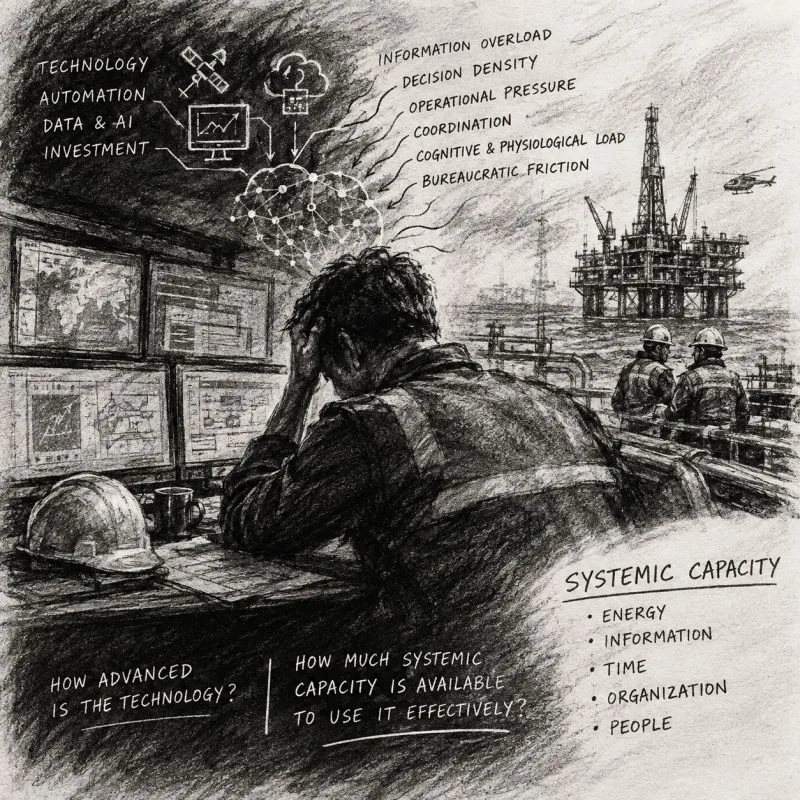
Perché l’alta ingegneria sbaglia proprio quando la tecnologia è più avanzata?
Nell’Oil & Gas e in altre operazioni complesse, più tecnologia non garantisce decisioni migliori: questo testo indaga la capacità sistemica, quanto un sistema sa assorbire e tradurre in azione sotto pressione.

NOTA-ECO-003 · Economia 5.0
Frankenstein e il petrolio: perché il Venezuela torna a contare nella geopolitica?
Terza puntata della serie: dopo il passaggio dal capitale all'IA e alla concentrazione finanziaria, emerge il nuovo collo di bottiglia, il petrolio, e con esso il Venezuela torna sullo scacchiere geopolitico.