

Economía 5.0 · OSF-ECO-147
Economía 5.0: el ISHEA Index y el ciclo TACC
Por Carlos J. Pérez Pulido · ISHEA Institute ·
Propuesta que reúne dos herramientas originales: el ISHEA Index, métrica más allá del PIB que integra bienestar, sostenibilidad y gobernanza, y el ciclo cognitivo TACC.
Preprint — Manuscrito depositado en OSF. Sin revisión por pares.
Pieza original en inglés.
This project presents Economy 5.0, a comprehensive framework to rethink economic measurement and decision-making in the 21st century. It integrates two original tools:
ISHEA (Expanded and Adjusted Human Satisfaction Index): a post-GDP metric that combines human well-being, adjusted progress, ecological sustainability, and governance.
TACC (Thin–Assim–Create–Check): a cognitive cycle for acting under stress, enriched with Stress, Rov (±r), Tram, and Key as adaptive learning and knowledge transfer mechanisms.
The project is structured in three complementary outputs:
-
Economy 5.0 — Measuring Differently to Decide Better
The academic edition (main reference): includes methodology, variables, case studies, and scientific validation. -
La Economía 5 — Narrative Edition
The outreach edition: written in a more fluid and narrative style, with pedagogical anchors (TACC pauses, leitmotifs, bridges) and an epilogue with a “Gift from the Author.” -
The Gift — Learning Guide for the 5.0 Ecosystem
The practical manual: designed for classrooms, organizations, and communities. Includes the TACC game, the Key story, diagnostic tools, and printable annexes.
📌 Together, these three texts form an ecosystem of knowledge transfer:
The academic core (rigor and validation).
The narrative edition (public engagement).
The pedagogical guide (practice and training).
📑 Overview
Economy 5.0 is part of a broader research ecosystem designed to rethink economic measurement and human flourishing in the 21st century.
It integrates:
Principle +1 → universal law of negentropy.
ISHEA → a post-GDP index measuring well-being, adjusted progress, ecology, and governance.
TACC → a cognitive cycle for decision-making under stress.
Economy 5.0 → the applied framework bringing these tools into practice.
Relationship with the K Model
Economy 5.0 is nested within the K Model, which unifies theory, metrics, cognition, and application:
Principle +1: theoretical foundation (negentropy and systemic resilience).
ISHEA: the metric (Expanded and Adjusted Human Satisfaction Index).
TACC / Rov (±r): the cognitive and adaptive cycle under stress.
Lex (K as message): knowledge transfer and organized memory.
👉 In this architecture, the K Model = theory (+1) + measurement (ISHEA) + cognition (TACC) + application (Economy 5.0).
Components
Academic edition — Economy 5.0: methodological and validation framework.
Narrative edition — La Economía 5: public-facing, narrative book.
The Gift: pedagogical guide with stories and games.
Linked projects: Principle +1 (theory) and K Model (umbrella).
Project Goals
Provide a scientifically validated alternative to GDP.
Build tools for governments, businesses, and communities.
Transfer knowledge via academic, narrative, and pedagogical outputs.
Citation (APA 7th):
Pérez Pulido, C. (2025). Economy 5.0 — Measuring Differently to Decide Better. OSF. https://osf.io/6dbgk/
En la misma sala — Economía 5.0

NOTA-ECO-001 · Economía 5.0
¿Y si las variables con las que medimos el éxito de los países estuvieran al revés?
Durante décadas el progreso se ha medido con PIB, productividad, crecimiento y energía. Esta pieza plantea que esas variables podrían estar invertidas y pide repensar qué significa que un país prospere.
NOTA-ECO-002 · Economía 5.0
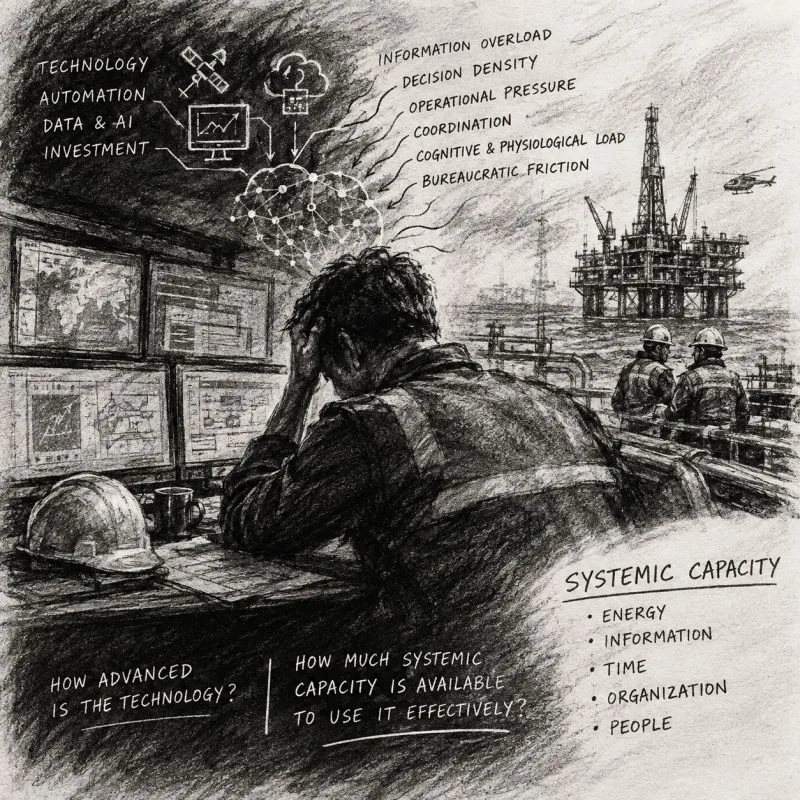
¿Por qué fallan los sistemas de alta ingeniería cuando la tecnología es más avanzada?
En Oil & Gas y otras operaciones complejas, más tecnología no garantiza mejores decisiones: esta pieza estudia la capacidad sistémica, lo que un sistema puede absorber y convertir en acción bajo presión.

NOTA-ECO-003 · Economía 5.0
Frankenstein y el petróleo: ¿por qué Venezuela vuelve a importar geopolíticamente?
Tercera entrega de la serie: tras el paso del capital a la IA y a la concentración financiera, llega el siguiente cuello de botella, el petróleo, y con él Venezuela vuelve al tablero geopolítico.