

Economia 5.0 · OSF-ECO-147
Economia 5.0: l'ISHEA Index e il ciclo TACC
Di Carlos J. Pérez Pulido · ISHEA Institute ·
Una proposta fondata su due strumenti originali: l'ISHEA Index, metrica oltre il PIL che unisce benessere, sostenibilità e governance, e TACC, ciclo cognitivo per agire sotto stress.
Preprint — Manoscritto depositato su OSF. Senza revisione paritaria.
Opera originale in inglese.
This project presents Economy 5.0, a comprehensive framework to rethink economic measurement and decision-making in the 21st century. It integrates two original tools:
ISHEA (Expanded and Adjusted Human Satisfaction Index): a post-GDP metric that combines human well-being, adjusted progress, ecological sustainability, and governance.
TACC (Thin–Assim–Create–Check): a cognitive cycle for acting under stress, enriched with Stress, Rov (±r), Tram, and Key as adaptive learning and knowledge transfer mechanisms.
The project is structured in three complementary outputs:
-
Economy 5.0 — Measuring Differently to Decide Better
The academic edition (main reference): includes methodology, variables, case studies, and scientific validation. -
La Economía 5 — Narrative Edition
The outreach edition: written in a more fluid and narrative style, with pedagogical anchors (TACC pauses, leitmotifs, bridges) and an epilogue with a “Gift from the Author.” -
The Gift — Learning Guide for the 5.0 Ecosystem
The practical manual: designed for classrooms, organizations, and communities. Includes the TACC game, the Key story, diagnostic tools, and printable annexes.
📌 Together, these three texts form an ecosystem of knowledge transfer:
The academic core (rigor and validation).
The narrative edition (public engagement).
The pedagogical guide (practice and training).
📑 Overview
Economy 5.0 is part of a broader research ecosystem designed to rethink economic measurement and human flourishing in the 21st century.
It integrates:
Principle +1 → universal law of negentropy.
ISHEA → a post-GDP index measuring well-being, adjusted progress, ecology, and governance.
TACC → a cognitive cycle for decision-making under stress.
Economy 5.0 → the applied framework bringing these tools into practice.
Relationship with the K Model
Economy 5.0 is nested within the K Model, which unifies theory, metrics, cognition, and application:
Principle +1: theoretical foundation (negentropy and systemic resilience).
ISHEA: the metric (Expanded and Adjusted Human Satisfaction Index).
TACC / Rov (±r): the cognitive and adaptive cycle under stress.
Lex (K as message): knowledge transfer and organized memory.
👉 In this architecture, the K Model = theory (+1) + measurement (ISHEA) + cognition (TACC) + application (Economy 5.0).
Components
Academic edition — Economy 5.0: methodological and validation framework.
Narrative edition — La Economía 5: public-facing, narrative book.
The Gift: pedagogical guide with stories and games.
Linked projects: Principle +1 (theory) and K Model (umbrella).
Project Goals
Provide a scientifically validated alternative to GDP.
Build tools for governments, businesses, and communities.
Transfer knowledge via academic, narrative, and pedagogical outputs.
Citation (APA 7th):
Pérez Pulido, C. (2025). Economy 5.0 — Measuring Differently to Decide Better. OSF. https://osf.io/6dbgk/
Nella stessa sala — Economia 5.0

NOTA-ECO-001 · Economia 5.0
E se le variabili con cui misuriamo il successo dei Paesi fossero del tutto capovolte?
Da decenni il progresso si misura con PIL, produttività, crescita ed energia. Questo testo sostiene che quelle variabili potrebbero essere capovolte e invita a ripensare che cosa significhi, per un Paese, prosperare.
NOTA-ECO-002 · Economia 5.0
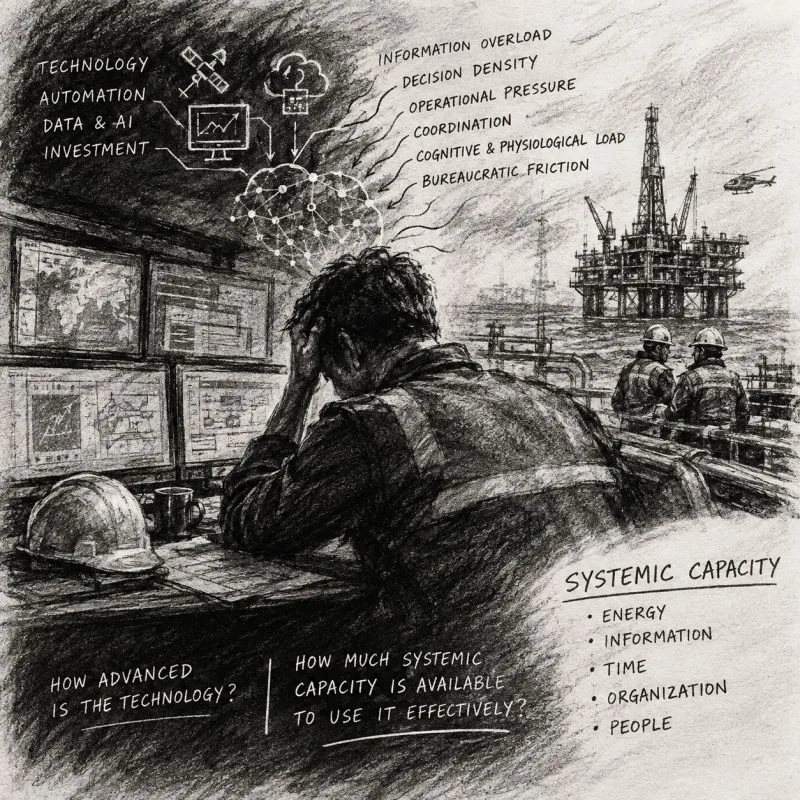
Perché l’alta ingegneria sbaglia proprio quando la tecnologia è più avanzata?
Nell’Oil & Gas e in altre operazioni complesse, più tecnologia non garantisce decisioni migliori: questo testo indaga la capacità sistemica, quanto un sistema sa assorbire e tradurre in azione sotto pressione.
NOTA-ECO-003 · Economia 5.0
Frankenstein e il petrolio: perché il Venezuela torna a contare nella geopolitica?
Terza puntata della serie: dopo il passaggio dal capitale all'IA e alla concentrazione finanziaria, emerge il nuovo collo di bottiglia, il petrolio, e con esso il Venezuela torna sullo scacchiere geopolitico.