

Economía 5.0 · NOTA-ECO-037
El nuevo método científico no sustituye a la ciencia: la amplía
Por Carlos J. Pérez Pulido · ISHEA Institute ·
La observación, el experimento, las matemáticas y la revisión crítica nos trajeron hasta aquí. La propuesta no renuncia a ese rigor: extiende su alcance a los sistemas complejos y vivos.
Nota de divulgación — Escrito breve publicado en abierto. Pensamiento en curso, no resultado.
Pieza original en inglés.
🚀 The New Scientific Method Is Not Replacing Science—It Is Expanding It
Science has brought humanity to where we are today. The rigor of observation, experimentation, mathematics, and critical review remains the foundation upon which all discovery is built.
Artificial Intelligence does not change those principles.
It changes our capacity to explore them.
In the age of AI, scientific creation becomes a collaboration between human reasoning and computational capability. The machine can process information at unprecedented speed, but it cannot replace curiosity, intuition, or the ability to formulate meaningful questions.
Modern scientific creation can be understood in four interconnected stages:
1. The Researcher Leads
- Curiosity precedes computation.
- AI accelerates analysis, but humans define the questions.
- Insight remains a uniquely human responsibility.
2. Integrate Knowledge Across Disciplines
- The greatest discoveries often emerge at the intersection of fields.
- Classical science provides the foundations; interdisciplinary thinking expands them.
- Innovation connects ideas that previously appeared unrelated.
3. Formulate Falsifiable Hypotheses
- Every scientific proposition must be open to being tested—and potentially disproved.
- Clear variables and reproducible methods transform ideas into science.
- Critical scrutiny strengthens knowledge.
4. Build Meaningful Metrics
- Complex systems require new ways of measuring coherence, interaction, and change.
- AI enables the analysis of massive datasets, but meaningful metrics remain a human design challenge.
- Better measurements lead to better science.
💡 The future of research belongs neither to humans alone nor to machines alone. It belongs to researchers capable of combining scientific rigor, critical thinking, and artificial intelligence to ask better questions—and discover answers that were previously beyond our reach.
Science evolves. The scientific method evolves with it.
#ISHEA #ArtificialIntelligence #ScientificMethod #Research #Innovation #Epistemology #CriticalThinking #ComplexSystems #FutureOfScienceCreo
En la misma sala — Economía 5.0

NOTA-ECO-001 · Economía 5.0
¿Y si las variables con las que medimos el éxito de los países estuvieran al revés?
Durante décadas el progreso se ha medido con PIB, productividad, crecimiento y energía. Esta pieza plantea que esas variables podrían estar invertidas y pide repensar qué significa que un país prospere.
NOTA-ECO-002 · Economía 5.0
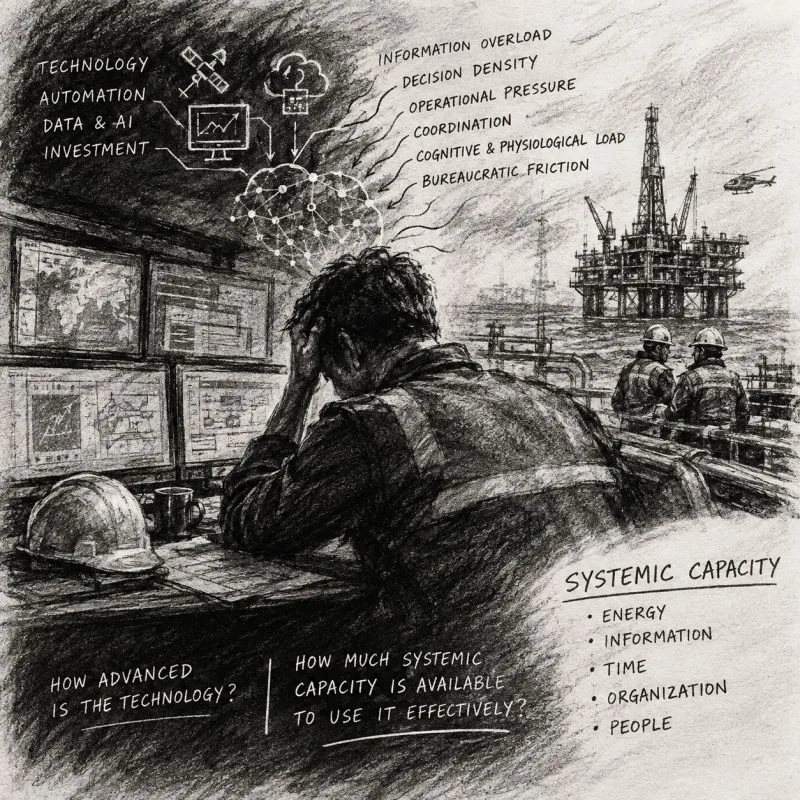
¿Por qué fallan los sistemas de alta ingeniería cuando la tecnología es más avanzada?
En Oil & Gas y otras operaciones complejas, más tecnología no garantiza mejores decisiones: esta pieza estudia la capacidad sistémica, lo que un sistema puede absorber y convertir en acción bajo presión.

NOTA-ECO-003 · Economía 5.0
Frankenstein y el petróleo: ¿por qué Venezuela vuelve a importar geopolíticamente?
Tercera entrega de la serie: tras el paso del capital a la IA y a la concentración financiera, llega el siguiente cuello de botella, el petróleo, y con él Venezuela vuelve al tablero geopolítico.