

Economia 5.0 · NOTA-ECO-037
Il nuovo metodo scientifico non sostituisce la scienza: la amplia
Di Carlos J. Pérez Pulido · ISHEA Institute ·
Osservazione, esperimento, matematica e revisione critica ci hanno portati fin qui. La proposta non rinuncia a quel rigore: ne estende la portata ai sistemi complessi e viventi.
Nota divulgativa — Testo breve pubblicato in aperto. Pensiero in corso, non risultato.
Opera originale in inglese.
🚀 The New Scientific Method Is Not Replacing Science—It Is Expanding It
Science has brought humanity to where we are today. The rigor of observation, experimentation, mathematics, and critical review remains the foundation upon which all discovery is built.
Artificial Intelligence does not change those principles.
It changes our capacity to explore them.
In the age of AI, scientific creation becomes a collaboration between human reasoning and computational capability. The machine can process information at unprecedented speed, but it cannot replace curiosity, intuition, or the ability to formulate meaningful questions.
Modern scientific creation can be understood in four interconnected stages:
1. The Researcher Leads
- Curiosity precedes computation.
- AI accelerates analysis, but humans define the questions.
- Insight remains a uniquely human responsibility.
2. Integrate Knowledge Across Disciplines
- The greatest discoveries often emerge at the intersection of fields.
- Classical science provides the foundations; interdisciplinary thinking expands them.
- Innovation connects ideas that previously appeared unrelated.
3. Formulate Falsifiable Hypotheses
- Every scientific proposition must be open to being tested—and potentially disproved.
- Clear variables and reproducible methods transform ideas into science.
- Critical scrutiny strengthens knowledge.
4. Build Meaningful Metrics
- Complex systems require new ways of measuring coherence, interaction, and change.
- AI enables the analysis of massive datasets, but meaningful metrics remain a human design challenge.
- Better measurements lead to better science.
💡 The future of research belongs neither to humans alone nor to machines alone. It belongs to researchers capable of combining scientific rigor, critical thinking, and artificial intelligence to ask better questions—and discover answers that were previously beyond our reach.
Science evolves. The scientific method evolves with it.
#ISHEA #ArtificialIntelligence #ScientificMethod #Research #Innovation #Epistemology #CriticalThinking #ComplexSystems #FutureOfScienceCreo
Nella stessa sala — Economia 5.0

NOTA-ECO-001 · Economia 5.0
E se le variabili con cui misuriamo il successo dei Paesi fossero del tutto capovolte?
Da decenni il progresso si misura con PIL, produttività, crescita ed energia. Questo testo sostiene che quelle variabili potrebbero essere capovolte e invita a ripensare che cosa significhi, per un Paese, prosperare.
NOTA-ECO-002 · Economia 5.0
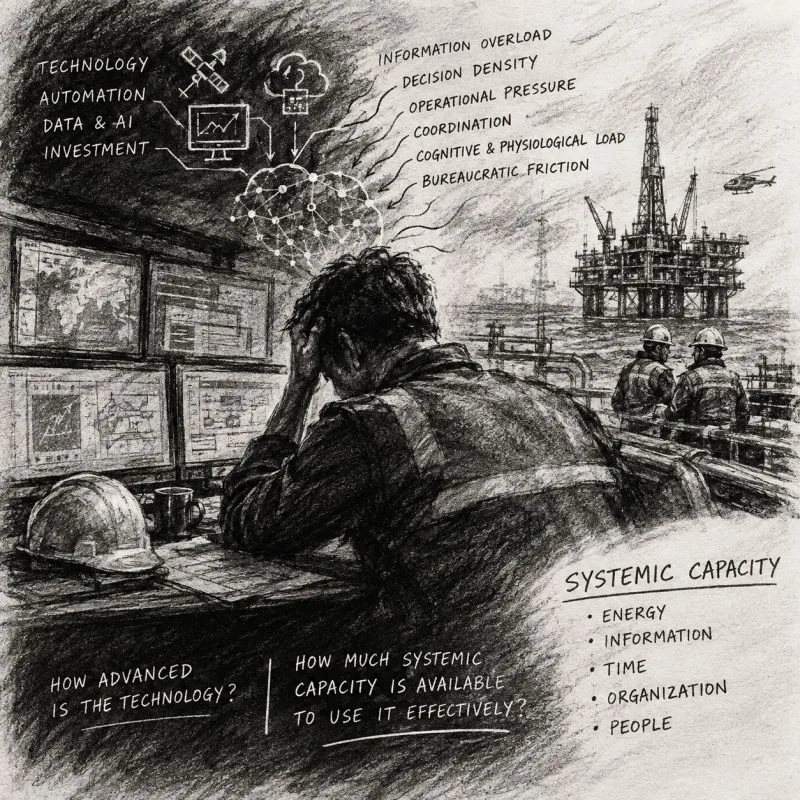
Perché l’alta ingegneria sbaglia proprio quando la tecnologia è più avanzata?
Nell’Oil & Gas e in altre operazioni complesse, più tecnologia non garantisce decisioni migliori: questo testo indaga la capacità sistemica, quanto un sistema sa assorbire e tradurre in azione sotto pressione.

NOTA-ECO-003 · Economia 5.0
Frankenstein e il petrolio: perché il Venezuela torna a contare nella geopolitica?
Terza puntata della serie: dopo il passaggio dal capitale all'IA e alla concentrazione finanziaria, emerge il nuovo collo di bottiglia, il petrolio, e con esso il Venezuela torna sullo scacchiere geopolitico.