

Sistemas planetarios · OSF-PLA-012
Flujos de energía planetaria y su correlación con el ciclo solar de Gleissberg
Por Carlos J. Pérez Pulido · ISHEA Institute ·
Serie de 1998 a 2024 que reúne el flujo de protones de la NOAA, los índices solares y la Anomalía del Atlántico Sur para cuantificar cómo la actividad solar redistribuye la energía del planeta.
Preprint — Manuscrito depositado en OSF. Sin revisión por pares.
Pieza original en inglés.
This dataset and accompanying analysis document the systemic planetary energy fluctuations observed from 1998–2024, integrating NOAA satellite proton flux measurements, solar indices (F10.7 flux, sunspot numbers), and geomagnetic anomalies including the South Atlantic Anomaly (SAA). Using the ISHEA framework, we identify and quantify events, revealing nonlinear interactions between solar activity, planetary energy redistribution, and geomagnetic disturbances. This resource enables further research into planetary bioenergetic coupling, systemic sensitivity to solar events, and the predictive modeling of geomagnetic impacts.
Wiki / Notes:
Objective: To analyze planetary energy flows and their correlation with the Gleissberg Solar Cycle using satellite and geomagnetic datasets.
Methods:
Satellite Data: NOAA-15 & NOAA-19 proton flux (>35, >70, >140 MeV), 1998–2024
Solar Indices: F10.7 cm flux, sunspot numbers
Geomagnetic Parameters: SAA area and drift, Dst indices during geomagnetic storms
Analysis: Correlation matrices, time series analysis, sensitivity evaluation
Key Findings:
Proton flux peaks correspond to solar maxima in the Gleissberg Cycle.
Geomagnetic anomalies, including SAA area fluctuations, show measurable responses to solar activity.
Planetary energy flows are non-linear and show systemic coherence patterns.
Applications:
Understanding planetary and biological energy interactions
Risk assessment for geomagnetic storms
Support for research on climate and energy flow management
Files Included:
Scientific validation document (PDF)
Supplementary figures (S1, S2, S3)
CSV dataset of satellite and geomagnetic parameters
References: Adams et al., 2025; Bregou et al., 2022; Feynman & Ruzmaikin, 2014; Spaceweather Archive, 2025
En la misma sala — Sistemas planetarios
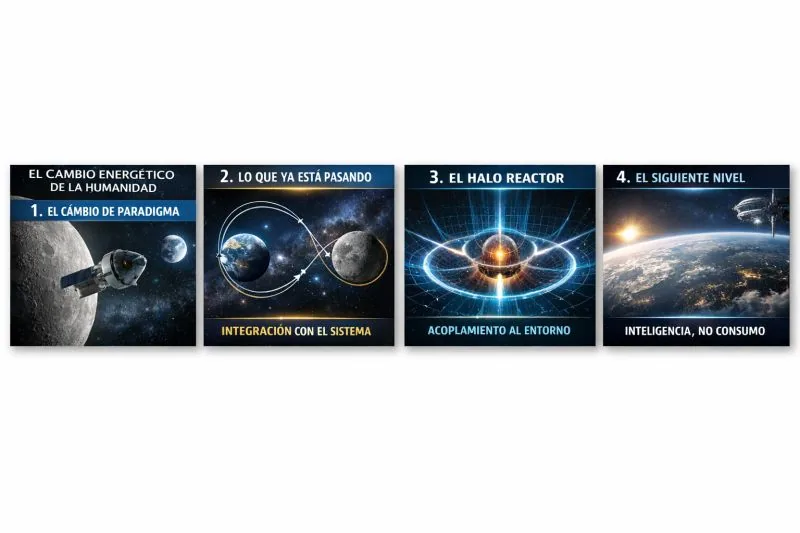
NOTA-PLA-001 · Sistemas planetarios
3/4. El HALO Reactor no es un reactor
Tercera entrega de la serie: el HALO Reactor no quema ni consume combustible. La pieza desmonta la idea clásica de reactor para explicar un sistema que organiza la energía en lugar de gastarla.
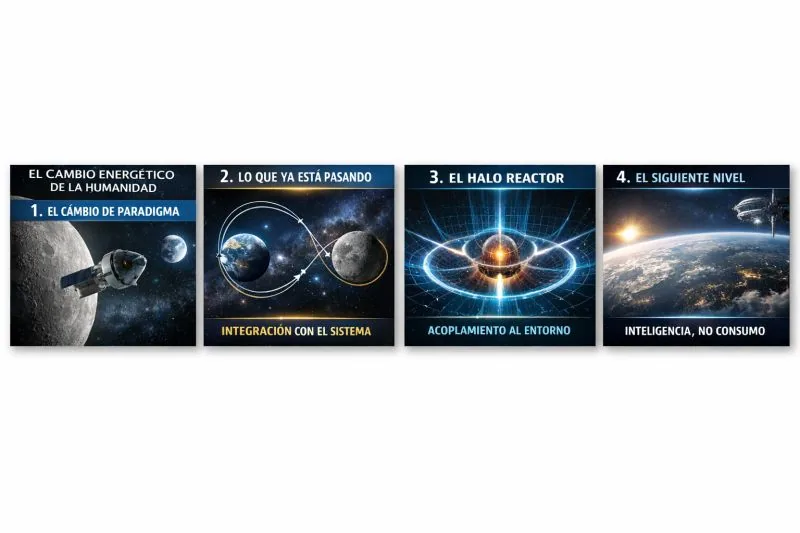
NOTA-PLA-002 · Sistemas planetarios
Energía coherente: de Artemis a HALO
No es una historia sobre cohetes, sino sobre el principio invisible que la naturaleza usa para sostener sistemas complejos y que hoy redefine el diseño de misiones y máquinas.
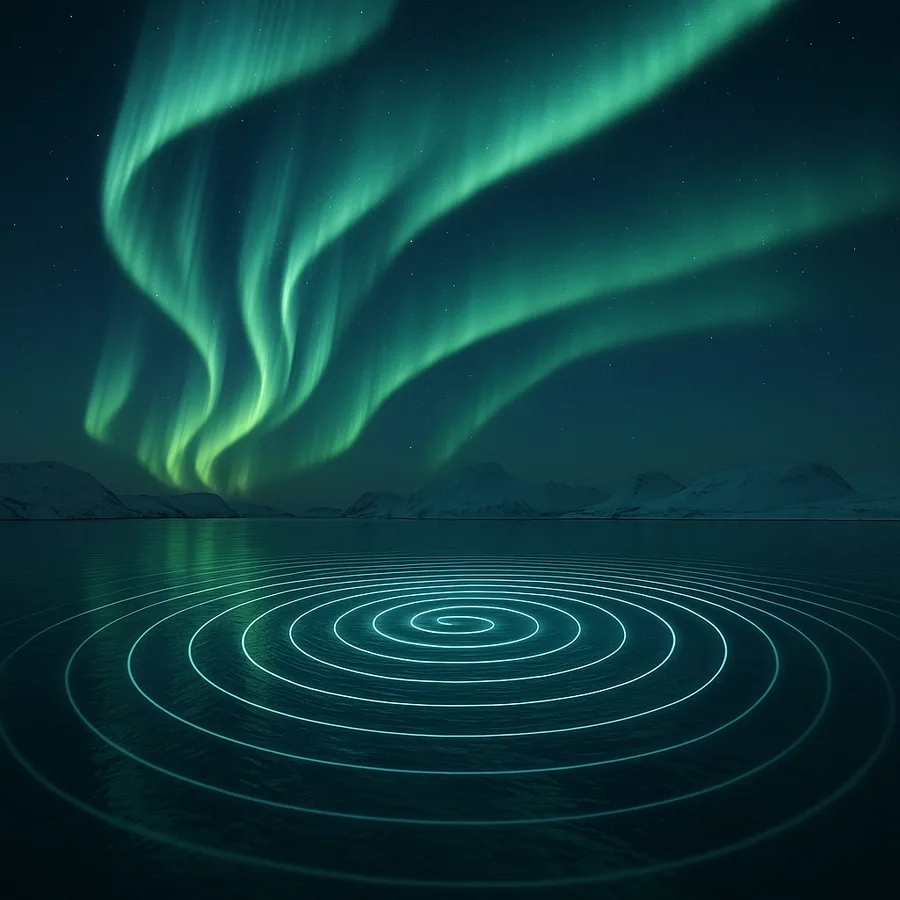
SN-PLA-003 · Sistemas planetarios
Integración de flujos energéticos planetarios, ciclos solares y dinámica de biosistemas
El índice de flujo energético planetario enlaza ciclos solares, química estratosférica y bioenergética dentro del marco HALO, y tiende un puente reproducible entre la ciencia planetaria y la biológica