

Economía 5.0 · NOTA-ECO-110
La política de la ruptura: por qué EE. UU. eligió el colapso antes que negociar
Por Carlos J. Pérez Pulido · ISHEA Institute ·
Un marco ausente en el análisis dominante: hay potencias que prefieren que un sistema colapse antes que negociar con él. La pieza aplica esa lente al caso venezolano y al diseño actual de la coerción.
Nota de divulgación — Escrito breve publicado en abierto. Pensamiento en curso, no resultado.
Pieza original en inglés.
🧨 The “Wreck-It Policy”: Why the U.S. Chose Breakdown Over Negotiation (The Venezuela Case)
There is a framework missing from most mainstream analysis — yet it explains almost everything we are witnessing.
👉 The United States is no longer trying to persuade, reform, or negotiate with certain regimes.
👉 It is neutralizing them through induced systemic breakdown.
Some analysts have begun to refer to this approach, informally, as the “Wreck-It Policy.”
What is it?
It is not classical diplomacy.
It is not nation-building.
It is not regime change à la Iraq.
It is colder and more structural:
> If a system is irreformable, it is broken. The vacuum is managed later.
🔑 What many are missing
1️⃣ Americans are not pacifists — they are pragmatic
The 47% who “have no opinion” are not opposition; they represent passive consent.
History shows how quickly this flips once a catalytic event occurs (1941, 2001).
2️⃣ Trump is not an extremist — he is transactional
Labels like “fascist” or “TACO” are tools of information warfare.
In practice, Trump 2.0 blends protectionism (historically left-wing) with geopolitical realism.
3️⃣ Fundamentals matter more than noise
Reindustrialization, cheap energy, nearshoring, and capital inflows are reshaping U.S. power beneath the media surface.
4️⃣ Capital already chose sides
When ~80% of global FDI flows into the U.S., this is not ideology — it is risk calculation.
🇻🇪 Why Venezuela is different
The logic applied to Venezuela is brutally clear:
❌ No attempt to “improve” the economy
❌ No incentives-based negotiation
❌ No gradual transition
✅ Total containment
>Any marginal revenue:
>Strengthens external lobbying,
>Sustains illicit networks,
& opens hemispheric space to China, Russia, or Iran.
☢️ The point of no return: FTO designation
Labeling a government-linked structure as a Foreign Terrorist Organization is not symbolic.
It provides full legal insulation for:
>Asset seizures,
>Financial isolation,
& future kinetic operations without additional political cost.
In Washington, language does not describe reality — it authorizes action.
“Terrorism” is a legal switch.
🧠 The deeper shift
The Western world has finally internalized a hard lesson:
Not all actors are rational partners.
Some operate outside the rule of law.
And against outlaw actors:
>Dialogue fails,
>Engagement fails,
>Concessions fail.
What remains:
1. force,
2. containment,
3. strategic patience.
📌 An uncomfortable conclusion
The Wreck-It Policy is not elegant.
It is not humanitarian.
It is not idealistic.
But it is not improvised.
It is the product of two decades of failed assumptions — and of a West that has stopped describing the world as it wishes it were, and started dealing with it as it is.
> Whether one agrees or not, this framework is likely to shape U.S. foreign policy well beyond any single administration.
#Geopolitics #USForeignPolicy #StrategicAnalysis #Realpolitik
#GlobalSecurity #GreatPowerCompetition #Venezuela
En la misma sala — Economía 5.0

NOTA-ECO-001 · Economía 5.0
¿Y si las variables con las que medimos el éxito de los países estuvieran al revés?
Durante décadas el progreso se ha medido con PIB, productividad, crecimiento y energía. Esta pieza plantea que esas variables podrían estar invertidas y pide repensar qué significa que un país prospere.
NOTA-ECO-002 · Economía 5.0
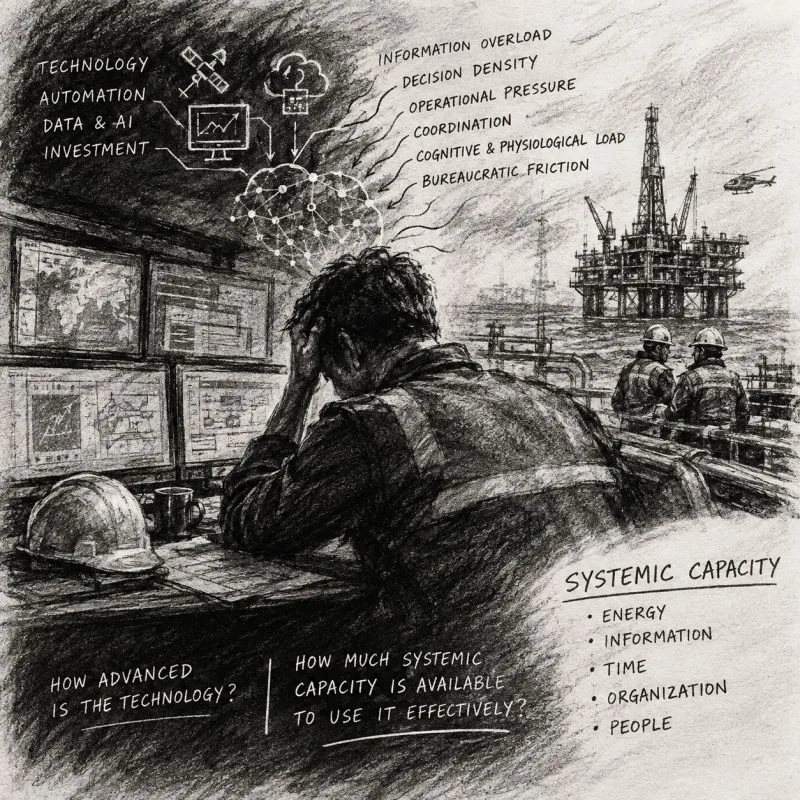
¿Por qué fallan los sistemas de alta ingeniería cuando la tecnología es más avanzada?
En Oil & Gas y otras operaciones complejas, más tecnología no garantiza mejores decisiones: esta pieza estudia la capacidad sistémica, lo que un sistema puede absorber y convertir en acción bajo presión.
NOTA-ECO-003 · Economía 5.0
Frankenstein y el petróleo: ¿por qué Venezuela vuelve a importar geopolíticamente?
Tercera entrega de la serie: tras el paso del capital a la IA y a la concentración financiera, llega el siguiente cuello de botella, el petróleo, y con él Venezuela vuelve al tablero geopolítico.