

Economia 5.0 · NOTA-ECO-110
La politica della rottura: perché gli USA hanno scelto il collasso in Venezuela
Di Carlos J. Pérez Pulido · ISHEA Institute ·
Una cornice assente dall'analisi dominante: certe potenze preferiscono che un sistema collassi piuttosto che negoziare con esso. Il pezzo applica questa lente al caso venezuelano.
Nota divulgativa — Testo breve pubblicato in aperto. Pensiero in corso, non risultato.
Opera originale in inglese.
🧨 The “Wreck-It Policy”: Why the U.S. Chose Breakdown Over Negotiation (The Venezuela Case)
There is a framework missing from most mainstream analysis — yet it explains almost everything we are witnessing.
👉 The United States is no longer trying to persuade, reform, or negotiate with certain regimes.
👉 It is neutralizing them through induced systemic breakdown.
Some analysts have begun to refer to this approach, informally, as the “Wreck-It Policy.”
What is it?
It is not classical diplomacy.
It is not nation-building.
It is not regime change à la Iraq.
It is colder and more structural:
> If a system is irreformable, it is broken. The vacuum is managed later.
🔑 What many are missing
1️⃣ Americans are not pacifists — they are pragmatic
The 47% who “have no opinion” are not opposition; they represent passive consent.
History shows how quickly this flips once a catalytic event occurs (1941, 2001).
2️⃣ Trump is not an extremist — he is transactional
Labels like “fascist” or “TACO” are tools of information warfare.
In practice, Trump 2.0 blends protectionism (historically left-wing) with geopolitical realism.
3️⃣ Fundamentals matter more than noise
Reindustrialization, cheap energy, nearshoring, and capital inflows are reshaping U.S. power beneath the media surface.
4️⃣ Capital already chose sides
When ~80% of global FDI flows into the U.S., this is not ideology — it is risk calculation.
🇻🇪 Why Venezuela is different
The logic applied to Venezuela is brutally clear:
❌ No attempt to “improve” the economy
❌ No incentives-based negotiation
❌ No gradual transition
✅ Total containment
>Any marginal revenue:
>Strengthens external lobbying,
>Sustains illicit networks,
& opens hemispheric space to China, Russia, or Iran.
☢️ The point of no return: FTO designation
Labeling a government-linked structure as a Foreign Terrorist Organization is not symbolic.
It provides full legal insulation for:
>Asset seizures,
>Financial isolation,
& future kinetic operations without additional political cost.
In Washington, language does not describe reality — it authorizes action.
“Terrorism” is a legal switch.
🧠 The deeper shift
The Western world has finally internalized a hard lesson:
Not all actors are rational partners.
Some operate outside the rule of law.
And against outlaw actors:
>Dialogue fails,
>Engagement fails,
>Concessions fail.
What remains:
1. force,
2. containment,
3. strategic patience.
📌 An uncomfortable conclusion
The Wreck-It Policy is not elegant.
It is not humanitarian.
It is not idealistic.
But it is not improvised.
It is the product of two decades of failed assumptions — and of a West that has stopped describing the world as it wishes it were, and started dealing with it as it is.
> Whether one agrees or not, this framework is likely to shape U.S. foreign policy well beyond any single administration.
#Geopolitics #USForeignPolicy #StrategicAnalysis #Realpolitik
#GlobalSecurity #GreatPowerCompetition #Venezuela
Nella stessa sala — Economia 5.0

NOTA-ECO-001 · Economia 5.0
E se le variabili con cui misuriamo il successo dei Paesi fossero del tutto capovolte?
Da decenni il progresso si misura con PIL, produttività, crescita ed energia. Questo testo sostiene che quelle variabili potrebbero essere capovolte e invita a ripensare che cosa significhi, per un Paese, prosperare.
NOTA-ECO-002 · Economia 5.0
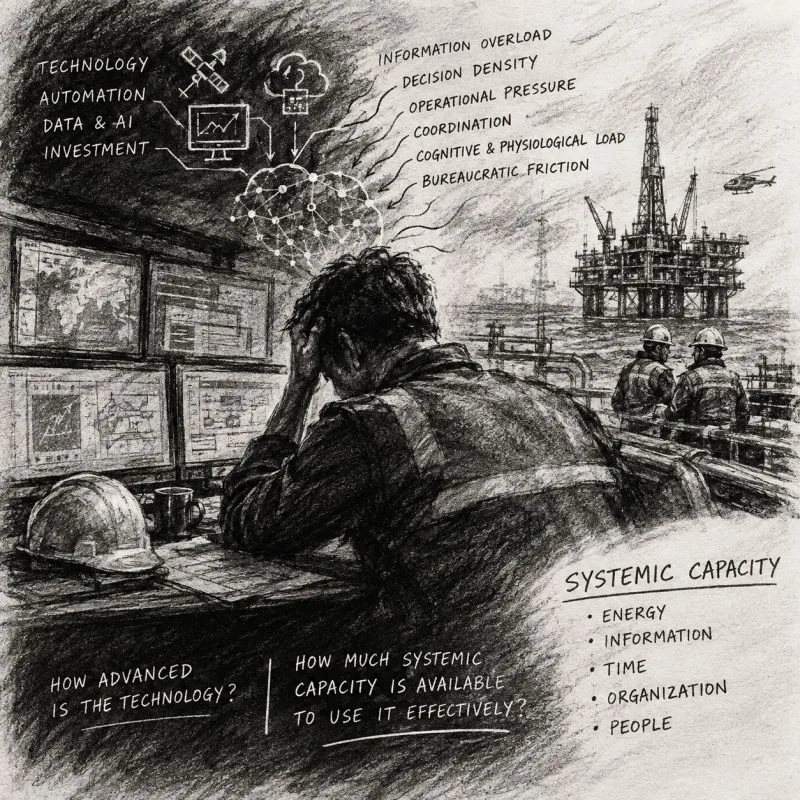
Perché l’alta ingegneria sbaglia proprio quando la tecnologia è più avanzata?
Nell’Oil & Gas e in altre operazioni complesse, più tecnologia non garantisce decisioni migliori: questo testo indaga la capacità sistemica, quanto un sistema sa assorbire e tradurre in azione sotto pressione.
NOTA-ECO-003 · Economia 5.0
Frankenstein e il petrolio: perché il Venezuela torna a contare nella geopolitica?
Terza puntata della serie: dopo il passaggio dal capitale all'IA e alla concentrazione finanziaria, emerge il nuovo collo di bottiglia, il petrolio, e con esso il Venezuela torna sullo scacchiere geopolitico.