

Bioenergética · NOTA-BIO-121
Lo que aprendí sobre el cerebro en la conferencia Nature × DGIST
Por Carlos J. Pérez Pulido · ISHEA Institute ·
Del encuentro sobre envejecimiento cerebral celebrado en diciembre de 2025 emergió una idea central: el cerebro no falla por falta de información, sino por lo que ocurre cuando esa información deja de sostenerse.
Nota de divulgación — Escrito breve publicado en abierto. Pensamiento en curso, no resultado.
Pieza original en inglés.
🧠 What I learned about the brain
After attending the Nature × DGIST Conference (Dec 9–11, 2025) on brain aging, one idea stood out:
👉 The brain doesn’t fail because it lacks information.
It fails because it runs out of energy.
Here it is in simple terms:
• Cells need energy to work
• They need energy to repair
• They need energy to clean waste
• Stress uses energy
• Aging is, in part, an energy problem
Scientists can now map thousands of brain cell types.
That’s incredible.
But knowing where cells are doesn’t explain:
• Why some fail first
• Why degeneration follows patterns
• Why resilience disappears
⚡ A basic rule applies:
> If energy demand is higher than energy supply, systems lose balance.
When that happens:
• Signals get noisy
• Repair slows down
• Vulnerability appears
This is not disease first.
It’s loss of balance first.
In finance, we say follow the money.
In biology, it’s the same:
👉 Follow the ATP.
That’s the energy every cell runs on.
This lens doesn’t replace biology.
It helps us understand it.
Sometimes, the problem isn’t the parts.
It’s the flow between them.
Carlos J. Pérez Pulido
ISHEA
#BrainHealth #SystemsBiology #EnergyMatters #AgingResearch
#Neuroscience #ComplexSystems
#ISHEA
En la misma sala — Bioenergética
NOTA-BIO-001 · Bioenergética
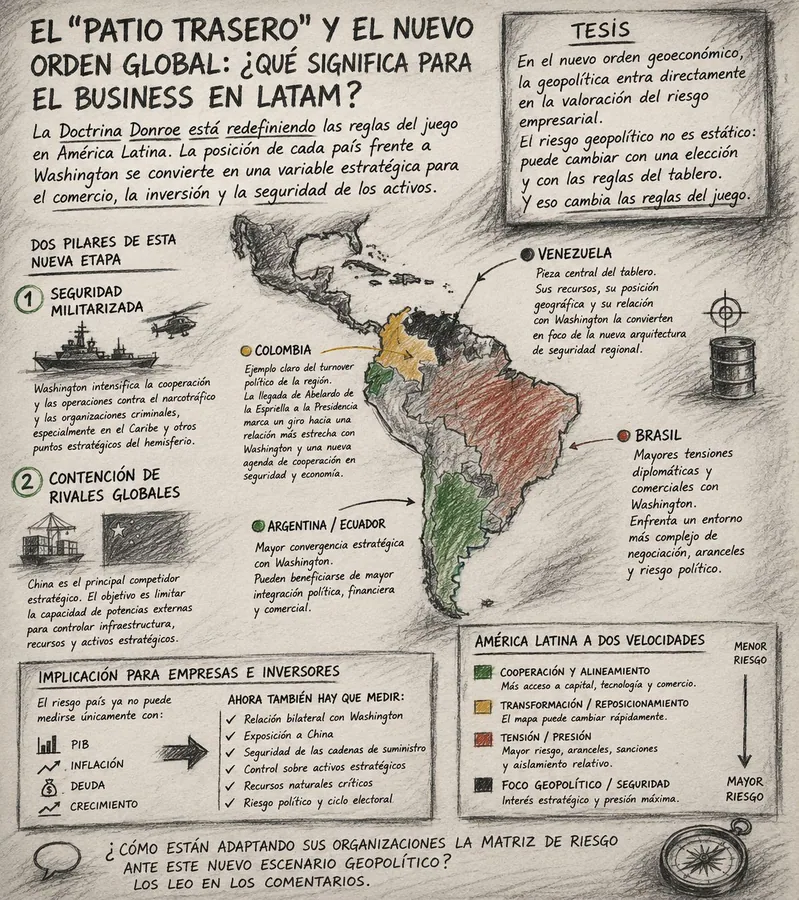
El «patio trasero» y el nuevo orden global: ¿qué significa para el business plan en Latam?
Un análisis de cómo la llamada Doctrina Donroe ha convertido en política explícita la metáfora del «patio trasero» y de lo que ese giro supone para cualquier plan de negocio en América Latina.

NOTA-BIO-002 · Bioenergética
¿Por qué los trabajadores más eficientes se vuelven más lentos a mitad de la jornada?
Para directores de operaciones y gerentes de logística: una lectura bioenergética de por qué los mejores trabajadores pierden productividad a mitad de jornada, un patrón que muchos ven y pocos explican.

NOTA-BIO-003 · Bioenergética
¿Amenaza u oportunidad? La inteligencia artificial y nuestra capacidad creativa
Frente al llamamiento de León XIV a «desarmar la IA», esta pieza sostiene que el riesgo no está en la tecnología, sino en el sistema humano que la usa: bien diseñada, puede liberar capacidad creativa.