

Bioenergetica · NOTA-BIO-121
Ciò che ho imparato sul cervello alla conferenza Nature × DGIST
Di Carlos J. Pérez Pulido · ISHEA Institute ·
Dall'incontro sull'invecchiamento cerebrale del dicembre 2025 è emersa un'idea centrale: il cervello non cede per mancanza di informazione, ma quando l'energia che la sostiene viene meno.
Nota divulgativa — Testo breve pubblicato in aperto. Pensiero in corso, non risultato.
Opera originale in inglese.
🧠 What I learned about the brain
After attending the Nature × DGIST Conference (Dec 9–11, 2025) on brain aging, one idea stood out:
👉 The brain doesn’t fail because it lacks information.
It fails because it runs out of energy.
Here it is in simple terms:
• Cells need energy to work
• They need energy to repair
• They need energy to clean waste
• Stress uses energy
• Aging is, in part, an energy problem
Scientists can now map thousands of brain cell types.
That’s incredible.
But knowing where cells are doesn’t explain:
• Why some fail first
• Why degeneration follows patterns
• Why resilience disappears
⚡ A basic rule applies:
> If energy demand is higher than energy supply, systems lose balance.
When that happens:
• Signals get noisy
• Repair slows down
• Vulnerability appears
This is not disease first.
It’s loss of balance first.
In finance, we say follow the money.
In biology, it’s the same:
👉 Follow the ATP.
That’s the energy every cell runs on.
This lens doesn’t replace biology.
It helps us understand it.
Sometimes, the problem isn’t the parts.
It’s the flow between them.
Carlos J. Pérez Pulido
ISHEA
#BrainHealth #SystemsBiology #EnergyMatters #AgingResearch
#Neuroscience #ComplexSystems
#ISHEA
Nella stessa sala — Bioenergetica
NOTA-BIO-001 · Bioenergetica
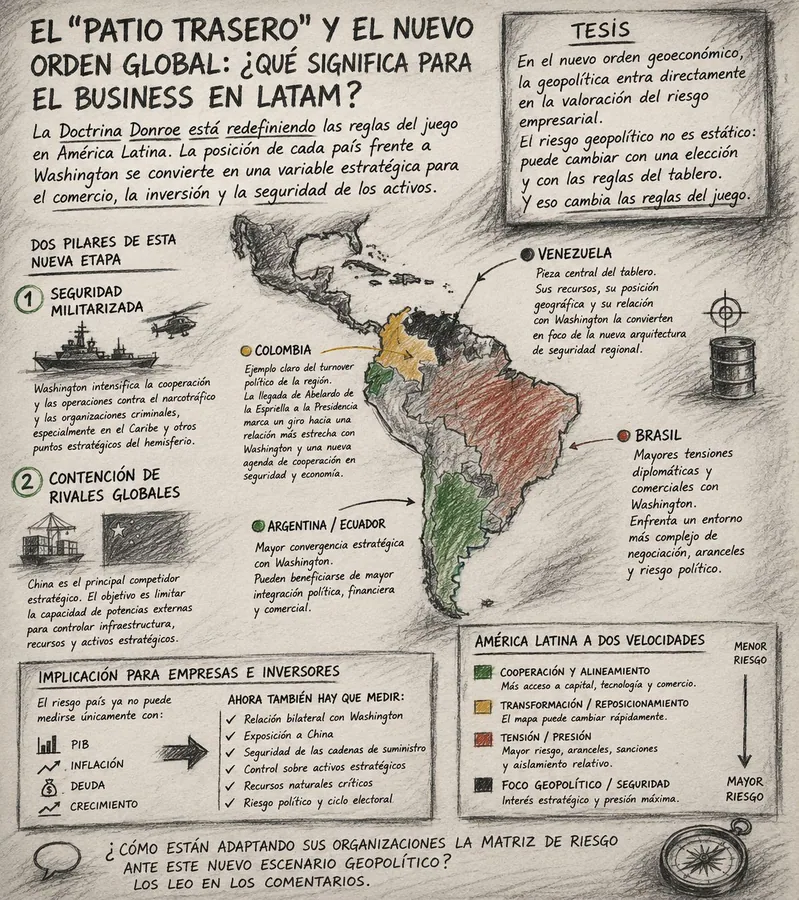
Il «cortile di casa» e il nuovo ordine globale: cosa significa per il business plan in LatAm?
Un'analisi di come la cosiddetta Dottrina Donroe abbia trasformato in politica esplicita la metafora del «cortile di casa» e di ciò che questa svolta comporta per ogni business plan in America Latina.

NOTA-BIO-002 · Bioenergetica
Perché i lavoratori più efficienti rallentano a metà giornata?
Per direttori operativi e responsabili della logistica: una lettura bioenergetica del perché i lavoratori migliori perdono produttività a metà giornata, un fenomeno che molti notano e pochi spiegano.

NOTA-BIO-003 · Bioenergetica
Minaccia o opportunità? L’intelligenza artificiale e la nostra capacità creativa
Di fronte all’appello di Leone XIV a «disarmare l’IA», questo testo sostiene che il rischio non sta nella tecnologia ma nel sistema umano che la usa: ben progettata, può liberare capacità creativa.