

Economía 5.0 · NOTA-ECO-011
Venezuela 1999-2026: cómo llegamos hasta aquí
Por Carlos J. Pérez Pulido · ISHEA Institute ·
Un recorrido desde el inicio de la era Chávez, cuando Venezuela contaba con reservas de petróleo extraordinarias, hasta 2026: la cadena de decisiones que explica el país de hoy.
Nota de divulgación — Escrito breve publicado en abierto. Pensamiento en curso, no resultado.
Pieza original en inglés.
🇻🇪 VENEZUELA 1999 → 2026
HOW DID WE GET HERE?
To understand Venezuela in 2026, you have to go back to 1999.
At the beginning of the Chávez era, Venezuela had something extraordinary:
Oil reserves + production capacity + technical talent + infrastructure + access to international markets.
The country did not lack resources.
It had a system capable of converting those resources into cash flow.
Then the model changed.
PDVSA stopped being treated primarily as an energy company and increasingly became an instrument for broader state objectives.
The argument was simple:
“The oil belongs to the people.”
And politically, it was powerful.
But economically, something was missed:
Owning the resource and managing the system that extracts it are two different things.
The consequences accumulated over time.
📉 Production capacity deteriorated.
📉 Investment and maintenance weakened.
📉 Technical talent was lost.
📉 Refining capacity deteriorated.
📉 PDVSA accumulated increasing fiscal and political responsibilities.
And eventually:
~3 million bpd → ~500,000 bpd
The oil did not disappear.
The capacity to monetize it did.
Now jump to 2026.
Venezuela still has approximately 303 billion barrels of proved crude oil reserves — the largest proven reserve base in the world.
And this creates the paradox:
🇻🇪 1999: Venezuela had the resource AND the machinery to monetize it.
🇻🇪 2026: Venezuela still has the resource — but needs to rebuild the machinery.
That is why today's geopolitical story is not simply about Venezuela's weakness.
It is about the enormous strategic value of rebuilding what was lost.
The country did not lose its oil.
It lost the system that transformed oil into power.
And that system can be rebuilt.
VENEZUELA’S LEVERAGE
Reserves → Investment → Production → Energy security → Geopolitical leverage.
The question for 2026 is no longer:
“What happened to Venezuela?”
It is:
“Who will help Venezuela convert what survived into what the world needs?”
🇻🇪 The story is not over.
#continue next post
#Venezuela #PDVSA #Oil #Energy #Geopolitics #Venezuela2026 #VenezuelaLeverage
En la misma sala — Economía 5.0

NOTA-ECO-001 · Economía 5.0
¿Y si las variables con las que medimos el éxito de los países estuvieran al revés?
Durante décadas el progreso se ha medido con PIB, productividad, crecimiento y energía. Esta pieza plantea que esas variables podrían estar invertidas y pide repensar qué significa que un país prospere.
NOTA-ECO-002 · Economía 5.0
¿Por qué fallan los sistemas de alta ingeniería cuando la tecnología es más avanzada?
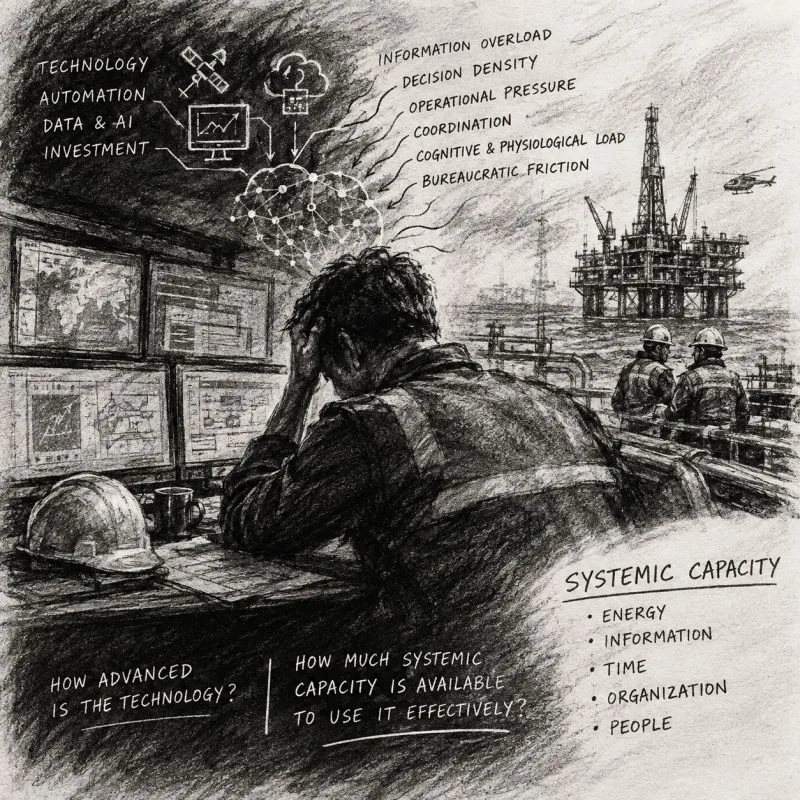
En Oil & Gas y otras operaciones complejas, más tecnología no garantiza mejores decisiones: esta pieza estudia la capacidad sistémica, lo que un sistema puede absorber y convertir en acción bajo presión.

NOTA-ECO-003 · Economía 5.0
Frankenstein y el petróleo: ¿por qué Venezuela vuelve a importar geopolíticamente?
Tercera entrega de la serie: tras el paso del capital a la IA y a la concentración financiera, llega el siguiente cuello de botella, el petróleo, y con él Venezuela vuelve al tablero geopolítico.