

Economia 5.0 · NOTA-ECO-011
Venezuela 1999-2026: come siamo arrivati fin qui
Di Carlos J. Pérez Pulido · ISHEA Institute ·
Un percorso dall'inizio dell'era Chávez, quando il Venezuela disponeva di riserve petrolifere straordinarie, fino al 2026: la catena di decisioni che spiega il Paese di oggi.
Nota divulgativa — Testo breve pubblicato in aperto. Pensiero in corso, non risultato.
Opera originale in inglese.
🇻🇪 VENEZUELA 1999 → 2026
HOW DID WE GET HERE?
To understand Venezuela in 2026, you have to go back to 1999.
At the beginning of the Chávez era, Venezuela had something extraordinary:
Oil reserves + production capacity + technical talent + infrastructure + access to international markets.
The country did not lack resources.
It had a system capable of converting those resources into cash flow.
Then the model changed.
PDVSA stopped being treated primarily as an energy company and increasingly became an instrument for broader state objectives.
The argument was simple:
“The oil belongs to the people.”
And politically, it was powerful.
But economically, something was missed:
Owning the resource and managing the system that extracts it are two different things.
The consequences accumulated over time.
📉 Production capacity deteriorated.
📉 Investment and maintenance weakened.
📉 Technical talent was lost.
📉 Refining capacity deteriorated.
📉 PDVSA accumulated increasing fiscal and political responsibilities.
And eventually:
~3 million bpd → ~500,000 bpd
The oil did not disappear.
The capacity to monetize it did.
Now jump to 2026.
Venezuela still has approximately 303 billion barrels of proved crude oil reserves — the largest proven reserve base in the world.
And this creates the paradox:
🇻🇪 1999: Venezuela had the resource AND the machinery to monetize it.
🇻🇪 2026: Venezuela still has the resource — but needs to rebuild the machinery.
That is why today's geopolitical story is not simply about Venezuela's weakness.
It is about the enormous strategic value of rebuilding what was lost.
The country did not lose its oil.
It lost the system that transformed oil into power.
And that system can be rebuilt.
VENEZUELA’S LEVERAGE
Reserves → Investment → Production → Energy security → Geopolitical leverage.
The question for 2026 is no longer:
“What happened to Venezuela?”
It is:
“Who will help Venezuela convert what survived into what the world needs?”
🇻🇪 The story is not over.
#continue next post
#Venezuela #PDVSA #Oil #Energy #Geopolitics #Venezuela2026 #VenezuelaLeverage
Nella stessa sala — Economia 5.0

NOTA-ECO-001 · Economia 5.0
E se le variabili con cui misuriamo il successo dei Paesi fossero del tutto capovolte?
Da decenni il progresso si misura con PIL, produttività, crescita ed energia. Questo testo sostiene che quelle variabili potrebbero essere capovolte e invita a ripensare che cosa significhi, per un Paese, prosperare.
NOTA-ECO-002 · Economia 5.0
Perché l’alta ingegneria sbaglia proprio quando la tecnologia è più avanzata?
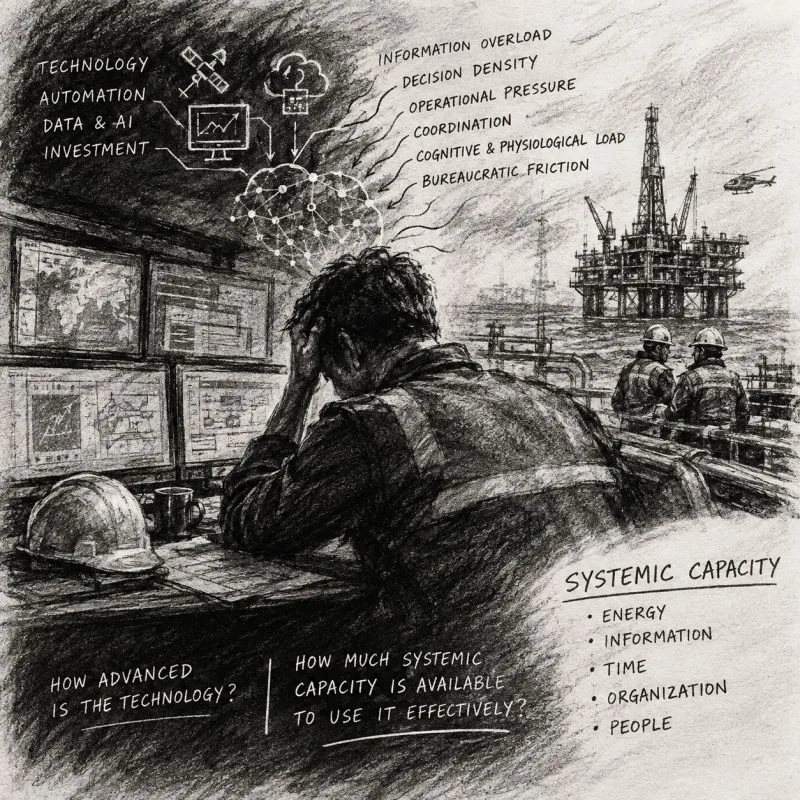
Nell’Oil & Gas e in altre operazioni complesse, più tecnologia non garantisce decisioni migliori: questo testo indaga la capacità sistemica, quanto un sistema sa assorbire e tradurre in azione sotto pressione.

NOTA-ECO-003 · Economia 5.0
Frankenstein e il petrolio: perché il Venezuela torna a contare nella geopolitica?
Terza puntata della serie: dopo il passaggio dal capitale all'IA e alla concentrazione finanziaria, emerge il nuovo collo di bottiglia, il petrolio, e con esso il Venezuela torna sullo scacchiere geopolitico.