

Economía 5.0 · NOTA-ECO-087
Venezuela: de la tormenta política al desafío ecológico
Por Carlos J. Pérez Pulido · ISHEA Institute ·
Análisis de la barrera estructural que frena la inversión en Venezuela: no solo pesan la política y las sanciones, también un pasivo ambiental que condiciona cualquier reconstrucción económica.
Nota de divulgación — Escrito breve publicado en abierto. Pensamiento en curso, no resultado.
Pieza original en inglés.
🇻🇪 #Venezuela: From Political Storm to Ecological Challenge
Source: Bloomberg Línea
Venezuela faces a structural barrier to investment — not only due to political and sanctions-related factors, but also because of managerial, environmental, and reputational risk.
Yet every systemic crisis has two sides.
📉 Causes and Consequences
Regulatory uncertainty and weak environmental institutions
Reputational risk for international investors
Lack of verifiable ESG standards
Result: less capital → lower production → higher systemic fragility.
Strategic projects remain stalled, financing costs rise, sustainable investment is excluded, and structural trust erodes.
🌱 The Other Side: Opportunity
Fixing isolated problems does not save an economy.
Protecting long-term productive capacity does.
Venezuela holds exceptional natural resources, real energy potential, and the capacity for productive reconversion. With verifiable environmental governance, clear metrics, and operational transparency, the country could turn risk into competitive advantage — accessing green finance, ESG capital, and modernizing production sustainably.
🚀 Strategic Pathways
Integrate real ESG criteria (not cosmetic compliance)
Reduce managerial risk through clear, stable rules
Use ecological transition as a productive lever
Rebuild trust through coherence, data, and systemic governance
🔚 Closing — ISHEA Perspective
Capital does not flee risk.
It flees improvisation.
From an ISHEA systemic view, resilience emerges when a system can self-organize and align energy flows, trust, and regulation. An ecological transition integrated with governance and transparency is not an ideological choice — it is a strategic opportunity to attract responsible capital, rebuild stability, and generate adaptive capacity.
The key is to allow talent, capital, and resources to flow coherently toward sustainable outcomes — protecting the goose that lays the golden eggs and ensuring long-term production.
#VenezuelaPower #GreenFinance #ESG #ReputationalRisk #SystemsThinking
#SystemicEconomics #Resilience #ISHEA #Kmodel
En la misma sala — Economía 5.0

NOTA-ECO-001 · Economía 5.0
¿Y si las variables con las que medimos el éxito de los países estuvieran al revés?
Durante décadas el progreso se ha medido con PIB, productividad, crecimiento y energía. Esta pieza plantea que esas variables podrían estar invertidas y pide repensar qué significa que un país prospere.
NOTA-ECO-002 · Economía 5.0
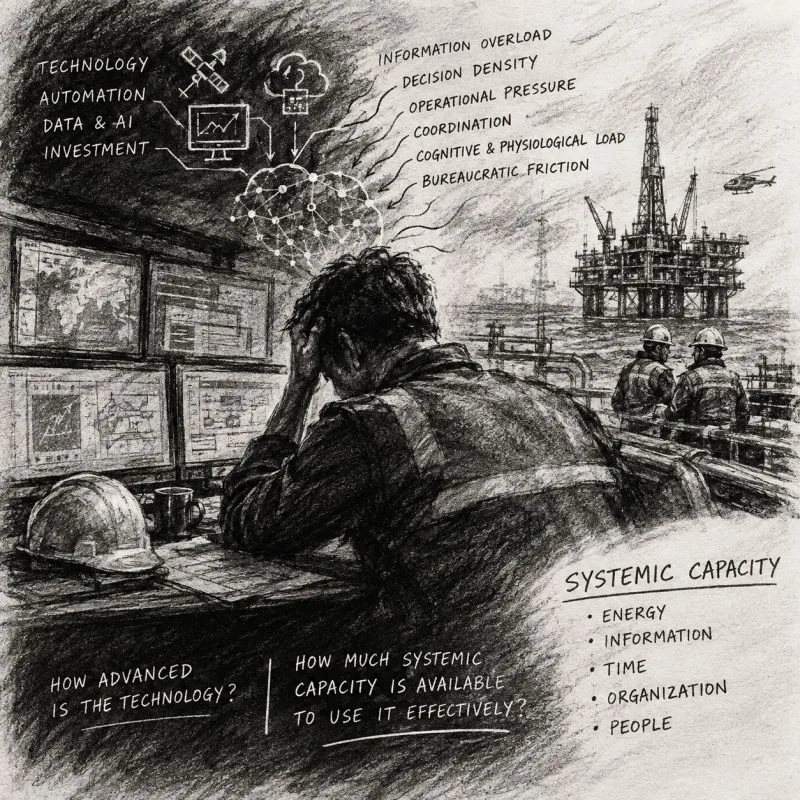
¿Por qué fallan los sistemas de alta ingeniería cuando la tecnología es más avanzada?
En Oil & Gas y otras operaciones complejas, más tecnología no garantiza mejores decisiones: esta pieza estudia la capacidad sistémica, lo que un sistema puede absorber y convertir en acción bajo presión.
NOTA-ECO-003 · Economía 5.0
Frankenstein y el petróleo: ¿por qué Venezuela vuelve a importar geopolíticamente?
Tercera entrega de la serie: tras el paso del capital a la IA y a la concentración financiera, llega el siguiente cuello de botella, el petróleo, y con él Venezuela vuelve al tablero geopolítico.