

Economía 5.0 · NOTA-ECO-088
Jobless Growth 2025: no faltan empleos, cambia la economía
Por Carlos J. Pérez Pulido · ISHEA Institute ·
El PIB crece cerca del 5 % mientras el empleo formal se estanca. La pieza explica por qué esa paradoja no señala escasez de trabajo, sino una economía en plena transición estructural.
Nota de divulgación — Escrito breve publicado en abierto. Pensamiento en curso, no resultado.
Pieza original en inglés.
📊 JOBLESS GROWTH 2025: IT’S NOT A LACK OF JOBS, IT’S AN ECONOMY IN TRANSITION
In 2025 we observed an apparent paradox:
📈 GDP growing near 5%
📉 Formal job creation historically weak
The mainstream explanation points to AI and productivity gains.
My conclusion is different (and perhaps more uncomfortable):
👉 The problem is not the absence of work, but a partially invisible economy.
In a working paper published by ISHEA Institute, I show that 45–55% of the labor gap can be explained by a digital economy that escapes traditional metrics:
Fragmented self-employment
Platform work & the creator economy
Cross-border freelancing
Digital goods and services production
Intangible consumption (Gen Z: services, experiences, subscriptions)
Jobs are not disappearing.
👉 They are redistributed, fragmented, and temporarily externalized, while 20th-century metrics try to measure a 21st-century economy.
📌 Key takeaway
We are not witnessing the end of employment, but a phase of economic transition in which new forms of work are being gradually and asymmetrically absorbed by statistical, fiscal, and institutional systems.
AI matters, yes.
But the real gap is structural and statistical, not productive.
🔍 Rethinking how we measure jobs and economic growth is no longer optional: it’s a precondition for designing realistic economic policies.
—
Carlos Pérez Pulido
ISHEA Institute – Economía 5.0
#JoblessGrowth #DigitalEconomy #FutureOfWork #AI #Macroeconomics #ISHEA #Policy #Economy5_0 #kmodel
En la misma sala — Economía 5.0

NOTA-ECO-001 · Economía 5.0
¿Y si las variables con las que medimos el éxito de los países estuvieran al revés?
Durante décadas el progreso se ha medido con PIB, productividad, crecimiento y energía. Esta pieza plantea que esas variables podrían estar invertidas y pide repensar qué significa que un país prospere.
NOTA-ECO-002 · Economía 5.0
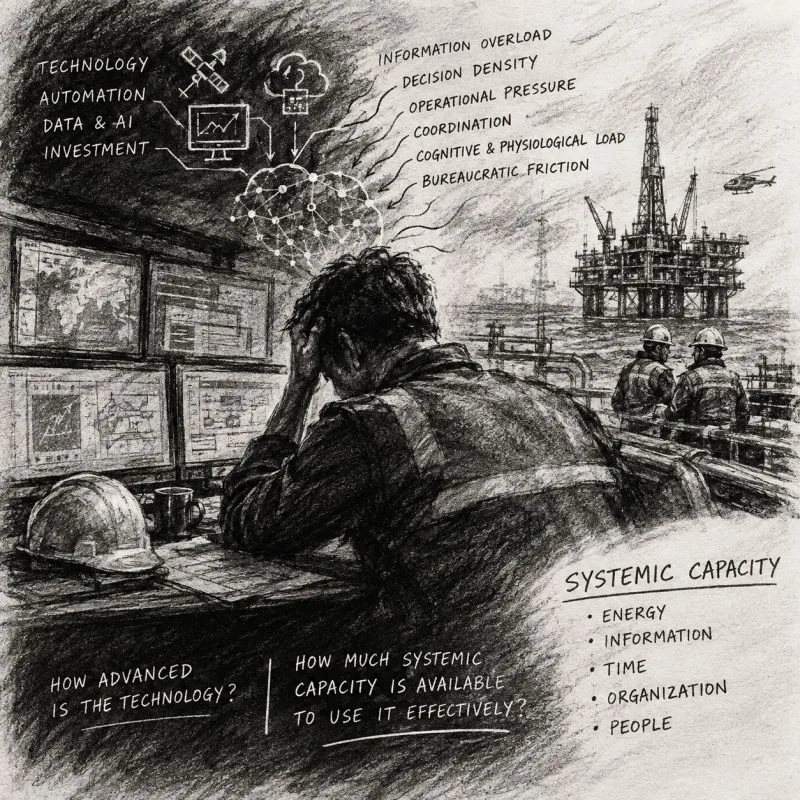
¿Por qué fallan los sistemas de alta ingeniería cuando la tecnología es más avanzada?
En Oil & Gas y otras operaciones complejas, más tecnología no garantiza mejores decisiones: esta pieza estudia la capacidad sistémica, lo que un sistema puede absorber y convertir en acción bajo presión.

NOTA-ECO-003 · Economía 5.0
Frankenstein y el petróleo: ¿por qué Venezuela vuelve a importar geopolíticamente?
Tercera entrega de la serie: tras el paso del capital a la IA y a la concentración financiera, llega el siguiente cuello de botella, el petróleo, y con él Venezuela vuelve al tablero geopolítico.