

Sistemi planetari · NOTA-PLA-008
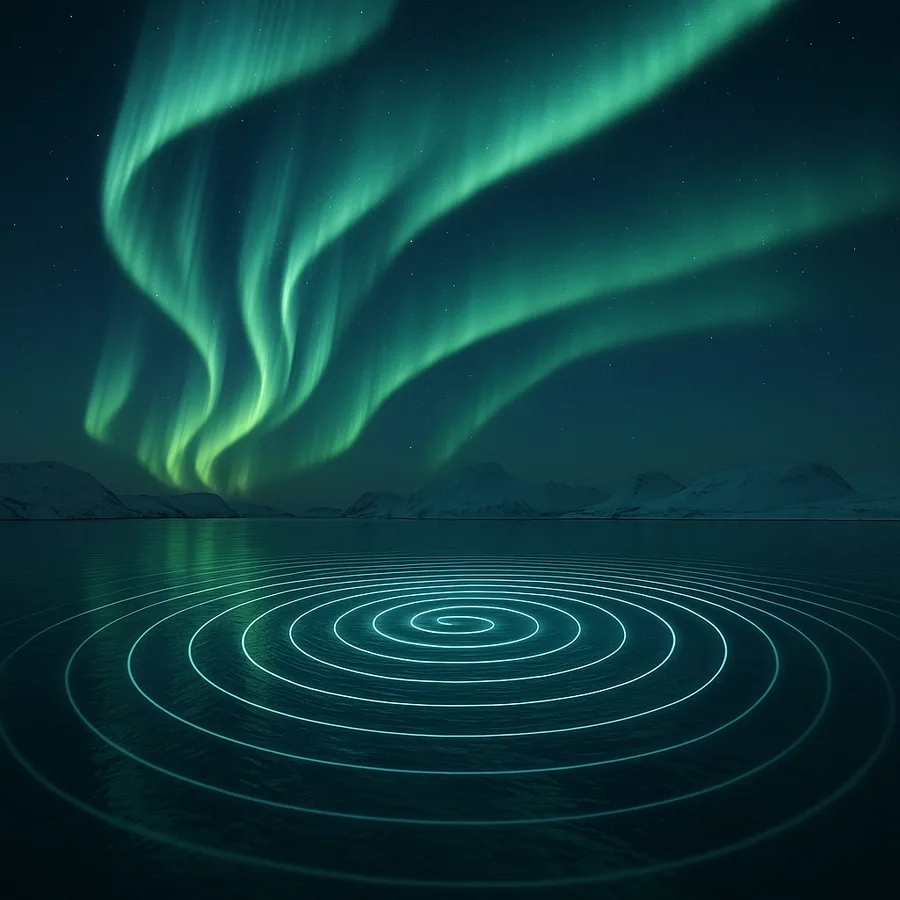
L'aurora boreale: il flusso planetario reso visibile (Cap. II)
Di Carlos J. Pérez Pulido · ISHEA Institute ·
Secondo capitolo della serie sul flusso planetario: l'aurora non è soltanto bella, è la prova visibile che la Terra incanala energia, e questo cambia il modo di leggere il clima.
Nota divulgativa — Testo breve pubblicato in aperto. Pensiero in corso, non risultato.
Opera originale in inglese.
🌌 La Aurora Boreal: the visible Planetary Flow . Cap-II
>Last night I saw the Northern Lights.
And I understood something that changes everything.
The aurora isn't just "beautiful."
It's the visible signature of something deeper:
→ The planet solving an energy problem
we want to "fix" with geoengineering.
After analyzing 26 years of satellite data,
we found the proof:
💡 The aurora proves the problem ISN'T the Sun.
It's that we don't know how to read what the planet tells us.
🔬 The data (NOAA-15/19, GOES, CSES):
Over the next 50 years we'll see more auroras.
✅ Reason: Gleissberg Cycle (solar maximum)
But here's what's fascinating:
✨ Solar particles → enter in CONTROLLED manner
✨ Magnetosphere → CHANNELS them without chaos
✨ Energy → DISSIPATES harmoniously
✨ Result → visible light (the aurora)
If the system failed, we'd see:
❌ Uncontrolled ionization
❌ Persistent atmospheric damage
❌ Irreversible chemical alterations
But it DOESN'T happen.
Instead: ordered, safe, efficient flow.
📊 Numbers that don't lie:
⚡ Proton flux dominates perturbations (r=0.87)
⚡ Correlation with biological processes (r=0.92)
⚡ System stable even with 50% higher energy
🎨 The geoengineering problem:
*Blocking solar radiation =Painting over a canvas without understanding it
Real risks:
⚠️ Eliminating natural energy dissipation pathways
⚠️ Accumulating energy in unprepared systems
⚠️ Inducing permanent imbalances
💰 The comparison no one shows you (2025-2075):
🔴 Solar Geoengineering:
💸 Cost: $750 billion
⚡ Efficiency: 25%
☠️ Risk: EXTREME
📉 ROI: - negative C~
🟢 Ecosystem Restoration:
💸 Cost: $300 billion
⚡ Efficiency: 95%
🛡️ Risk: LOW
📈 ROI: +positive AA+
🌍 The hardest data point:
Nature: 4,500,000,000 years optimizing efficiency
Humans: 200 years operating at 25%
🤔 And we want to "teach" the planet how to manage energy.
The Northern Lights show us the way every night.
The question is: are we watching 👀?
🎯 If you made it this far, do this:
1️⃣ Save this post → You'll need it
2️⃣ Tag 1 person who should read this
3️⃣ Comment "FLOW" if you want access to the complete paper
(with replicable methodology + 26 years of data)
All of this is documented and available for peer validation:
📄 https://lnkd.in/dAfydxXQ
📅 Next week:
How the Gleissberg Cycle can be our
greatest OPPORTUNITY (not threat) if we learn
to read what the planet tells us.
#ClimateScience #PlanetaryScience #EcosystemRestoration
#Geoengineering #SolarCycles #ISHEA #NorthernLights #ISHEABIO
#Aurora #SustainabilityScience #Fl
Nella stessa sala — Sistemi planetari
NOTA-PLA-001 · Sistemi planetari
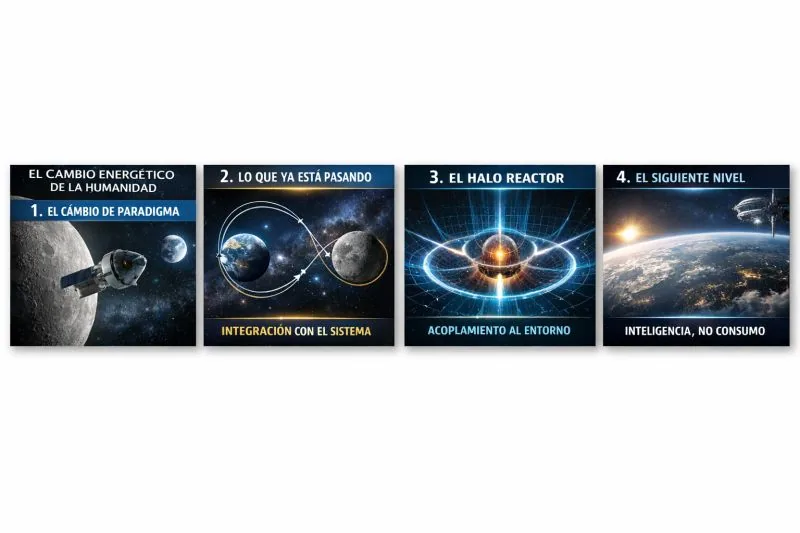
3/4. L'HALO Reactor non è un reattore
Terza parte della serie: l'HALO Reactor non brucia né consuma combustibile. Il testo smonta l'idea classica di reattore per descrivere un sistema che organizza l'energia invece di consumarla.
NOTA-PLA-002 · Sistemi planetari
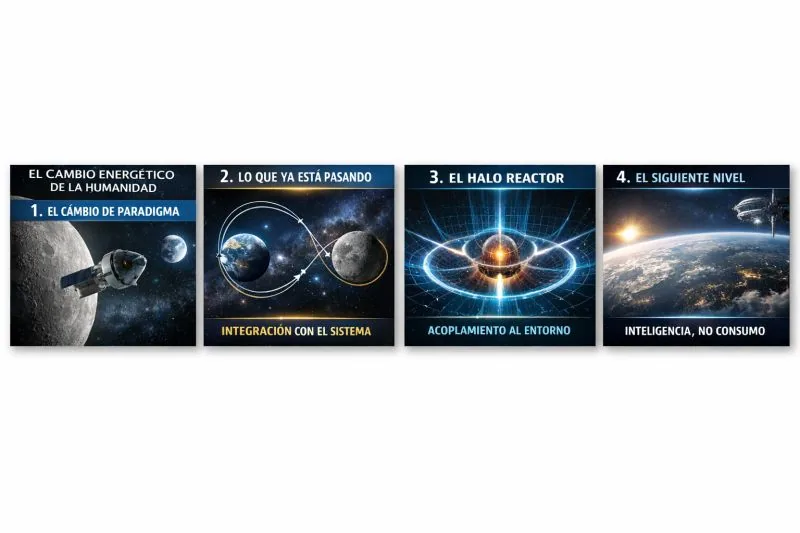
Energia coerente: da Artemis a HALO
Non è una storia sui razzi, ma sul principio invisibile che la natura usa per sostenere i sistemi complessi e che oggi ridefinisce la progettazione di missioni e macchine.
SN-PLA-003 · Sistemi planetari
Integrazione dei flussi energetici planetari, cicli solari e dinamiche dei biosistemi
L'indice di flusso energetico planetario collega cicli solari, chimica stratosferica e bioenergetica nel quadro HALO, offrendo un ponte riproducibile tra scienza planetaria e biologica