

Economia 5.0 · NOTA-ECO-097
Transizione e tempo: le chiavi del processo venezuelano
Di Carlos J. Pérez Pulido · ISHEA Institute ·
Due forze governano oggi il Venezuela: la transizione e il tempo. Il pezzo le distingue per spiegare perché, senza di esse, leggere il processo politico diventa un esercizio di pura congettura.
Nota divulgativa — Testo breve pubblicato in aperto. Pensiero in corso, non risultato.
Opera originale in inglese.
🔑 Transition and Time: The Keys to Venezuela’s Process
Today in Venezuela, two forces shape everything: transition and time
Understanding them isn’t optional—it’s the difference between seeing collapse as an end…or as a phase of systemic reorganization.
🔄 What Is Transition?
Transition is the movement from one state to another.
It doesn’t happen instantly, but through a gradual transformation—where a system sheds one form to reorganize into another.
This is universal:
⚡ Energy transition: energy transforms; it isn’t destroyed.
🌱 Ecological transition: ecosystems recycle matter and energy in interconnected cycles.
🧠 Complex systems: every transition sends ripples—cascading effects that unfold over time.
Intervening without understanding these cycles deepens harm instead of healing it.
🐛 The Caterpillar Metaphor: Cycles, Time, and Perspective
The caterpillar consumes until it becomes a chrysalis.
From the outside, it looks like destruction.
From within, it’s preparation.
Then the butterfly emerges 🦋—
pollinating, regenerating, restoring balance.
Even the chrysalis leaves something behind: silk.
Each phase has its own rhythm. The full cycle is their sum.
And as Einstein reminded us: "time is relative to the observer"⏳.
🔁 Time as Cycles—Not a Straight Line
Seeing time as cycles—not a rigid line—builds resilience.
Every actor lives in a different time:
🐛 For the caterpillar: growth and consumption.
🌿 For the plants: crisis—and unwitting contribution to renewal.
🦋 For the butterfly: emergence; the past dissolved into purpose.
👥 For humanity:
— The caterpillar is a plague
— The chrysalis is raw material
— The butterfly is equilibrium
Each perception shapes—and is shaped by—the observer’s place in the cycle.
🧭 Time Is Relative
Time isn’t absolute.
It depends on where you stand—and what’s at stake.
For some, time is eternal.
For others, strategic.
For many, unbearable.
🇻🇪 Venezuela’s Transition: Multiple Views, Multiple Timelines
There is no single way to understand Venezuela’s transition.
It’s never the same to observe it from:
🏛️ Washington
🏢 Miraflores
🚶 The streets of Venezuela.
Even within the opposition, timelines, priorities, and interpretations diverge deeply.
🧠 Conclusion – ISHEA Vision:
Venezuela is in transition. Not as a political slogan—but as a systemic reality.
The real challenge isn’t to force change, but to:
✔️ Recognize which phase of the cycle we’re in
✔️ Respect the natural timing of the process
✔️ Accept that destruction and regeneration can be two faces of the same transformation
The caterpillar, the chrysalis, and the butterfly are not separate beings.
They are one essence in different states.
🦋 This is not the “butterfly effect”—a random ripple in chaos.
This is structural metamorphosis: a deliberate shift in state, born from necessary dissolution.
#ISHEA #ISHEBio #SystemsThinking #VenezuelaPower 🇻🇪 #Resilience
Nella stessa sala — Economia 5.0
NOTA-ECO-001 · Economia 5.0
E se le variabili con cui misuriamo il successo dei Paesi fossero del tutto capovolte?
Da decenni il progresso si misura con PIL, produttività, crescita ed energia. Questo testo sostiene che quelle variabili potrebbero essere capovolte e invita a ripensare che cosa significhi, per un Paese, prosperare.
NOTA-ECO-002 · Economia 5.0
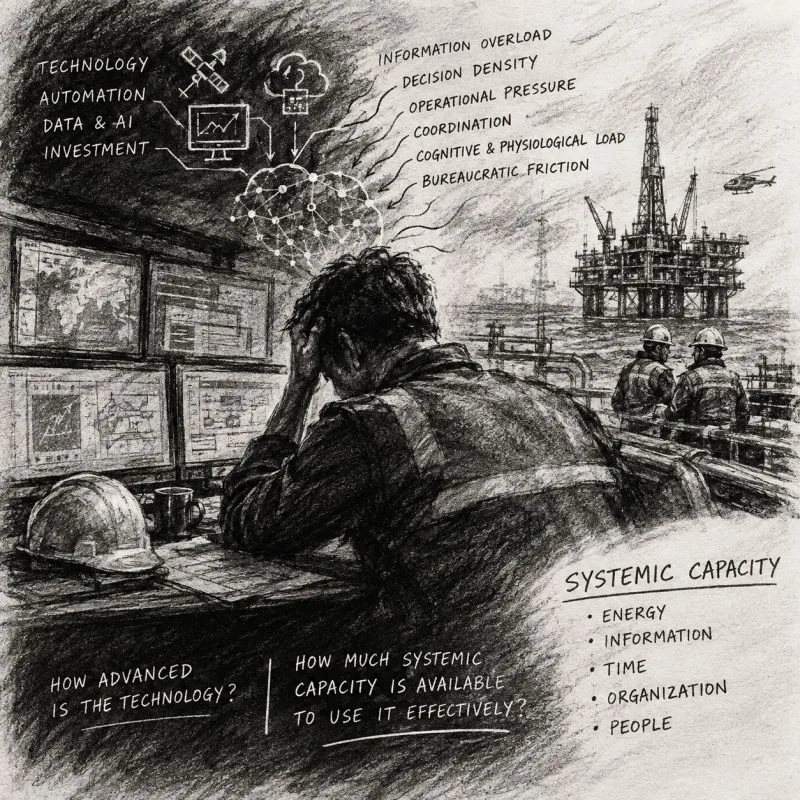
Perché l’alta ingegneria sbaglia proprio quando la tecnologia è più avanzata?
Nell’Oil & Gas e in altre operazioni complesse, più tecnologia non garantisce decisioni migliori: questo testo indaga la capacità sistemica, quanto un sistema sa assorbire e tradurre in azione sotto pressione.
NOTA-ECO-003 · Economia 5.0
Frankenstein e il petrolio: perché il Venezuela torna a contare nella geopolitica?
Terza puntata della serie: dopo il passaggio dal capitale all'IA e alla concentrazione finanziaria, emerge il nuovo collo di bottiglia, il petrolio, e con esso il Venezuela torna sullo scacchiere geopolitico.