

Bioenergetics · OSF-BIO-143
ATP as the biological currency of collective cognition
By Carlos J. Pérez Pulido · ISHEA Institute ·
A reading of ATP not merely as a unit of cellular energy but as the unit of exchange that sustains shared thought and the bioenergetic coherence of human groups.
Preprint — Manuscript deposited on OSF. Not peer-reviewed.

We demonstrate that adenosine triphosphate (ATP) is a quantifiable biological substrate of systemic cognitive capacity. Within the ISHEA–KTR–TACC–IHC framework, ATP efficiency serves as a direct proxy for the health of knowledge-processing ecosystems. Using preregistered analyses (OSF: 10.17605/OSF.IO/WST24) and global data (n = 89 countries, 2015–2024), we show that chronic cognitive tension (high TACC) dysregulates mitochondrial function—manifesting as obesity, cancer mortality, and suicide—while successful knowledge processing (high K-Flow) preserves ATP homeostasis. Comparative analysis of Argentina (low K/T/R) and Australia (high K/T/R) reveals that, despite similar ATP stress, only high-K systems exhibit declining mortality and rising resilience. Sobol sensitivity analysis confirms ATP proxies explain 35.2% of variance in IHC—exceeding GDP. This work establishes ATP as a limiting energetic substrate of collective cognition, validated across six biological levels (The Economist, 2024) and measurable via open-data indicators.
In the same room — Bioenergetics
NOTA-BIO-001 · Bioenergetics
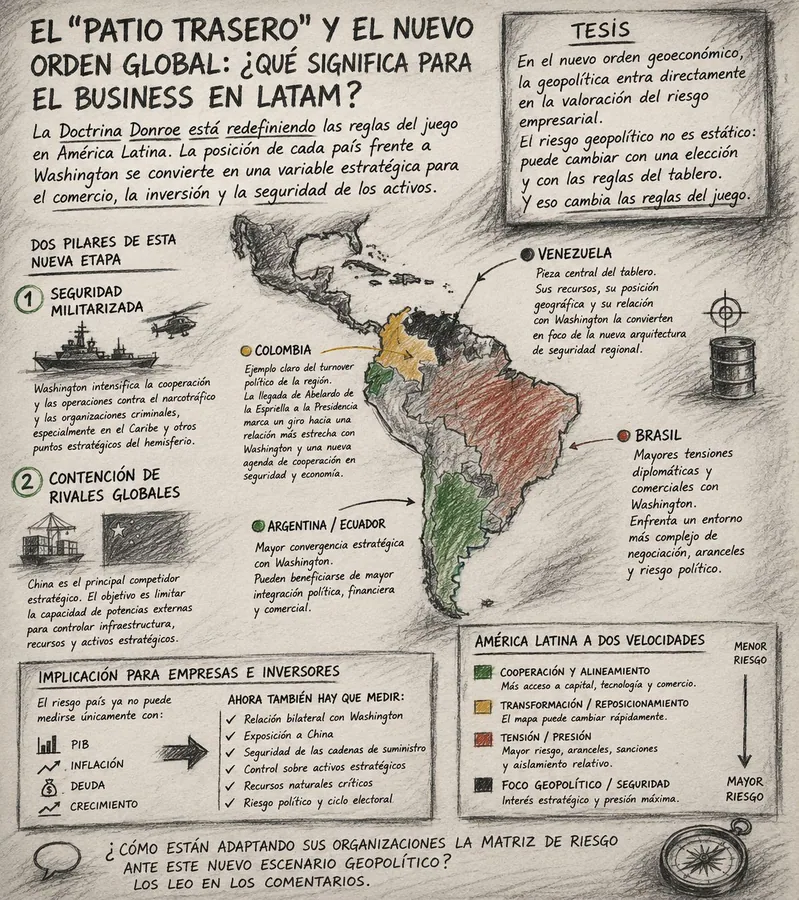
The “Backyard” and the New Global Order: What Does It Mean for the Business Plan in LatAm?
An analysis of how the so-called Donroe Doctrine has turned the “backyard” metaphor into explicit policy, and what that shift means for any business plan built for Latin America.

NOTA-BIO-002 · Bioenergetics
Why do the most efficient workers slow down midway through the workday?
For operations directors and logistics managers: a bioenergetic reading of why top performers lose productivity midway through the workday, a pattern many see and few explain.
NOTA-BIO-003 · Bioenergetics
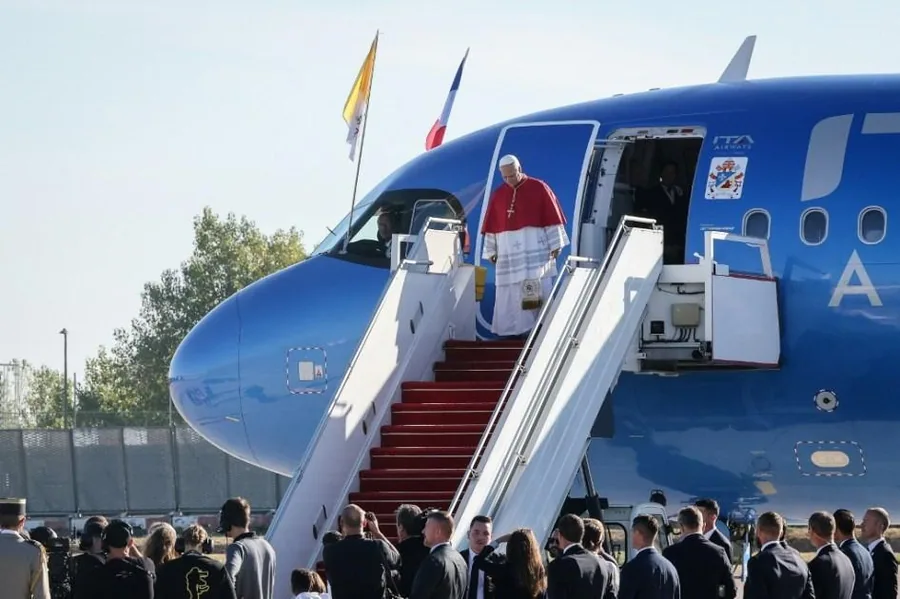
Threat or opportunity? Artificial intelligence and our creative capacity
Responding to Pope Leo XIV’s call to “disarm AI”, this piece argues that the risk lies not in the technology but in the human system using it: well designed, AI can free up creative capacity.