OSF-BIO-001 · Bioenergetics
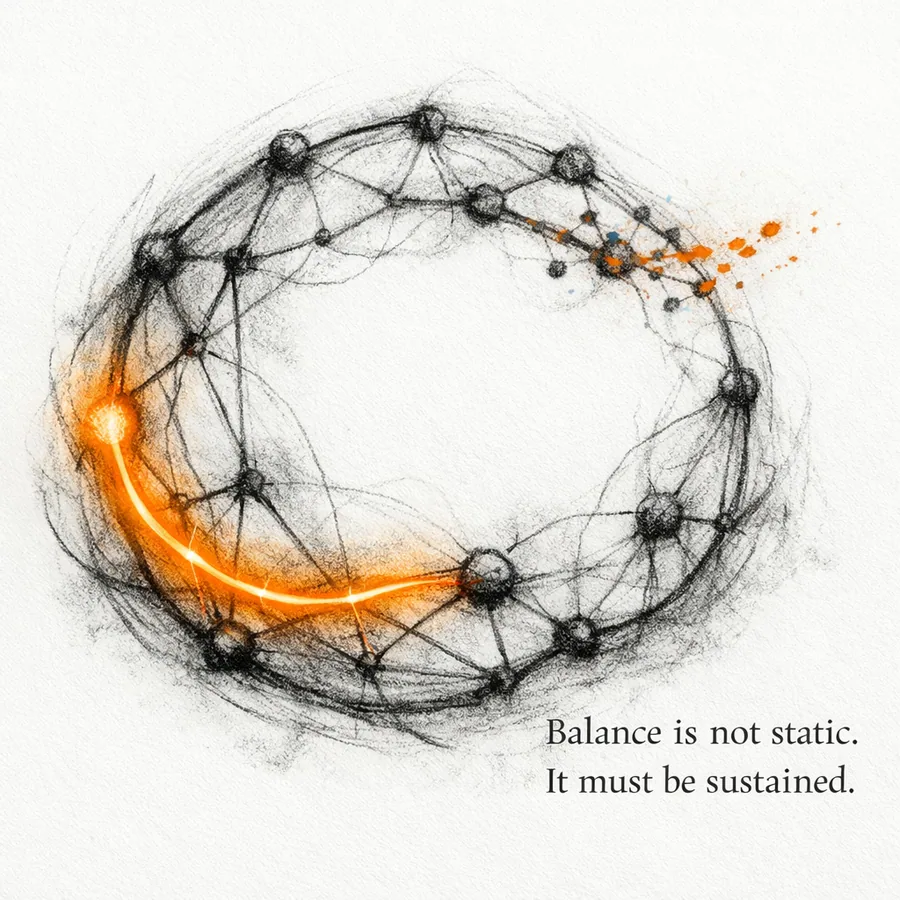
Technical report and visual archive tracing one year of the ISHEA Δ±1 framework: from a 2025 Nature Conference poster in South Korea to its computational formalization with NAD+, ROS and ATP.
OSF-BIO-002 · Bioenergetics
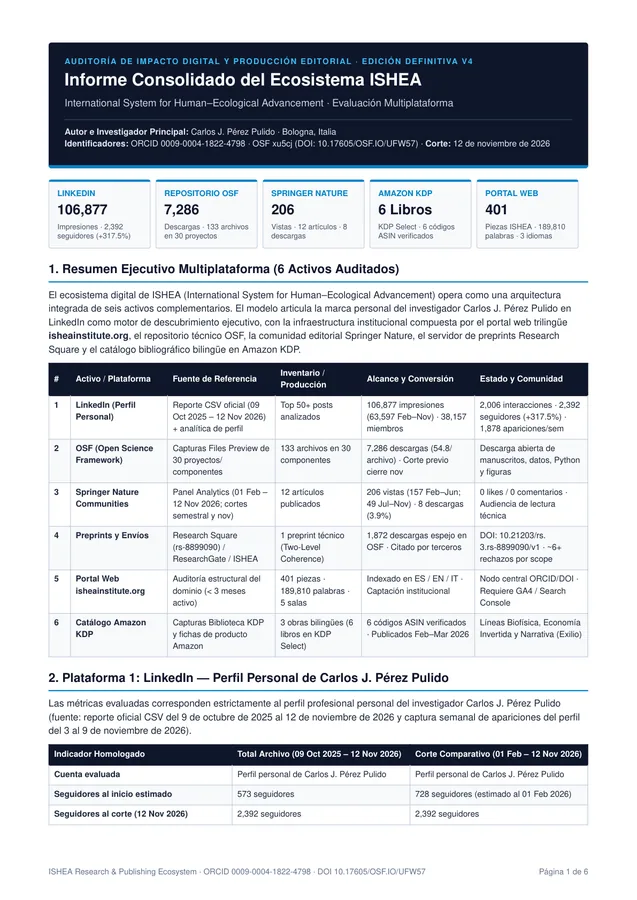
Report v4.1 measuring the reach of six ISHEA dissemination channels, from LinkedIn to OSF, with 106,877 impressions and 7,286 downloads. It shows how far its open-science infrastructure has matured.
SN-ECO-001 · Economy 5.0
The next step in the circular economy is not recovering more but designing to lose less. Economy 5.0 joins Digital Twins, biophysical management, circular design and sustainable finance to preserve systemic value.
OSF-COG-001 · Collective cognition
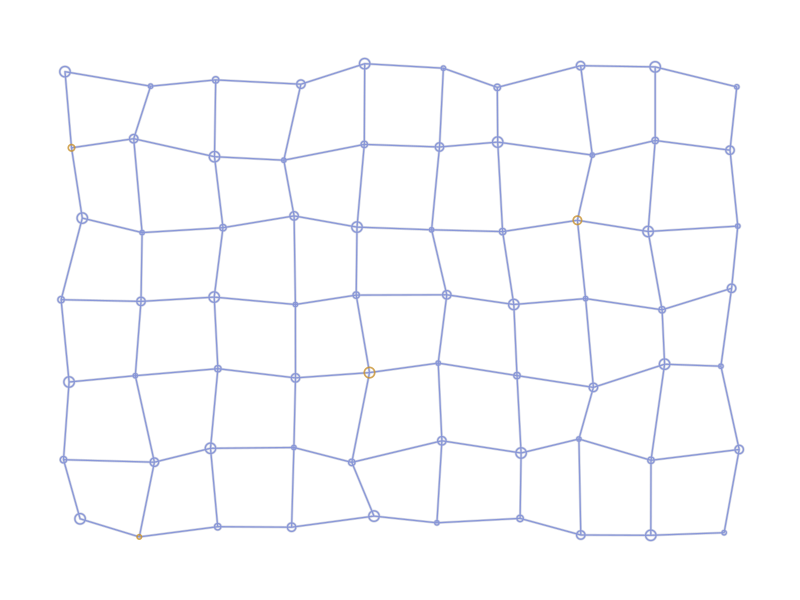
A conceptual essay that treats energy, information and friction as three intertwined dimensions of how systems organize. It frames systemic coherence as an open question, without claiming a universal law.
SN-ECO-002 · Economy 5.0
ISHEA's proposal for Economy 5.0: a human-centred economic framework that looks past energy, carbon and efficiency to systemic coherence, human capabilities and the capacity of economies to adapt and endure.
SN-COG-002 · Collective cognition
An exploratory study that introduces Biophysical Management (BPM) through a European logistics case, showing how biological energy, task design, rewards and systemic friction shape efficiency and worker behavior.
OSF-ECO-003 · Economy 5.0
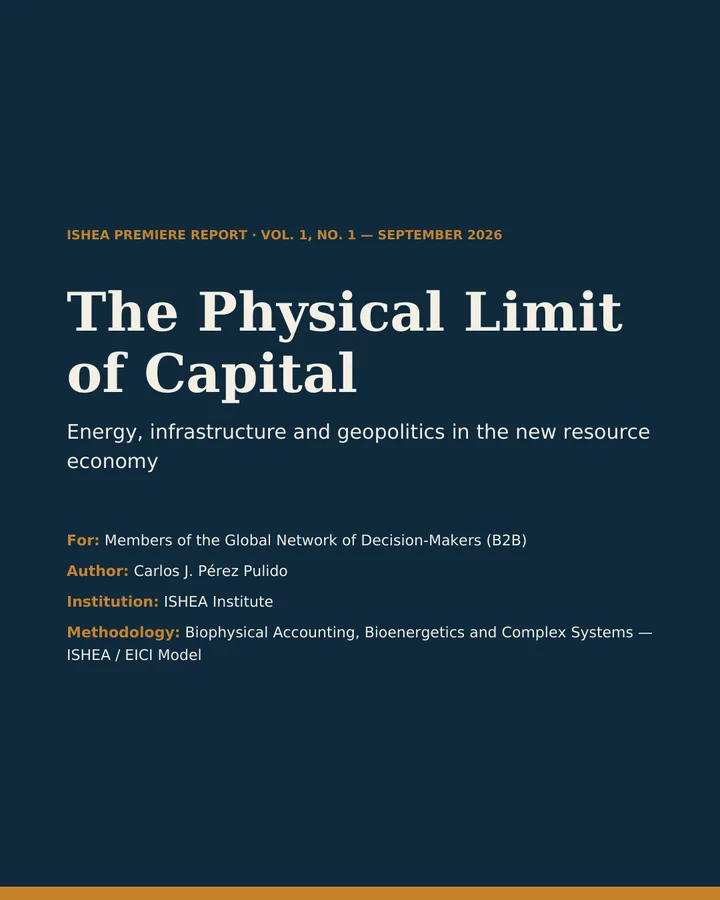
The ISHEA Institute's premiere report examines how AI infrastructure, energy and mineral supply chains and maritime corridors set how much financial capital can become real economic activity.
NOTA-ECO-004 · Economy 5.0
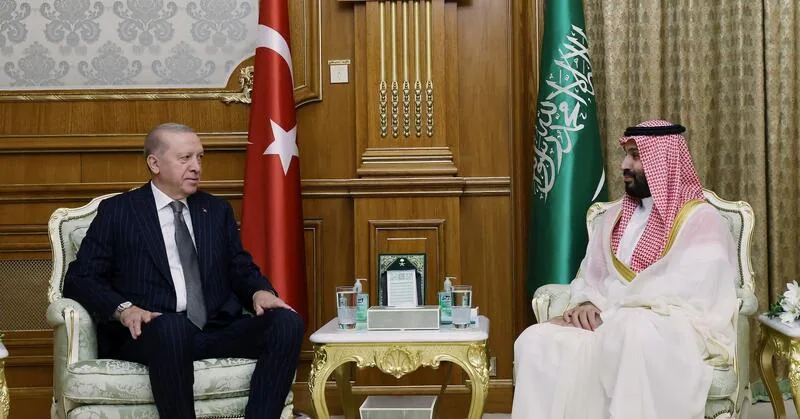
Fourth instalment of the series: after mapping the Latin American board, Carlos J. Pérez Pulido sets LATAM and the Middle East face to face, two seemingly distant regions that are sides of the same coin.
NOTA-BIO-003 · Bioenergetics
Carlos J. Pérez Pulido reflects on the 2026 Nobel Prize in Physiology or Medicine, awarded to Deisseroth, Hegemann and Nagel for optogenetics, and poses a question he intends to put to the test.
NOTA-ECO-005 · Economy 5.0
An ex-president in prison, a former prisoner back in power and the first one's son challenging the second: Brazil's 2026 election read as a script even Netflix would find too far-fetched.
NOTA-BIO-004 · Bioenergetics
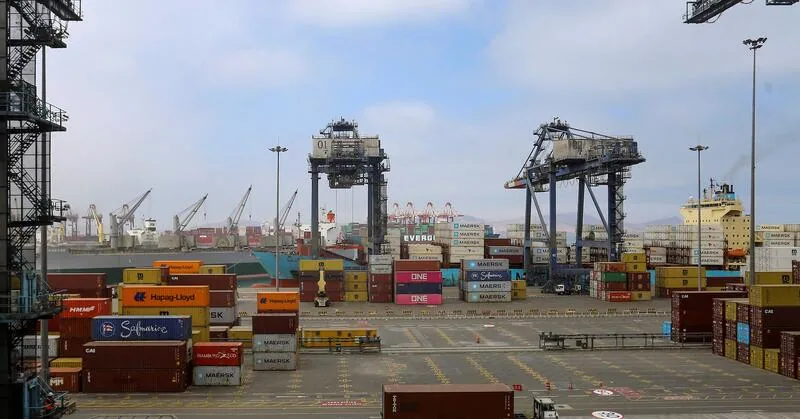
Third installment of the Groundplay series: after the rules and the board, it asks where geopolitical confrontation really takes place and locates it in the port, its concrete ground.
NOTA-ECO-006 · Economy 5.0
Second instalment of a series that reads Latin America as a Go board: Venezuela emerges as the hinge of the new “Shield of the Americas” and of Washington’s shifting strategy in the region.
NOTA-BIO-005 · Bioenergetics
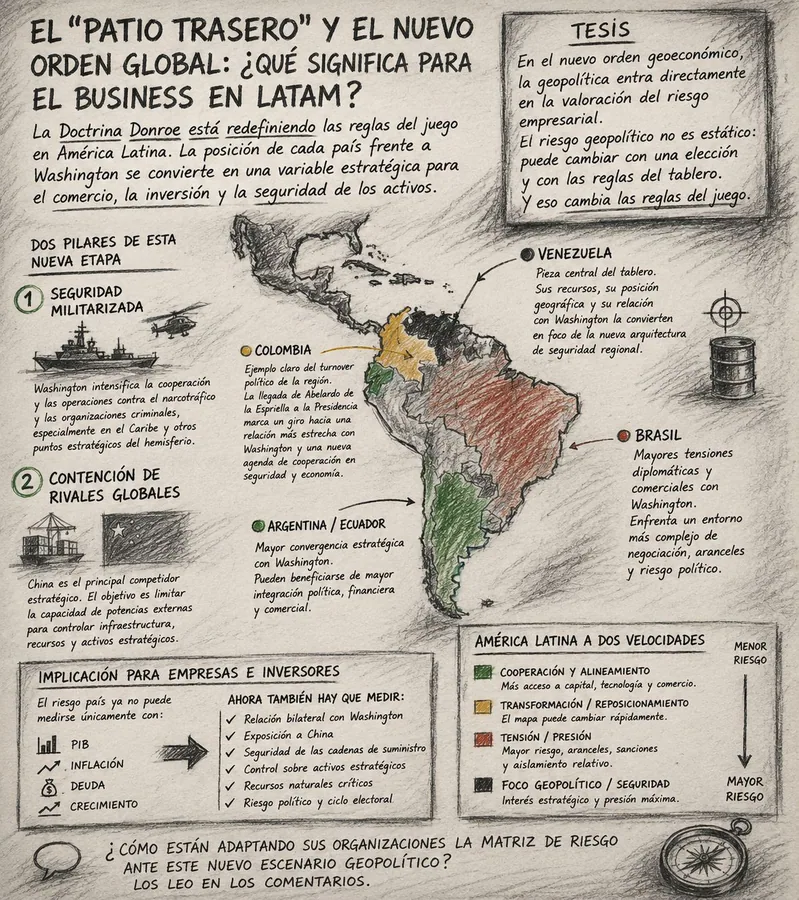
An analysis of how the so-called Donroe Doctrine has turned the “backyard” metaphor into explicit policy, and what that shift means for any business plan built for Latin America.
NOTA-ECO-007 · Economy 5.0
For decades, progress has been measured through GDP, productivity, growth and energy use. This piece argues those variables may be inverted and asks us to rethink what it means for a country to thrive.
NOTA-COG-003 · Collective cognition
A reading of the PISA 2025 results and the signal they send about performance across OECD countries: the suspicion that speeding up learning may end up hollowing it out.
NOTA-BIO-006 · Bioenergetics
For operations directors and logistics managers: a bioenergetic reading of why top performers lose productivity midway through the workday, a pattern many see and few explain.
NOTA-BIO-007 · Bioenergetics
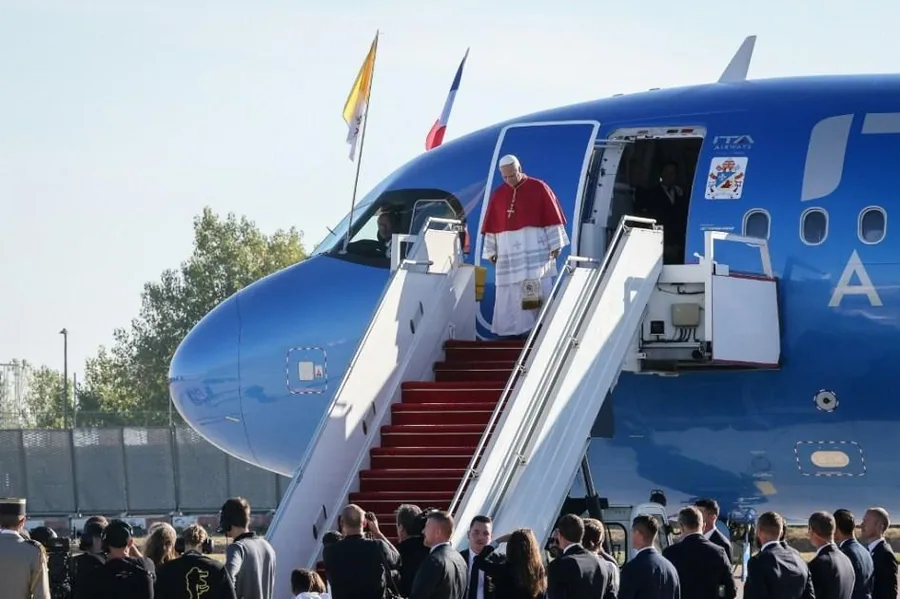
Responding to Pope Leo XIV’s call to “disarm AI”, this piece argues that the risk lies not in the technology but in the human system using it: well designed, AI can free up creative capacity.
NOTA-ECO-008 · Economy 5.0
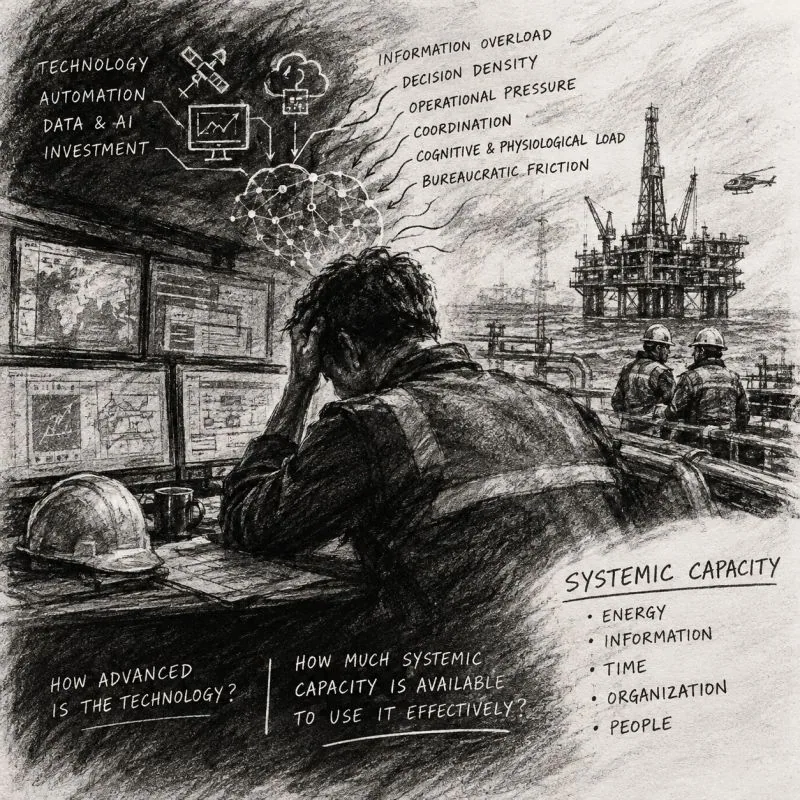
In Oil & Gas and other complex operations, more technology does not guarantee better decisions: this piece examines systemic capacity, how much a system can absorb and turn into action under pressure.
NOTA-ECO-009 · Economy 5.0
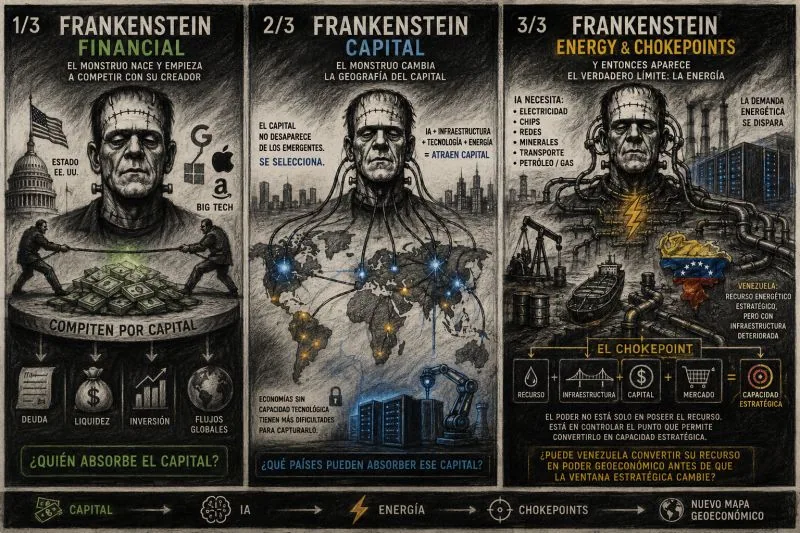
Third installment of the series: after tracing capital into AI and financial concentration, the next bottleneck comes into view, oil, and with it Venezuela returns to the geopolitical board.
NOTA-ECO-010 · Economy 5.0
Second of three parts: the State built the ecosystem that gave birth to Big Tech, and now the creature competes with its creator and redraws the world map of capital.
NOTA-ECO-011 · Economy 5.0
An analysis of the technological, financial and regulatory ecosystem the United States built for Big Tech, and of how those same companies now compete with the state that created them.
NOTA-BIO-008 · Bioenergetics
A reflection on the volatile mix of Gulf oil, Western protection, a new military alliance and an enemy that refuses to disappear, and on the impossible balance that holds the region together.
NOTA-ECO-012 · Economy 5.0
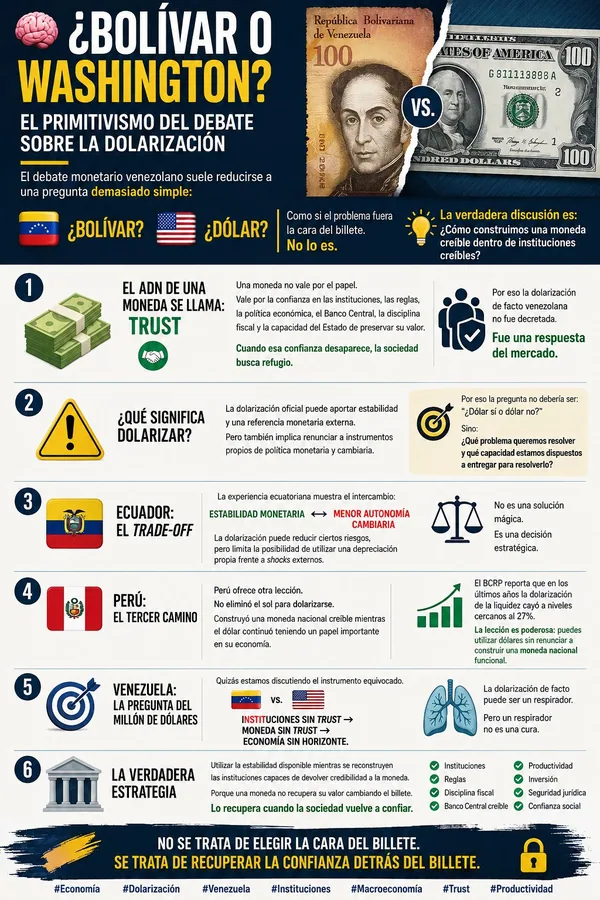
A rereading of Venezuela's monetary debate: the choice between the bolívar and the dollar hides the real issue, which is not the face on the banknote but the institutional architecture behind it.
NOTA-COH-001 · Coherence
A warning to the corporate and political world: storytelling cannot make up for a weak architecture. Without the structural trust that sustains it, any narrative loses its power.