

Bioenergetics · NOTA-BIO-069
China 2025-2035: Food Security as a Vital Risk
By Carlos J. Pérez Pulido · ISHEA Institute ·
The evidence is stark: Beijing treats grain as a pillar of national security, not as a market. An analysis of the minimum reserves and the biophysical limit shaping the decade.
Note — Short piece published openly. Thinking in progress, not a result.
⏳ China 2025–2035: Food Security as a Vital Risk — “Peak of China”
🔎 Clear Evidence
Beijing doesn’t talk efficiency. It talks national security:
• “Fundamental pillar of national security”
• Minimum target: 650M tons of grain
• Maintain long-term stability
> Not export rhetoric. It’s strategic survival.
🌾 1️⃣ Physical Limits (Biophysics in Action — Limit of Humanity)
• Only 12–13% of territory is arable
• ~19% of farmland with significant chemical contamination
• ~40% degraded (erosion, compaction, desertification)
• 25–30% of total territory faces desertification
• Water stress in key agricultural regions
💥 Direct Impact
• Losses ~10 billion kg/year
• Urban compaction reduces yields up to 60%
• China uses 33% of global fertilizers with only 8% of world’s arable land
(Re Soil Foundation, New Security Beat)
> Large territory ≠ large net agricultural capacity
🌍 2️⃣ Growing Dependence
• Self-sufficiency: 94% → ~66%
• Largest global food importer
• 85% of soy imported
• $140–215B/year in food imports
⚠ Structural paradox:
• Higher income → more meat → more soy for animal feed
• More urbanization → less arable land
🛢️ 3️⃣ Energy + Critical Routes
• 60–80% of imported oil passes through Strait of Malacca (Malaysia–Indonesia–Singapore), connecting the Indian Ocean with the South China Sea
• Most imported food also passes here → critical chokepoint, energy & food risk in months (Stratfor, 2022)
• Strategic reserves: 6–12 months
⚡ Beckley–Brands & Danger Zone #Peakchina
Powers with structural ceilings may take higher risks:
• Food dependence
• Ecological degradation
• Water stress
• Energy vulnerability
• Aging rural population
🔹 Taiwan scenario:
• Malacca blockade → limited soy & meat → internal social pressure
• Growing vulnerability window
🧬 Biological Perspective #Biophysics
• Cornered system acts to survive, not rationally
• Tech constraints & pressure accelerate strategic decisions
♟️ Structural Dilemma
• Act → accelerated isolation
• Wait → irreversible deterioration
🎯 Strategic Proposal (#DoubleTrack)
• Gradual pressure + dignified exits
• Productive diversification
• Ordered BRI restructuring
• Energy & food guarantees
• Democratic bloc cohesion
> #Reagan 2.0 logic: strong defense + active diplomacy vs a rival more integrated than the USSR
💡 ISHEA Conclusion
• Systems collapse due to loss of simultaneous energetic coherence, not a single shock
• Options:
1️⃣ Adaptive reorganization → orderly transition
2️⃣ Abrupt release → crisis or conflict
⏯ Menú chino (para ampliar)
LinkedIn – Menú chino
#ISHEA #China #Geopolitics #ChinaFirstRate #Geostrategy #HegemonicTransition #GlobalSystem
#GlobalRisk #InternationalSecurity #Europe #USA #Taiwan #BRI #Nearshoring #Energy #Food #Demographics #ArableLand #BioPhysicsLimitOfHumanity
In the same room — Bioenergetics
NOTA-BIO-001 · Bioenergetics
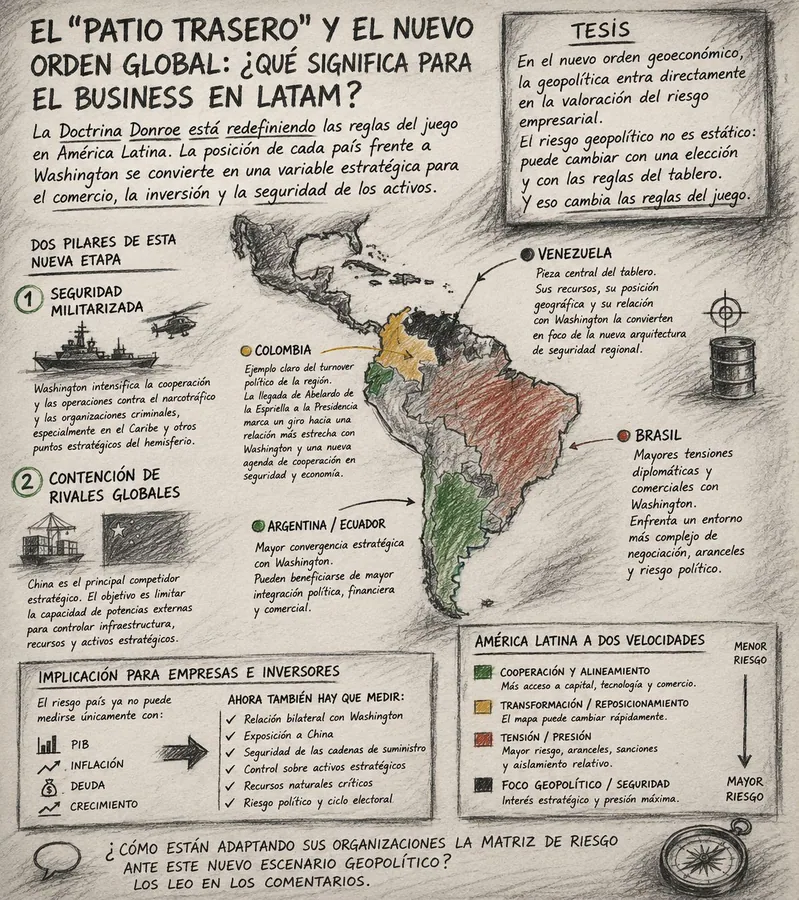
The “Backyard” and the New Global Order: What Does It Mean for the Business Plan in LatAm?
An analysis of how the so-called Donroe Doctrine has turned the “backyard” metaphor into explicit policy, and what that shift means for any business plan built for Latin America.

NOTA-BIO-002 · Bioenergetics
Why do the most efficient workers slow down midway through the workday?
For operations directors and logistics managers: a bioenergetic reading of why top performers lose productivity midway through the workday, a pattern many see and few explain.

NOTA-BIO-003 · Bioenergetics
Threat or opportunity? Artificial intelligence and our creative capacity
Responding to Pope Leo XIV’s call to “disarm AI”, this piece argues that the risk lies not in the technology but in the human system using it: well designed, AI can free up creative capacity.