

Bioenergetics · NOTA-BIO-052
Iran and Hormuz: the myth that dominates global geopolitical reading
By Carlos J. Pérez Pulido · ISHEA Institute ·
Saying that Iran controls Hormuz flattens a far more uncomfortable board. This piece dismantles the cliché and describes who actually sustains passage through the strait.
Note — Short piece published openly. Thinking in progress, not a result.
Original piece in Spanish.
🌍 IRÁN VS ORMUZ: EL MITO QUE DOMINA LA GEOPOLÍTICA GLOBAL
🔍 EL ERROR DE LECTURA GLOBAL
Decir que “Irán controla Ormuz” es una simplificación.
La realidad es más incómoda:
Irán no es un “player sistémico global” en el sentido clásico.
Es un actor de presión en un punto de congestión energética mundial.
__
📍 ORMUZ: NO ES PODER, ES DEPENDENCIA
El Estrecho de Ormuz mueve ~21 millones de barriles diarios.
Pero lo importante no es quién lo controla, sino qué sistema depende de él:
🇸🇦 Arabia Saudita
🇦🇪 Emiratos Árabes Unidos
🇰🇼 Kuwait
🇶🇦 Qatar
🇮🇶 Irak
👉 Esto representa el núcleo energético del sistema global.
Irán, en cambio:
Produce ~3.2 mb/d
Está sancionado
Opera parcialmente fuera del sistema financiero global
Exporta principalmente a China en circuitos paralelos
📉 Resultado:
Irán no es el centro del flujo global, es un flujo paralelo dentro de un sistema que no controla.
⚠️ LA VERDAD ESTRATÉGICA
Irán no puede “cerrar” Ormuz como decisión soberana sostenida.
Porque el impacto no sería solo occidental:
→ Golpearía también a China, India y Asia
→ Activaría coaliciones navales inmediatas
→ Convertiría el conflicto en sistémico global
👉 Por eso el “cierre total” es más narrativa que posibilidad estructural.
🧭 EL PAPEL REAL DE IRÁN
Irán opera en tres niveles:
1. Energía
Exportador sancionado → dependiente de China
2. Geografía
Ubicado sobre el chokepoint más crítico del planeta
3. Estrategia
Capacidad de disrupción asimétrica (no control)
🧩 EL SISTEMA REAL: NO ES IRÁN, ES EL CORREDOR
El verdadero riesgo no es el país.
Es el sistema de flujos:
Ormuz (energía)
Bab el-Mandeb (comercio Asia–Europa)
Suez (redistribución global)
👉 Tres puntos donde el sistema global se vuelve vulnerable.
💥 CONCLUSIÓN ESTRUCTURAL
Irán no es una potencia de control global.
Es un amplificador de riesgo dentro de un sistema altamente interdependiente.
👉 Su poder no está en lo que produce,
👉 sino en lo que puede tensionar sin controlar.
🤔 PREGUNTA FINAL
Si el poder ya no depende del tamaño económico ni militar…
¿sino de la capacidad de generar fricción en los flujos críticos del sistema global?
¿Entonces quién es realmente un “player”: el que controla… o el que interrumpe?
#Hashtags
#Geopolítica #Irán #Ormuz #Energía #Chokepoints #Petróleo #GolfoPérsico #EstrategiaGlobal #SupplyChain #BabElMandeb #Suez #PoderGlobal #RiesgoSistémico
In the same room — Bioenergetics
NOTA-BIO-001 · Bioenergetics
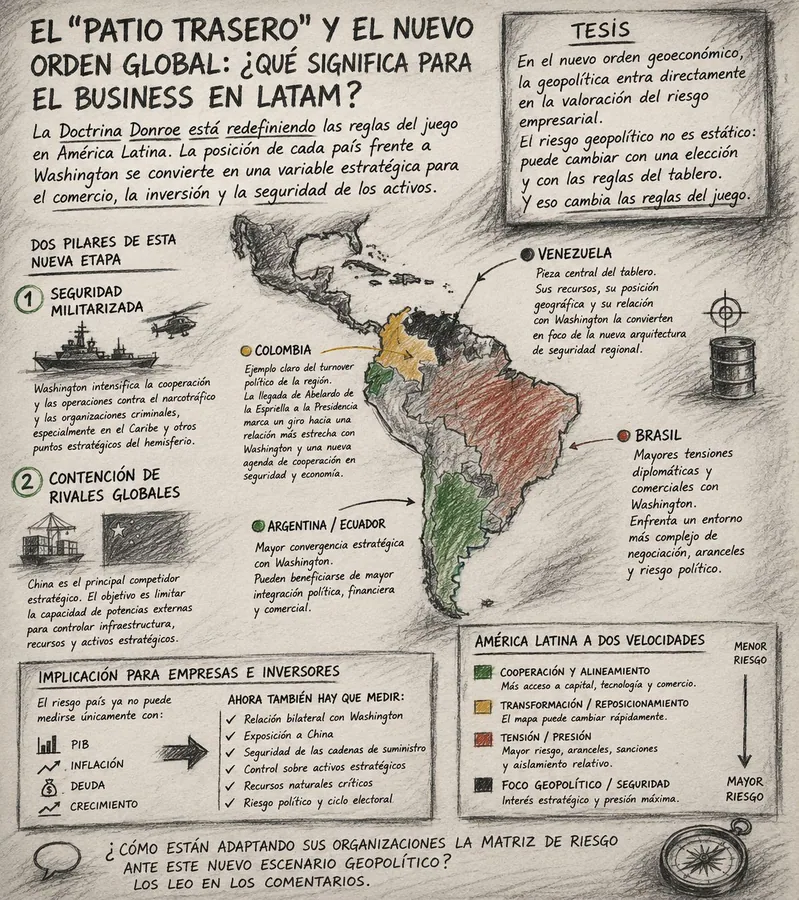
The “Backyard” and the New Global Order: What Does It Mean for the Business Plan in LatAm?
An analysis of how the so-called Donroe Doctrine has turned the “backyard” metaphor into explicit policy, and what that shift means for any business plan built for Latin America.
NOTA-BIO-002 · Bioenergetics
Why do the most efficient workers slow down midway through the workday?
For operations directors and logistics managers: a bioenergetic reading of why top performers lose productivity midway through the workday, a pattern many see and few explain.
NOTA-BIO-003 · Bioenergetics
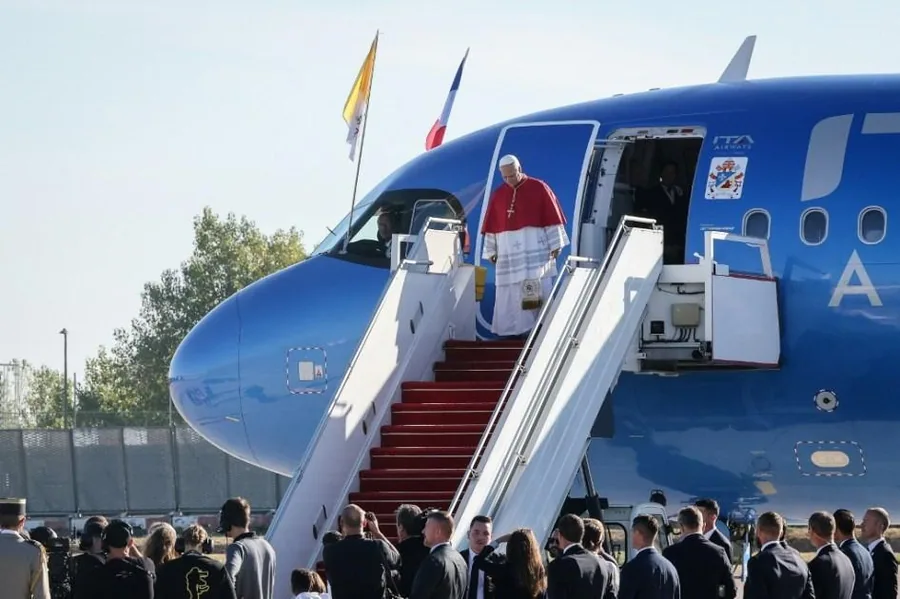
Threat or opportunity? Artificial intelligence and our creative capacity
Responding to Pope Leo XIV’s call to “disarm AI”, this piece argues that the risk lies not in the technology but in the human system using it: well designed, AI can free up creative capacity.