

Cognición colectiva · OSF-COG-035
Dossier 04 — Antropología y comunicación: mitos, rituales y sistemas narrativos
Por Carlos J. Pérez Pulido · ISHEA Institute ·
Mitos, rituales y relatos son los canales por los que una cultura transmite su propósito. Cuando esa transmisión se fragmenta, el vínculo colectivo se erosiona: validación antropológica del modelo ISHEA.
Preprint — Manuscrito depositado en OSF. Sin revisión por pares.
Pieza original en inglés.
This dossier examines polarization, digital disinformation, and collective action through three sociological cases: Trump’s populism, TikTok’s algorithmic echo chambers, and the GameStop financial swarm. Each illustrates how Transmission (T) fragmentation and cognitive tension disrupt collective purpose, validating ISHEA in contemporary social systems.
🌍 Dossier 4 – Anthropology & Communication
Anthropological Validation of ISHEA–KTR–TACC–IHC through Myths, Rituals, and Narrative Systems
Author: Carlos Pérez Pulido
Year: 2025
Overview
This dossier applies the ISHEA–KTR–TACC–IHC model to anthropological and communicative systems, showing how early societies used myths, rituals, and storytelling to structure purpose (K), transmission (T), and resilience (R).
By contrast, modern societies experience fragmentation when these narrative anchors dissolve or are replaced by unstable digital communication.
Key Anthropological Insights
- Myths and Rituals as K/T/R Systems:
- Myths provided Purpose (K) and collective identity.
- Rituals ensured Transmission (T) across generations.
-
Communal bonds created Resilience (R) against crises.
-
Communication Collapse in Modernity:
- Fragmentation of narratives leads to anomie.
- Digital networks replace rituals with algorithms, distorting T.
- Collective resilience (R) weakens as trust and cohesion erode.
Hypotheses
- H18.1: Myths and rituals were the first K/T/R frameworks ensuring systemic stability.
- H18.2: Narrative collapse in modern societies increases IDCS values, correlating with social fragmentation.
- H18.3: Communication systems act as cognitive “biofilms”—when disrupted, the social hive becomes vulnerable.
Results (Conceptual Validation)
- Anthropological studies confirm that societies with strong myth-ritual structures exhibited greater resilience (R).
- Modern fragmentation (echo chambers, disinformation) validates the importance of Transmission (T) in sustaining cohesion.
- ISHEA explains both tribal survival and contemporary polarization under one systemic framework.
Conclusion
Anthropology validates ISHEA:
- K = Purpose through myth.
- T = Transmission through ritual and oral tradition.
- R = Resilience through communal bonds.
Where myths collapse and rituals dissolve, societies face the same systemic fragility seen in health, ecology, and digital systems.
Files in this folder
- exp18_anthropology_communication.md
- exp18_anthropology_dataset.csv
- exp18_anthropology_analysis.py
- figures/exp18_myths_to_modernity.png
- figures/exp18_rituals_as_resilience.png
En la misma sala — Cognición colectiva
NOTA-COG-001 · Cognición colectiva
PISA 2025: ¿qué ocurre cuando aprender demasiado rápido deja de ser aprender?
Una lectura de los resultados de PISA 2025 y de la señal que dejan en el rendimiento de los países de la OCDE: la sospecha de que acelerar el aprendizaje puede terminar vaciándolo de contenido.
NOTA-COG-002 · Cognición colectiva
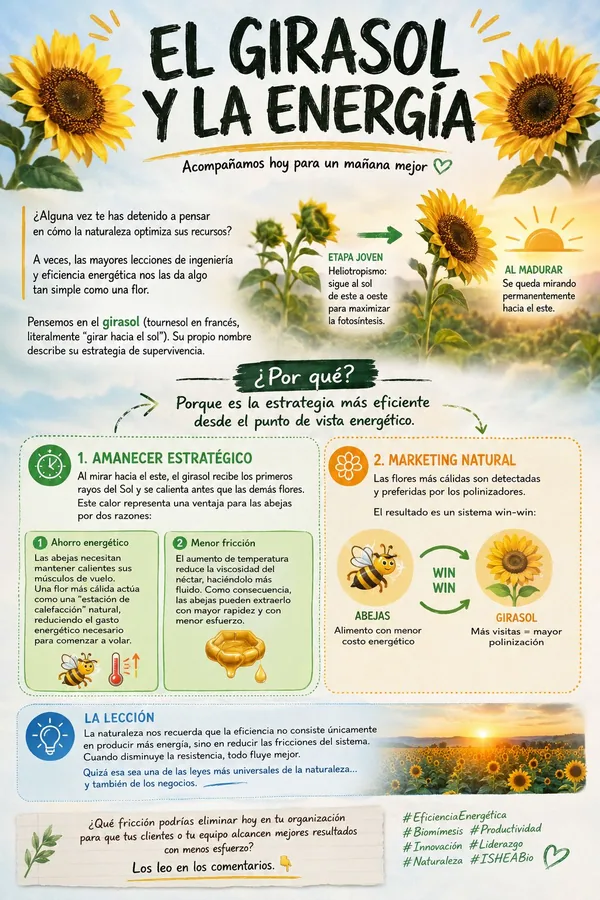
El girasol y la energía
Cómo la naturaleza optimiza sus recursos: el girasol convierte su geometría en una lección de ingeniería y eficiencia energética que la tecnología humana todavía intenta igualar.
OSF-COG-003 · Cognición colectiva
ICSD: dinámica de estados cognitivos (en preparación)
Repositorio en preparación del ICSD, el modelo de dinámica de estados cognitivos; abre el espacio donde se depositarán los materiales del marco EICI + TACC conforme avance la investigación.