

Collective cognition · OSF-COG-035
Dossier 04 — Anthropology and communication: myths, rituals and narratives
By Carlos J. Pérez Pulido · ISHEA Institute ·
Myths, rituals and narratives are the channels through which a culture transmits its purpose. When that transmission fragments, the collective bond erodes: an anthropological validation of ISHEA.
Preprint — Manuscript deposited on OSF. Not peer-reviewed.
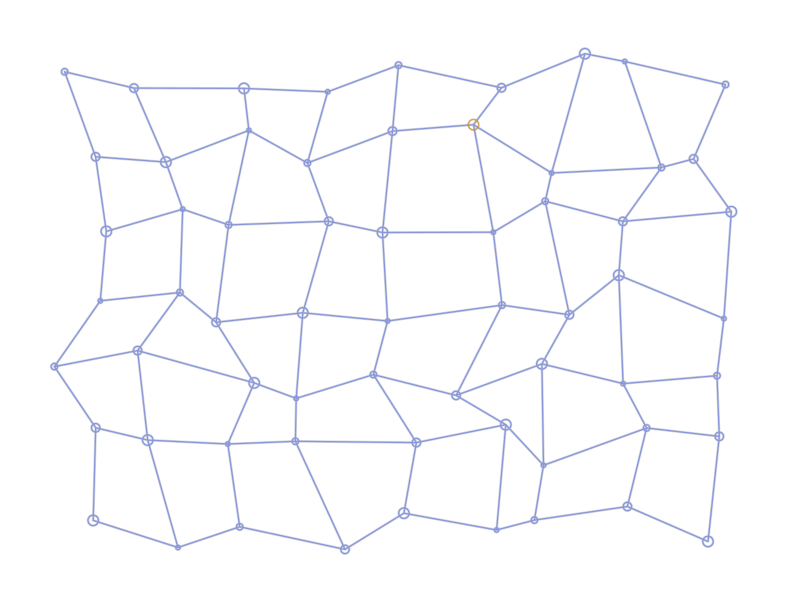
This dossier examines polarization, digital disinformation, and collective action through three sociological cases: Trump’s populism, TikTok’s algorithmic echo chambers, and the GameStop financial swarm. Each illustrates how Transmission (T) fragmentation and cognitive tension disrupt collective purpose, validating ISHEA in contemporary social systems.
🌍 Dossier 4 – Anthropology & Communication
Anthropological Validation of ISHEA–KTR–TACC–IHC through Myths, Rituals, and Narrative Systems
Author: Carlos Pérez Pulido
Year: 2025
Overview
This dossier applies the ISHEA–KTR–TACC–IHC model to anthropological and communicative systems, showing how early societies used myths, rituals, and storytelling to structure purpose (K), transmission (T), and resilience (R).
By contrast, modern societies experience fragmentation when these narrative anchors dissolve or are replaced by unstable digital communication.
Key Anthropological Insights
- Myths and Rituals as K/T/R Systems:
- Myths provided Purpose (K) and collective identity.
- Rituals ensured Transmission (T) across generations.
-
Communal bonds created Resilience (R) against crises.
-
Communication Collapse in Modernity:
- Fragmentation of narratives leads to anomie.
- Digital networks replace rituals with algorithms, distorting T.
- Collective resilience (R) weakens as trust and cohesion erode.
Hypotheses
- H18.1: Myths and rituals were the first K/T/R frameworks ensuring systemic stability.
- H18.2: Narrative collapse in modern societies increases IDCS values, correlating with social fragmentation.
- H18.3: Communication systems act as cognitive “biofilms”—when disrupted, the social hive becomes vulnerable.
Results (Conceptual Validation)
- Anthropological studies confirm that societies with strong myth-ritual structures exhibited greater resilience (R).
- Modern fragmentation (echo chambers, disinformation) validates the importance of Transmission (T) in sustaining cohesion.
- ISHEA explains both tribal survival and contemporary polarization under one systemic framework.
Conclusion
Anthropology validates ISHEA:
- K = Purpose through myth.
- T = Transmission through ritual and oral tradition.
- R = Resilience through communal bonds.
Where myths collapse and rituals dissolve, societies face the same systemic fragility seen in health, ecology, and digital systems.
Files in this folder
- exp18_anthropology_communication.md
- exp18_anthropology_dataset.csv
- exp18_anthropology_analysis.py
- figures/exp18_myths_to_modernity.png
- figures/exp18_rituals_as_resilience.png
In the same room — Collective cognition
NOTA-COG-001 · Collective cognition
PISA 2025: what happens when learning too fast stops being learning?
A reading of the PISA 2025 results and the signal they send about performance across OECD countries: the suspicion that speeding up learning may end up hollowing it out.
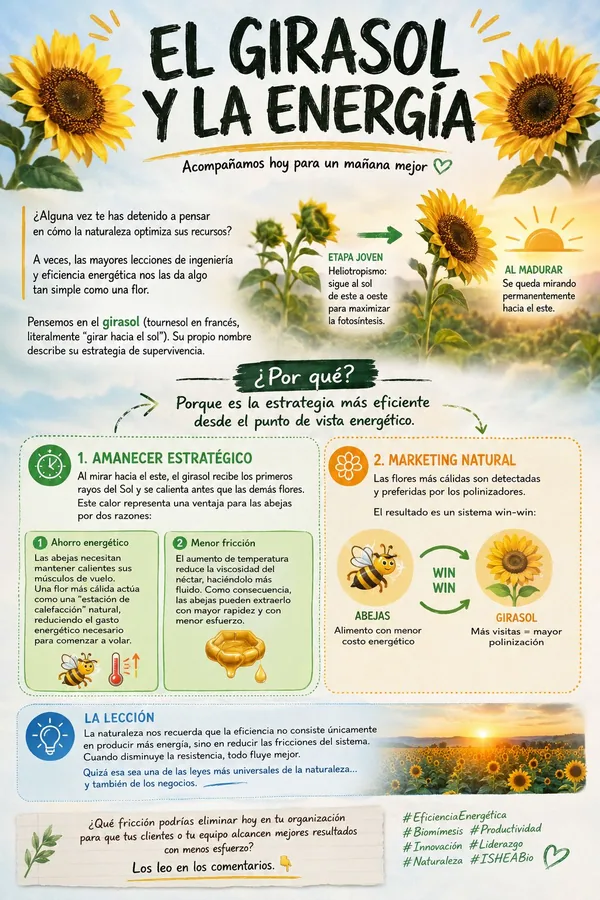
NOTA-COG-002 · Collective cognition
The Sunflower and Energy
How nature optimises its resources: the sunflower turns its geometry into a lesson in engineering and energy efficiency that human technology is still trying to match.
OSF-COG-003 · Collective cognition
ICSD: cognitive state dynamics (in preparation)
A repository in preparation for ICSD, the cognitive state dynamics model; it opens the space where the materials of the EICI + TACC framework will be deposited as the research advances.