

Cognición colectiva · OSF-COG-032
Experimento 8 – Infraestructura y electricidad: validar ISHEA con los grandes apagones
Por Carlos J. Pérez Pulido · ISHEA Institute ·
Nueva York 2003, Brasil 2009, India 2012 y la crisis europea del gas leídas como fallos de propósito, transmisión y resiliencia: la infraestructura colapsa igual que la cognición bajo estrés.
Preprint — Manuscrito depositado en OSF. Sin revisión por pares.
Pieza original en inglés.
This dossier examines major blackouts and energy crises (New York 2003, Brazil 2009, India 2012, EU gas crisis 2021–2022) as systemic failures of Purpose (K), Transmission (T), and Resilience (R). Using IDCS as an analytical proxy, the study validates the ISHEA–KTR–TACC–IHC model by showing how infrastructure collapses mirror biological and cognitive breakdowns under systemic stress.
⚡ Exp. 08 – Infrastructure & Electricity
Validation of the ISHEA–KTR–TACC–IHC Model through Blackouts and Energy Systems
Author: Carlos Pérez Pulido
Period: 2003–2024
Overview
This dossier validates the ISHEA–KTR–TACC–IHC framework by examining major blackouts and energy crises as systemic failures of purpose (K), transmission (T), and resilience (R). Case studies include the New York blackout (2003), Brazil’s grid collapse (2009), India’s massive outage (2012), and Europe’s gas and electricity crisis (2021–2022). These events demonstrate that infrastructure systems, like human health, deteriorate when cognitive purpose and resilience are misaligned.
Key Insights
- New York 2003: Transmission (T) collapsed due to grid overload; weak resilience triggered a cascade failure.
- Brazil 2009: Purpose (K) misaligned with investment and maintenance; infrastructure fragility exposed.
- India 2012: Largest blackout in history (700 million affected); weak governance and fragmented T.
- Europe 2021–2022: Gas crisis revealed the systemic vulnerability of energy systems under geopolitical stress; resilience (R) insufficient to protect consumers.
Hypotheses
- H08.1: Energy blackouts follow the K–T–R pattern of collapse.
- H08.2: Countries with higher IDCS values are more vulnerable to infrastructure failures.
- H08.3: Resilience (R) alone cannot prevent collapse without aligned Purpose (K) and Transmission (T).
Results (Conceptual Validation)
- Blackouts consistently occur when investment (K) is neglected, coordination (T) is fragmented, and resilience (R) is insufficient.
- Comparative evidence suggests a correlation between IDCS and infrastructure fragility: higher cognitive stress corresponds with weaker infrastructural resilience.
- Energy systems mirror biological systems: both collapse when tension accumulates without regeneration.
Conclusion
Infrastructure validates ISHEA:
- K = Long-term planning and investment.
- T = Coordination and grid communication.
- R = Redundancy and adaptive resilience.
When these dimensions fail, blackouts mirror systemic health crises, reinforcing the universality of the K–T–R model across domains.
Suggested Files
- exp08_infrastructure_electricity.md
- exp08_infrastructure_dataset.csv (blackouts, energy demand, IDCS)
- exp08_infrastructure_analysis.py
- figures/exp08_blackouts_timeline.png
- figures/exp08_eu_energy_crisis.png
En la misma sala — Cognición colectiva
NOTA-COG-001 · Cognición colectiva
PISA 2025: ¿qué ocurre cuando aprender demasiado rápido deja de ser aprender?
Una lectura de los resultados de PISA 2025 y de la señal que dejan en el rendimiento de los países de la OCDE: la sospecha de que acelerar el aprendizaje puede terminar vaciándolo de contenido.
NOTA-COG-002 · Cognición colectiva
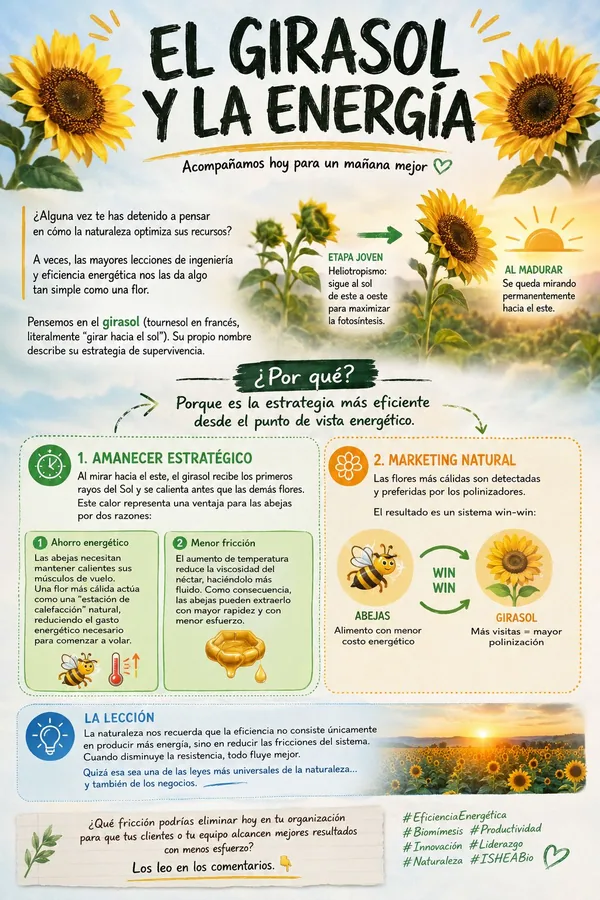
El girasol y la energía
Cómo la naturaleza optimiza sus recursos: el girasol convierte su geometría en una lección de ingeniería y eficiencia energética que la tecnología humana todavía intenta igualar.
OSF-COG-003 · Cognición colectiva
ICSD: dinámica de estados cognitivos (en preparación)
Repositorio en preparación del ICSD, el modelo de dinámica de estados cognitivos; abre el espacio donde se depositarán los materiales del marco EICI + TACC conforme avance la investigación.