

Sistemas planetarios · OSF-PLA-017
Experimento 9 – Abejas: Brasil y Australia, validación ecológica en la colmena
Por Carlos J. Pérez Pulido · ISHEA Institute ·
Colmenas africanizadas y europeas comparadas como prueba viva del modelo ISHEA–KTR–TACC–IHC: la resiliencia sin transmisión deriva en agresividad, mientras el equilibrio sostiene a la colonia.
Preprint — Manuscrito depositado en OSF. Sin revisión por pares.
Pieza original en inglés.
This dossier compares Africanized bees in Brazil and European bees in Australia as an ecological validation of the ISHEA–KTR–TACC–IHC model. It demonstrates that Resilience without Transmission leads to aggression, while balanced K/T/R alignment ensures hive stability and productivity. The hive thus mirrors human cognitive systems under stress.
🐝 Exp 9 MIX – Bees: Brazil vs Australia
Ecological Validation of ISHEA–KTR–TACC–IHC through Hive Behavior
Author: Carlos Pérez Pulido
Year: 2025
Overview
This dossier validates the ISHEA–KTR–TACC–IHC model through the case of bees in Brazil and Australia. Africanized bees in Brazil (descendants of European × African hybrids) display high Resilience (R) but fragmented Transmission (T), producing collective aggression and systemic instability.
By contrast, European bees in Australia preserve a stronger alignment between Purpose (K), Transmission (T), and Resilience (R), resulting in more cooperative hive behavior and ecological stability.
Key Ecological Insights
- Brazil (Africanized Bees):
- High R (resistance, adaptability).
- Weak T (fragmented communication, aggressive signals).
-
Outcome: hyper-defensive behavior, higher mortality, lower productivity.
-
Australia (European Bees):
- Balanced K/T/R alignment.
- Stable hive communication and cooperative cycles.
- Outcome: sustainable honey production, lower aggression.
Hypotheses
- H12.1: Resilience without proper Transmission produces systemic aggression.
- H12.2: Balanced K/T/R in hive systems leads to cooperative adaptation.
- H12.3: Ecological hives mirror human cognitive hives under systemic stress.
Results (Conceptual Validation)
- Empirical studies on Africanized bees confirm that fragmented communication → high aggression.
- Australian beekeeping systems demonstrate how aligned transmission supports resilience and productivity.
- The ISHEA cycle (K–T–R) is observed in ecological systems, validating the model beyond human societies.
Conclusion
Bees provide an ecological proof of ISHEA:
- R without T → aggression (Brazil).
- K+T+R aligned → stability (Australia).
The hive is both a biological system and an analogy of the human cognitive hive, reinforcing the universality of the model.
Files in this folder
exp12_bees_report.mdexp12_bees_dataset.csvexp12_bees_analysis.pyfigures/exp12_bees_trends.png
En la misma sala — Sistemas planetarios
NOTA-PLA-001 · Sistemas planetarios
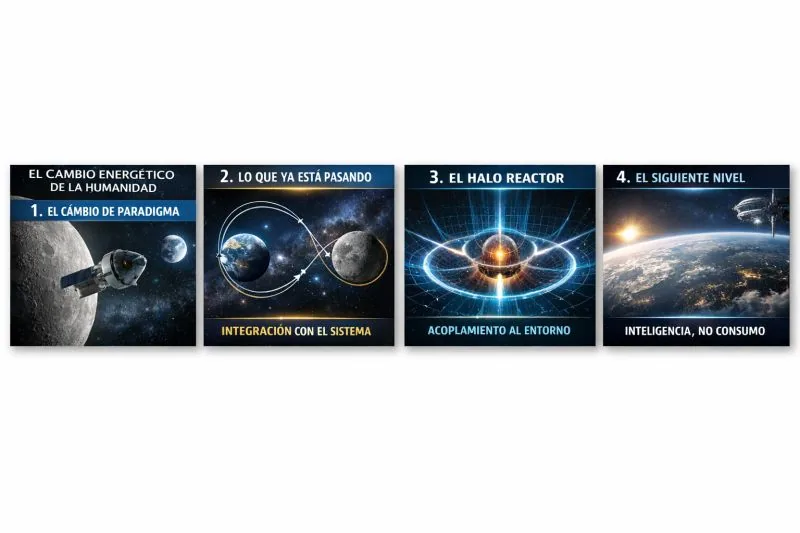
3/4. El HALO Reactor no es un reactor
Tercera entrega de la serie: el HALO Reactor no quema ni consume combustible. La pieza desmonta la idea clásica de reactor para explicar un sistema que organiza la energía en lugar de gastarla.
NOTA-PLA-002 · Sistemas planetarios
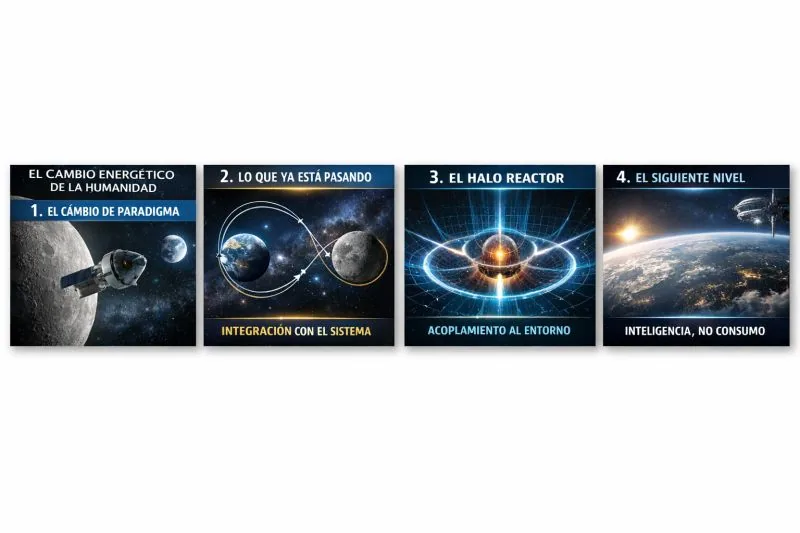
Energía coherente: de Artemis a HALO
No es una historia sobre cohetes, sino sobre el principio invisible que la naturaleza usa para sostener sistemas complejos y que hoy redefine el diseño de misiones y máquinas.

SN-PLA-003 · Sistemas planetarios
Integración de flujos energéticos planetarios, ciclos solares y dinámica de biosistemas
El índice de flujo energético planetario enlaza ciclos solares, química estratosférica y bioenergética dentro del marco HALO, y tiende un puente reproducible entre la ciencia planetaria y la biológica