

Sistemi planetari · OSF-PLA-017
Esperimento 9 – Api: Brasile e Australia, validazione ecologica nell'alveare
Di Carlos J. Pérez Pulido · ISHEA Institute ·
Alveari africanizzati ed europei a confronto come prova vivente del modello ISHEA–KTR–TACC–IHC: la resilienza senza trasmissione sfocia in aggressività, mentre l'equilibrio sostiene la colonia.
Preprint — Manoscritto depositato su OSF. Senza revisione paritaria.
Opera originale in inglese.
This dossier compares Africanized bees in Brazil and European bees in Australia as an ecological validation of the ISHEA–KTR–TACC–IHC model. It demonstrates that Resilience without Transmission leads to aggression, while balanced K/T/R alignment ensures hive stability and productivity. The hive thus mirrors human cognitive systems under stress.
🐝 Exp 9 MIX – Bees: Brazil vs Australia
Ecological Validation of ISHEA–KTR–TACC–IHC through Hive Behavior
Author: Carlos Pérez Pulido
Year: 2025
Overview
This dossier validates the ISHEA–KTR–TACC–IHC model through the case of bees in Brazil and Australia. Africanized bees in Brazil (descendants of European × African hybrids) display high Resilience (R) but fragmented Transmission (T), producing collective aggression and systemic instability.
By contrast, European bees in Australia preserve a stronger alignment between Purpose (K), Transmission (T), and Resilience (R), resulting in more cooperative hive behavior and ecological stability.
Key Ecological Insights
- Brazil (Africanized Bees):
- High R (resistance, adaptability).
- Weak T (fragmented communication, aggressive signals).
-
Outcome: hyper-defensive behavior, higher mortality, lower productivity.
-
Australia (European Bees):
- Balanced K/T/R alignment.
- Stable hive communication and cooperative cycles.
- Outcome: sustainable honey production, lower aggression.
Hypotheses
- H12.1: Resilience without proper Transmission produces systemic aggression.
- H12.2: Balanced K/T/R in hive systems leads to cooperative adaptation.
- H12.3: Ecological hives mirror human cognitive hives under systemic stress.
Results (Conceptual Validation)
- Empirical studies on Africanized bees confirm that fragmented communication → high aggression.
- Australian beekeeping systems demonstrate how aligned transmission supports resilience and productivity.
- The ISHEA cycle (K–T–R) is observed in ecological systems, validating the model beyond human societies.
Conclusion
Bees provide an ecological proof of ISHEA:
- R without T → aggression (Brazil).
- K+T+R aligned → stability (Australia).
The hive is both a biological system and an analogy of the human cognitive hive, reinforcing the universality of the model.
Files in this folder
exp12_bees_report.mdexp12_bees_dataset.csvexp12_bees_analysis.pyfigures/exp12_bees_trends.png
Nella stessa sala — Sistemi planetari
NOTA-PLA-001 · Sistemi planetari
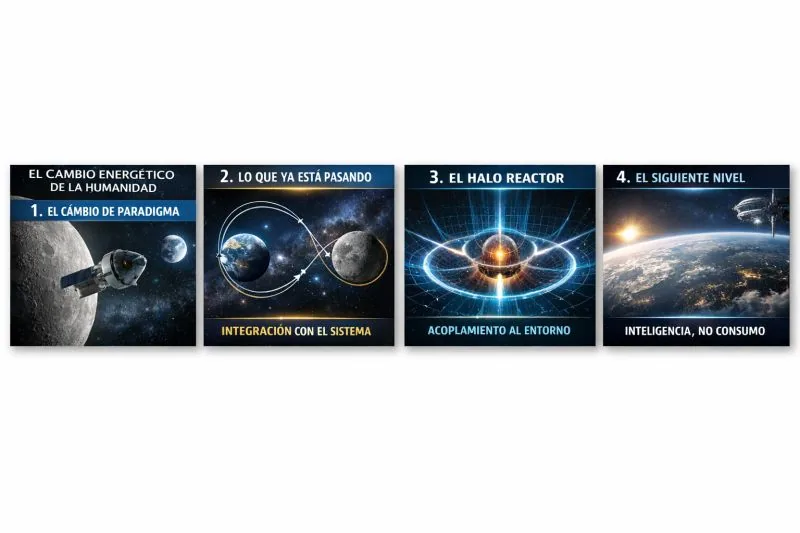
3/4. L'HALO Reactor non è un reattore
Terza parte della serie: l'HALO Reactor non brucia né consuma combustibile. Il testo smonta l'idea classica di reattore per descrivere un sistema che organizza l'energia invece di consumarla.
NOTA-PLA-002 · Sistemi planetari
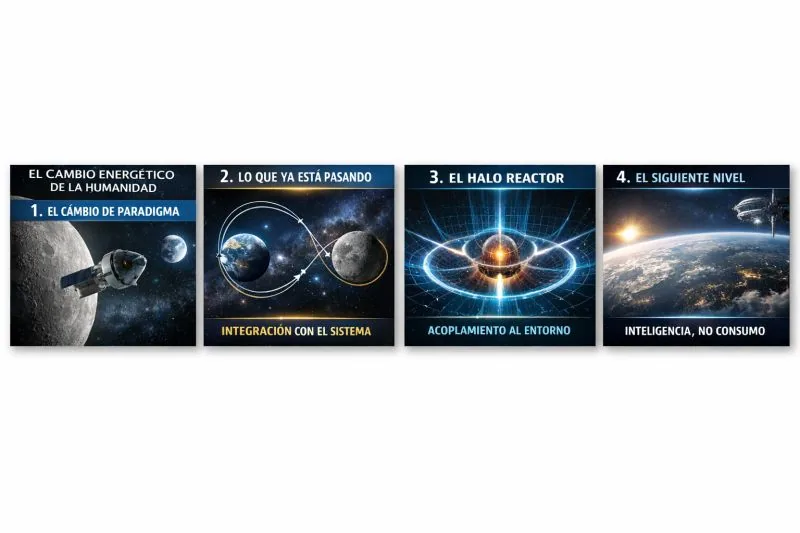
Energia coerente: da Artemis a HALO
Non è una storia sui razzi, ma sul principio invisibile che la natura usa per sostenere i sistemi complessi e che oggi ridefinisce la progettazione di missioni e macchine.

SN-PLA-003 · Sistemi planetari
Integrazione dei flussi energetici planetari, cicli solari e dinamiche dei biosistemi
L'indice di flusso energetico planetario collega cicli solari, chimica stratosferica e bioenergetica nel quadro HALO, offrendo un ponte riproducibile tra scienza planetaria e biologica