

Planetary systems · OSF-PLA-017
Experiment 9 – Bees: Brazil and Australia, ecological validation in the hive
By Carlos J. Pérez Pulido · ISHEA Institute ·
Africanized and European hives compared as a living test of the ISHEA–KTR–TACC–IHC model: resilience without transmission turns into aggression, while balanced alignment sustains the colony.
Preprint — Manuscript deposited on OSF. Not peer-reviewed.
This dossier compares Africanized bees in Brazil and European bees in Australia as an ecological validation of the ISHEA–KTR–TACC–IHC model. It demonstrates that Resilience without Transmission leads to aggression, while balanced K/T/R alignment ensures hive stability and productivity. The hive thus mirrors human cognitive systems under stress.
🐝 Exp 9 MIX – Bees: Brazil vs Australia
Ecological Validation of ISHEA–KTR–TACC–IHC through Hive Behavior
Author: Carlos Pérez Pulido
Year: 2025
Overview
This dossier validates the ISHEA–KTR–TACC–IHC model through the case of bees in Brazil and Australia. Africanized bees in Brazil (descendants of European × African hybrids) display high Resilience (R) but fragmented Transmission (T), producing collective aggression and systemic instability.
By contrast, European bees in Australia preserve a stronger alignment between Purpose (K), Transmission (T), and Resilience (R), resulting in more cooperative hive behavior and ecological stability.
Key Ecological Insights
- Brazil (Africanized Bees):
- High R (resistance, adaptability).
- Weak T (fragmented communication, aggressive signals).
-
Outcome: hyper-defensive behavior, higher mortality, lower productivity.
-
Australia (European Bees):
- Balanced K/T/R alignment.
- Stable hive communication and cooperative cycles.
- Outcome: sustainable honey production, lower aggression.
Hypotheses
- H12.1: Resilience without proper Transmission produces systemic aggression.
- H12.2: Balanced K/T/R in hive systems leads to cooperative adaptation.
- H12.3: Ecological hives mirror human cognitive hives under systemic stress.
Results (Conceptual Validation)
- Empirical studies on Africanized bees confirm that fragmented communication → high aggression.
- Australian beekeeping systems demonstrate how aligned transmission supports resilience and productivity.
- The ISHEA cycle (K–T–R) is observed in ecological systems, validating the model beyond human societies.
Conclusion
Bees provide an ecological proof of ISHEA:
- R without T → aggression (Brazil).
- K+T+R aligned → stability (Australia).
The hive is both a biological system and an analogy of the human cognitive hive, reinforcing the universality of the model.
Files in this folder
exp12_bees_report.mdexp12_bees_dataset.csvexp12_bees_analysis.pyfigures/exp12_bees_trends.png
In the same room — Planetary systems
NOTA-PLA-001 · Planetary systems
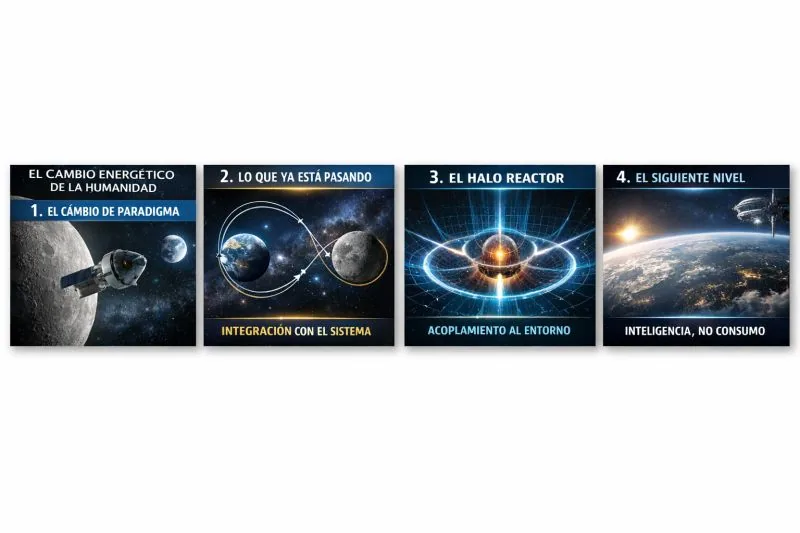
3/4. The HALO Reactor Is Not a Reactor
Third instalment of the series: the HALO Reactor neither burns nor consumes fuel. The piece dismantles the classic idea of a reactor to describe a system that organises energy rather than spending it.
NOTA-PLA-002 · Planetary systems
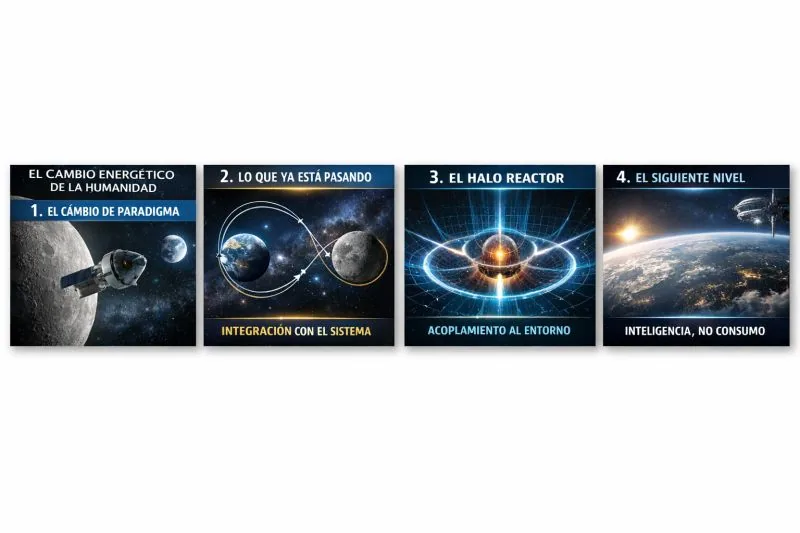
Coherent Energy: From Artemis to HALO
Not a story about rockets, but about the invisible principle nature uses to sustain complex systems, and which is now redefining how missions and machines are designed.

SN-PLA-003 · Planetary systems
Integrating planetary energy flows, solar cycles and biosystem dynamics
The Planetary Energy Flow Index links solar cycles, stratospheric chemistry and bioenergetics inside the HALO framework, offering a reproducible bridge between planetary and biological science