

Bioenergetica · OSF-BIO-147
Dossier 02 — Biologia: ATP, DNA e biofilm
Di Carlos J. Pérez Pulido · ISHEA Institute ·
Il corpo funziona come sensore biologico del fallimento dello scopo: ATP, DNA e biofilm registrano in chiave cellulare la tensione prolungata. La validazione di ISHEA scende alla scala molecolare.
Preprint — Manoscritto depositato su OSF. Senza revisione paritaria.
Opera originale in inglese.
🧬 Dossier 02– Biology: ATP, DNA, and Biofilm
Validation of ISHEA–KTR–TACC–IHC in Biological Systems
Author: Carlos Pérez Pulido
Year: 2025
Overview
This dossier validates the ISHEA–KTR–TACC–IHC model at the biological level, showing how stress and cognitive disruption manifest in cellular and molecular deterioration. The body acts as a biological sensor of cognitive hives, responding to systemic purpose failures with measurable physiological breakdowns.
Key Biological Pathways
-
ATP (Energy & Cognitive Hive Fuel):
Chronic stress reduces ATP efficiency, leading to fatigue, lowered immunity, and impaired neuronal signaling. ATP sparks are the “biochemical stories” that keep neurons and societies alive. -
DNA (Information & Transmission):
Disruption in Transmission (T) translates into DNA instability and epigenetic alterations. Stress-induced methylation patterns increase vulnerability to cancer and chronic diseases. -
Biofilm (Resilience & Collective Protection):
Biofilms are microbial communities that mirror social resilience. Weak R (resilience) makes the biofilm (or the human system) fragile against external shocks (antibiotics, infections, or systemic stress).
Hypotheses
- H06.1: ATP dysregulation under chronic stress mirrors loss of K (purpose).
- H06.2: DNA instability is a proxy for weak T (transmission).
- H06.3: Biofilm collapse under stress represents low R (resilience).
Results (Conceptual Validation)
- Biological evidence shows that stress → inflammation → disease progression.
- Psiconeuroimmunology confirms the body as an integrative sensor of cognitive tension.
- The K–T–R cycle is observed in cellular pathways: energy, information, resilience.
Conclusion
Biology validates the ISHEA model:
- ATP = Purpose (K) fuel.
- DNA = Transmission (T) of systemic information.
- Biofilm = Resilience (R) as collective shield.
When K/T/R collapse, the cellular hive collapses—leading to chronic illness and mortality.
Files in this folder
- exp06_biology_atp_dna_biofilm.md
- exp06_biology_dataset.csv
- exp06_biology_analysis.py
- figures/exp06_biofilm_resilience.png
Nella stessa sala — Bioenergetica
NOTA-BIO-001 · Bioenergetica
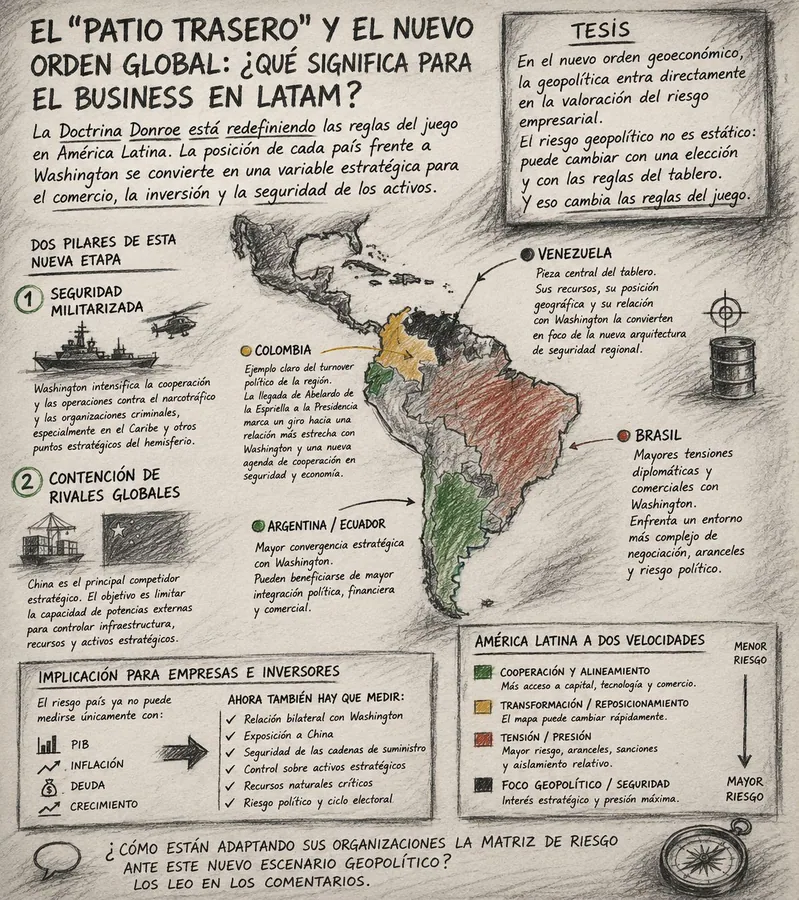
Il «cortile di casa» e il nuovo ordine globale: cosa significa per il business plan in LatAm?
Un'analisi di come la cosiddetta Dottrina Donroe abbia trasformato in politica esplicita la metafora del «cortile di casa» e di ciò che questa svolta comporta per ogni business plan in America Latina.

NOTA-BIO-002 · Bioenergetica
Perché i lavoratori più efficienti rallentano a metà giornata?
Per direttori operativi e responsabili della logistica: una lettura bioenergetica del perché i lavoratori migliori perdono produttività a metà giornata, un fenomeno che molti notano e pochi spiegano.
NOTA-BIO-003 · Bioenergetica
Minaccia o opportunità? L’intelligenza artificiale e la nostra capacità creativa
Di fronte all’appello di Leone XIV a «disarmare l’IA», questo testo sostiene che il rischio non sta nella tecnologia ma nel sistema umano che la usa: ben progettata, può liberare capacità creativa.