

Economia 5.0 · NOTA-ECO-056
I metalli rivelano lo strato cognitivo dei mercati
Di Carlos J. Pérez Pulido · ISHEA Institute ·
Rame, oro, litio e acciaio non si comportano più come materie prime isolate. Dopo il segnale del caffè e delle uova, i metalli espongono uno strato più profondo di prezzatura sistemica.
Nota divulgativa — Testo breve pubblicato in aperto. Pensiero in corso, non risultato.
Opera originale in inglese.
🧠 Metals reveal the cognitive layer of markets
If coffee and eggs exposed the first layer of systemic pricing, metals expose something deeper.
Copper, gold, lithium, and steel are no longer behaving as simple commodities driven only by supply and demand.
But:
> "In 1973, an oil embargo changed the price of everything — including products that had nothing to do with oil. Nobody called it systemic then. They called it a crisis. Today, copper, gold and lithium are sending the same signal. And again, most people are looking at the wrong layer."
Their behavior now reflects a multi-layered system:
→ Industrial demand
→ Supply constraints
→ Geopolitical tension
→ Energy transition dynamics
→ Algorithmic and AI-driven expectations
But even this is no longer sufficient to explain price formation.
Because two additional layers are becoming increasingly dominant:
---
1. Expectation & narrative layer
Markets increasingly price the future before it happens.
Not through intuition, but through structured anticipation systems:
• AI-driven forecasting
• Macro scenario modeling
• Risk anticipation frameworks
• Speculative positioning of capital
In this layer, prices are no longer reacting to reality.
They are reacting to modeled futures of reality.
---
2. Cognitive interaction layer (ISHEA perspective)
At a deeper level, markets are not only reacting to information.
They are reacting to collective interpretation of information under uncertainty.
This produces emergent pricing behavior driven by:
• perceived scarcity rather than absolute scarcity
• risk perception rather than measured risk
• security-seeking behavior under stress
• behavioral heuristics at scale
---
🧭 ISHEA Insight
At this level, the market is no longer only an economic mechanism.
It becomes a global coordination system for survival behavior.
A distributed network of billions of agents continuously adjusting decisions based on perceived threats, opportunities, and narrative signals about the future.
Traditional analysis reduces markets to KPIs, aggregates, and equilibrium dynamics.
But this misses the core actor in the system:
Not fully rational.
Not purely economic.
But metabolic in drive and cognitive in structure — a large-scale survival-processing architecture operating in real time.
---
In this sense:
The market is not simply a reflection of the economy.
It is cognition, aggregated into system-level behavior.
"This analysis builds on the ISHEA–KTR framework. OSF: https://lnkd.in/dcR5DvFJ"
---
#Metals #Commodities #GlobalEconomy #SystemThinking #MacroEconomics #CognitiveScience #BehavioralEconomics #SupplyChains #Geopolitics #AI #ISHEA #FutureOfEconomy #Markets
Nella stessa sala — Economia 5.0
SN-ECO-001 · Economia 5.0
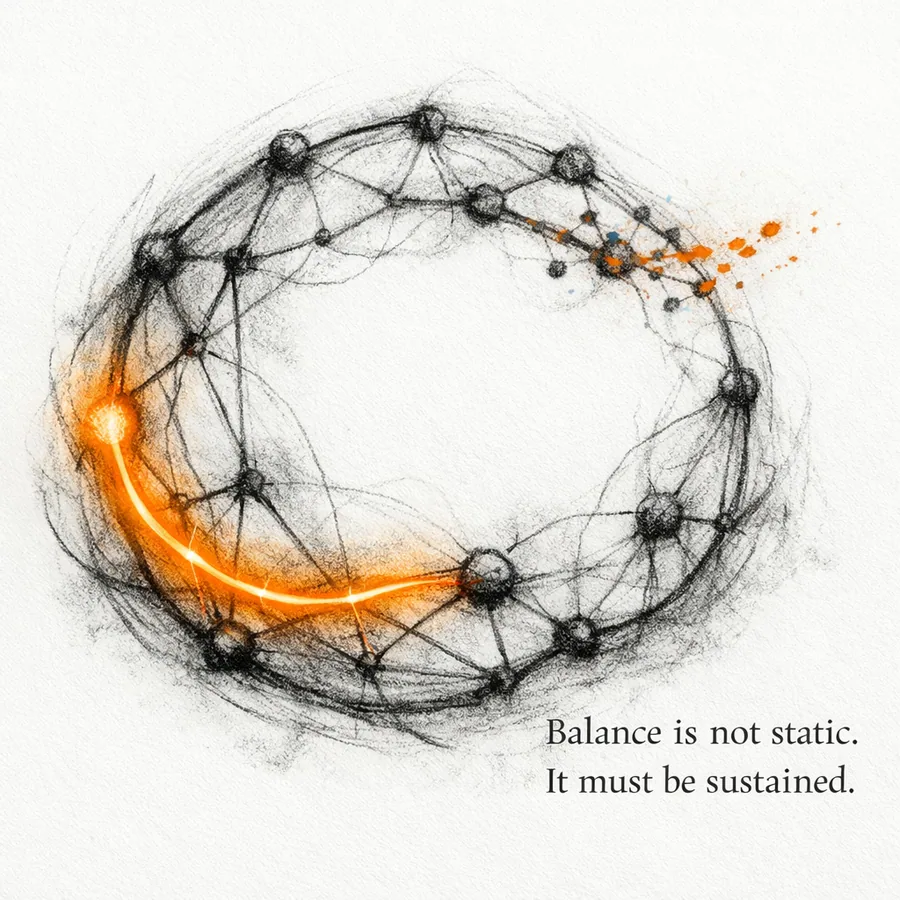
L'economia circolare deve partire dalla progettazione: una prospettiva ISHEA sull'Economy 5.0
L'economia circolare non deve solo recuperare di più, ma progettare per perdere meno. L'Economy 5.0 unisce gemelli digitali, gestione biofisica, design circolare e finanza sostenibile per tutelare il valore sistemico.
SN-ECO-002 · Economia 5.0
Economy 5.0: oltre l'energia e il carbonio, verso la coerenza sistemica
La proposta di ISHEA per Economy 5.0: un quadro economico incentrato sulla persona che, oltre a energia, carbonio ed efficienza, esamina la coerenza sistemica, le capacità umane e la resilienza dei sistemi.
OSF-ECO-003 · Economia 5.0
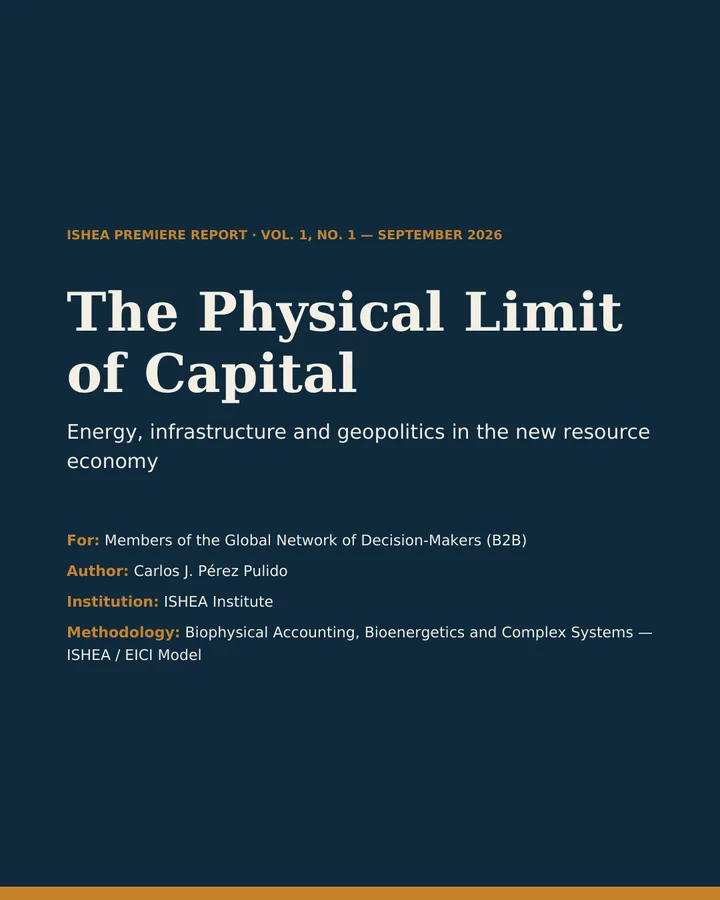
Il limite fisico del capitale: energia, infrastrutture e geopolitica
Il primo rapporto dell'ISHEA Institute esamina come l'infrastruttura dell'IA, le filiere di energia e minerali e i corridoi marittimi stabiliscano quanto capitale finanziario possa tradursi in economia reale.