

Economia 5.0 · NOTA-ECO-051
Il caffè sulla tua tavola non è più lo stesso
Di Carlos J. Pérez Pulido · ISHEA Institute ·
Come già osservato nel segnale dei prezzi delle uova, le materie prime essenziali non si comportano più in modo isolato. La colazione come indicatore di una trasformazione strutturale.
Nota divulgativa — Testo breve pubblicato in aperto. Pensiero in corso, non risultato.
Opera originale in inglese.
☕ Coffee on your table is not the same anymore
> Your breakfast will not feel the same again.
As previously observed in the eggs pricing signal, essential commodities are no longer behaving as isolated markets.
Coffee confirms the same structural pattern.
A bag that cost around US$4.30 in 2020 now approaches US$10 in some markets, without any proportional change in the product itself.
But this is not a coffee story.
It is a systems story.
What we are seeing in coffee is a compressed model of the new global economy:
→ Climate volatility disrupting harvests in Brazil and Vietnam 🌦️
→ Geopolitical fragmentation reshaping trade routes 🌍
→ Tariff divergence and regulatory complexity 🚢
→ Rising logistics, energy, and labor costs 📦
→ Persistent global demand growth 📈
No single factor explains the movement.
Together, they reveal a structural shift:
Prices are no longer formed only at production level — they emerge from interacting global systems.
This is why even when commodity markets stabilize, retail prices often remain elevated.
Because value is no longer localized.
In parallel, coffee chains are no longer selling coffee alone.
They are selling:
📱 Digital interaction systems
⚙️ Operational efficiency networks
🎯 Behavioral personalization
⏱️ Convenience and time compression
A latte is no longer a beverage.
It is a managed experience inside a service architecture.
From an ISHEA perspective, coffee is not an isolated case.
It is a measurable micro-model of systemic economic transformation.
The bean is the input.
The system is the cause.
---
🧭 ISHEA Insight
What we are observing is not inflation in the traditional sense.
It is emergent pricing, where value is distributed across energy, climate, logistics, technology, behavior, and governance systems simultaneously.
The physical product remains simple.
The pricing reality has become systemic.
---
PD:
As Maza Zabala used to say, the economy is like dry leather — press one side and another rises.
Today, that pressure is global and systemic.
Liquidity and supply-demand alone are no longer enough to explain prices. We are in a multi-system economic structure.
---
#Coffee #Inflation #GlobalEconomy #SupplyChains #Geopolitics #SystemThinking #MacroEconomics #FoodSecurity #Logistics #ISHEA #Economy #FutureOfEconomy
Nella stessa sala — Economia 5.0

NOTA-ECO-001 · Economia 5.0
E se le variabili con cui misuriamo il successo dei Paesi fossero del tutto capovolte?
Da decenni il progresso si misura con PIL, produttività, crescita ed energia. Questo testo sostiene che quelle variabili potrebbero essere capovolte e invita a ripensare che cosa significhi, per un Paese, prosperare.
NOTA-ECO-002 · Economia 5.0
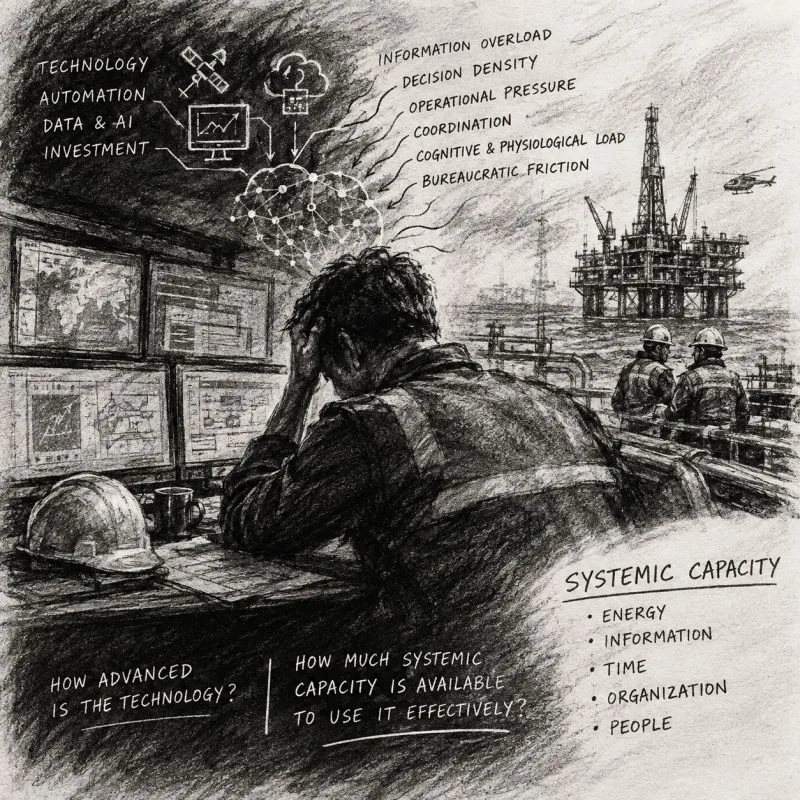
Perché l’alta ingegneria sbaglia proprio quando la tecnologia è più avanzata?
Nell’Oil & Gas e in altre operazioni complesse, più tecnologia non garantisce decisioni migliori: questo testo indaga la capacità sistemica, quanto un sistema sa assorbire e tradurre in azione sotto pressione.

NOTA-ECO-003 · Economia 5.0
Frankenstein e il petrolio: perché il Venezuela torna a contare nella geopolitica?
Terza puntata della serie: dopo il passaggio dal capitale all'IA e alla concentrazione finanziaria, emerge il nuovo collo di bottiglia, il petrolio, e con esso il Venezuela torna sullo scacchiere geopolitico.