

Economy 5.0 · NOTA-ECO-001
Brazil 2026: The Political Reality Show
By Carlos J. Pérez Pulido · ISHEA Institute ·
An ex-president in prison, a former prisoner back in power and the first one's son challenging the second: Brazil's 2026 election read as a script even Netflix would find too far-fetched.
Note — Short piece published openly. Thinking in progress, not a result.
🇧🇷📺 BRAZIL 2026: THE POLITICAL REALITY SHOW
Imagine pitching this script to Netflix:
An ex-president in prison.
A former prisoner back in power.
And now the son of the first challenging the second for Brazil’s presidency.
The producer would say:
Too much.
But this isn't television.
It's Brazil.
.
In Post 1, we looked at the rules of the game.
In Post 2, we looked at the board.
In Post 3, we looked at the groundplay — ports, bases, concessions, contracts, and the infrastructure where geopolitics becomes operational.
Now the game moves somewhere different:
The ballot box.
The final polls suggested a razor-thin race.
Then came the votes.
PLOT TWIST.
The actual count turned the script around.
Flávio Bolsonaro moved ahead.
Lula moved into second.
With neither candidate reaching the 50% threshold, Brazil is heading to a runoff on October 25.
The poll was a snapshot.
The ballot box is reality.
And this is where the series takes another step.
🇵🇪 Peru showed us the physical chokepoint.
🇵🇦 Panama, the legal and logistical chokepoint.
🇪🇨 Ecuador, operational capacity.
🇻🇪 Venezuela, strategic position.
🇧🇷 Brazil introduces something different:
the political inflection point.
Not a physical chokepoint.
Not a port.
Not a base.
Not a concession.
The vote itself becomes part of the strategic terrain.
Now comes Season 2.
Two finalists.
One enormous country.
Millions of votes still in play.
🎺 ENTER THE “DONROE DOCTRINE.”
A modern corollary to the Monroe Doctrine, the term has been used to describe the Trump administration's renewed emphasis on the Western Hemisphere in U.S. strategic thinking.
A new name for an old geographic question:
Who shapes the neighborhood?
Washington is watching.
Beijing is watching.
Latin America is watching.
Because Brazil isn't simply another election.
It is agriculture.
Energy.
Mining.
Industry.
Territory.
And strategic autonomy.
This brings us back to the larger map:
Domestic politics ↔ Geopolitics ↔ Infrastructure ↔ Supply Chains ↔ Business Risk
The groundplay has changed.
The terrain is now political.
So what happens next?
Alignment?
Autonomy?
Strategic balance?
For now:
WAIT & SEE MODE.
But the turn seems real.
And yes…
THE SHOW IS VERY MUCH ON. 🇧🇷📺
The groundplay has changed.
The terrain is now political.
Sources and election data in the first comment 👇
SOURCES
📰 Main election report
Reuters — Brazil election headed to runoff, projection shows, as Bolsonaro lead narrows
📊 Polling context before the vote
Reuters — Lula ahead in polls for Brazil's first-round vote; runoff likely
Datafolha — Final pre-election poll, as reported by Reuters.
🌎 Geopolitical context
Reuters — Pentagon seeks to rally Latin America behind new Monroe Doctrine — reporting on the so-called “Donroe Doctrine.”
#TheHemisphericGame #Brazil2026 #BrazilElection #Geopolitics #LatinAmerica #Geoeconomics #StrategicAutonomy #PoliticalRisk #DonroeDoctrine #ISHEA #Donroepolicy
In the same room — Economy 5.0
NOTA-ECO-002 · Economy 5.0
The Go Board in Latin America: Venezuela, Hinge of the New “Shield of the Americas
Second instalment of a series that reads Latin America as a Go board: Venezuela emerges as the hinge of the new “Shield of the Americas” and of Washington’s shifting strategy in the region.

NOTA-ECO-003 · Economy 5.0
What if the variables we use to measure national success were completely backwards?
For decades, progress has been measured through GDP, productivity, growth and energy use. This piece argues those variables may be inverted and asks us to rethink what it means for a country to thrive.
NOTA-ECO-004 · Economy 5.0
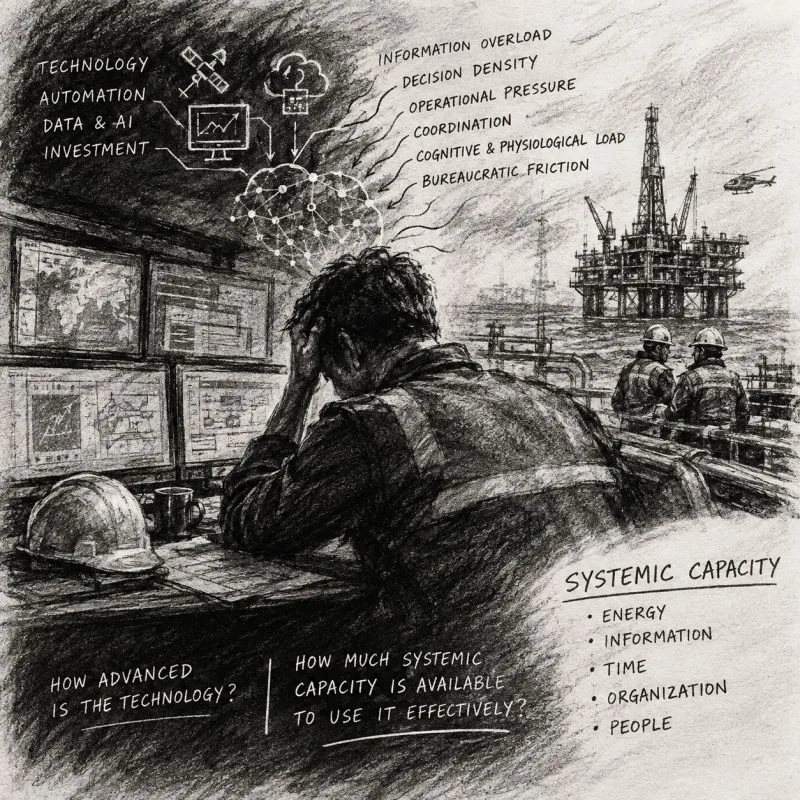
Why do highly engineered systems fail just when technology is most advanced?
In Oil & Gas and other complex operations, more technology does not guarantee better decisions: this piece examines systemic capacity, how much a system can absorb and turn into action under pressure.