

Collective cognition · NOTA-COG-006
ENERGY, FRICTION & RESPONSIBILITY
ENERGY, FRICTION & RESPONSIBILITY ⚡🧬 "Energy is not infinite. Friction is not neutral. Responsibility is emergent." — Biofísica: Limit of Humanity | Carlos J. Pérez Pulido APRIL REFLECTION 👁️ This…
Note — Short piece published openly. Thinking in progress, not a result.
ENERGY, FRICTION & RESPONSIBILITY ⚡🧬
"Energy is not infinite. Friction is not neutral. Responsibility is emergent."
— Biofísica: Limit of Humanity | Carlos J. Pérez Pulido
APRIL REFLECTION 👁️
This month we explored:
→ Friction as wasted energy
→ Misaligned systems → stress, inefficiency, collapse ⚡
→ Hive cognitive: the sum of our individual responsibility 🐝
THE TAKEAWAY 🔍
Every choice we make adds to the system:
Aligned → coherence, resilience, progress 🌟
Misaligned → stress, waste, collapse ⚡
ENERGY IS BIOPHYSICAL
It’s not metaphor. Every inefficiency, every misincentive, every ignored limit creates measurable load on human energy.
THE LESSON 💡
Responsibility is not optional.
The system we experience is the system we collectively build.
📖 Available worldwide: https://lnkd.in/dWCCcmDA
#ISHEA #BiofísicaLimitOfHumanidad #EnergyCoherence #HiveCognitive #ResponsibilityCollective #EconomíaInvertida #ISHEABio 🚀
In the same room — Collective cognition
NOTA-COG-001 · Collective cognition
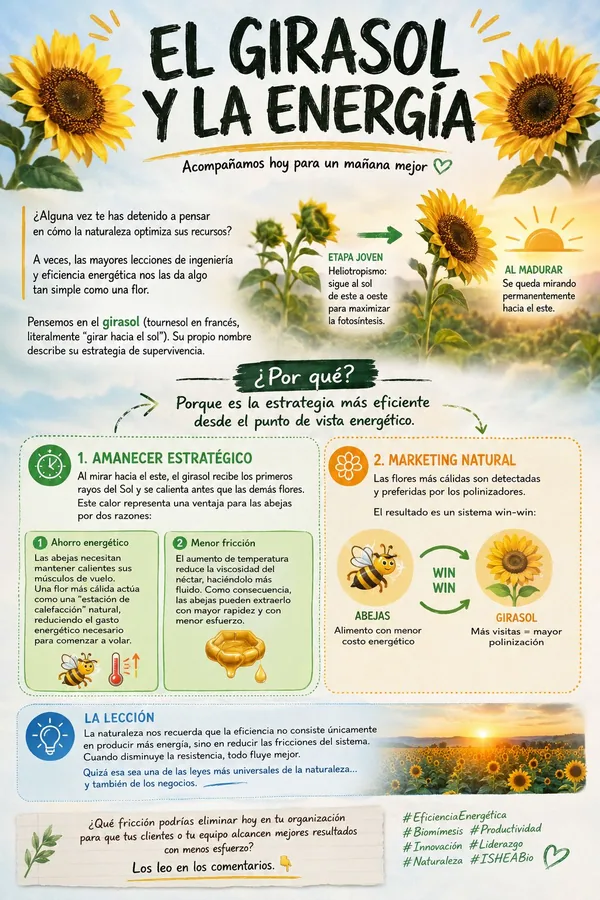
The sunflower and energy
A short note on how the sunflower solves the problem of capturing energy through geometry and rhythm, and why nature still reads as the most exacting manual of energy efficiency.
OSF-COG-002 · Collective cognition
ICSD: cognitive state dynamics (in preparation)
A repository in preparation for ICSD, the cognitive state dynamics model; it opens the space where the materials of the EICI + TACC framework will be deposited as the research advances.
OSF-COG-003 · Collective cognition
Cognitive State Dynamics Model (ICSD): a state-based view of innovation
A theory of innovation as a cognitive phase transition: joining the EICI criterion to the TACC cycle, it distinguishes four internal regimes an organization can occupy before it innovates.