NOTA-BIO-001 · Bioenergetics
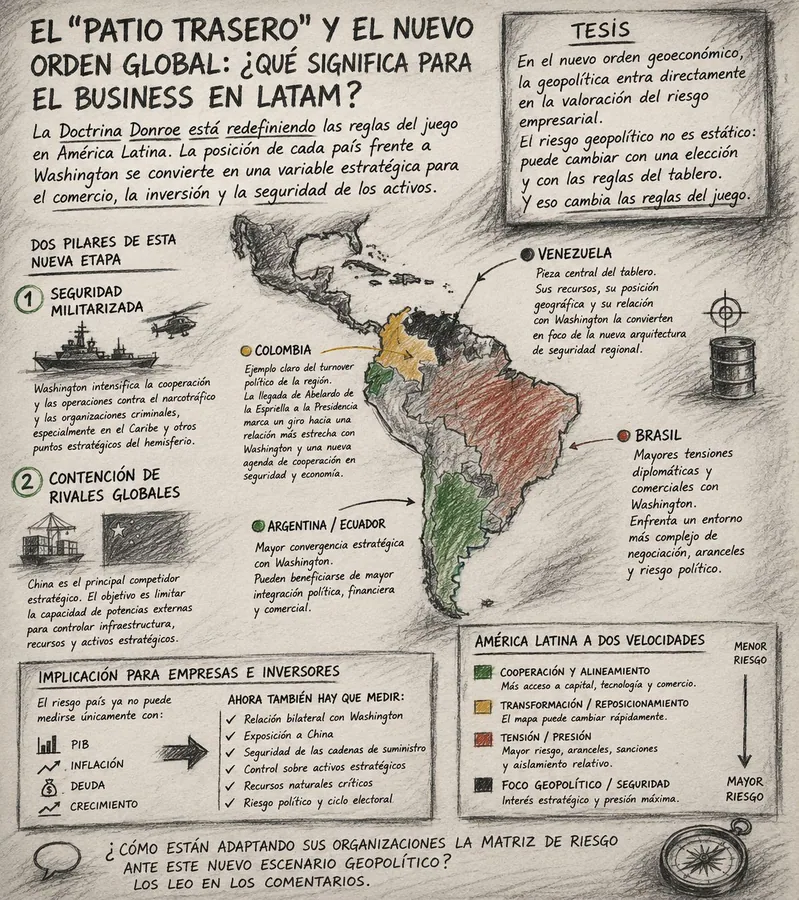
An analysis of how the so-called Donroe Doctrine has turned the “backyard” metaphor into explicit policy, and what that shift means for any business plan built for Latin America.
NOTA-ECO-001 · Economy 5.0
For decades, progress has been measured through GDP, productivity, growth and energy use. This piece argues those variables may be inverted and asks us to rethink what it means for a country to thrive.
NOTA-COG-001 · Collective cognition
A reading of the PISA 2025 results and the signal they send about performance across OECD countries: the suspicion that speeding up learning may end up hollowing it out.
NOTA-BIO-002 · Bioenergetics
For operations directors and logistics managers: a bioenergetic reading of why top performers lose productivity midway through the workday, a pattern many see and few explain.
NOTA-BIO-003 · Bioenergetics
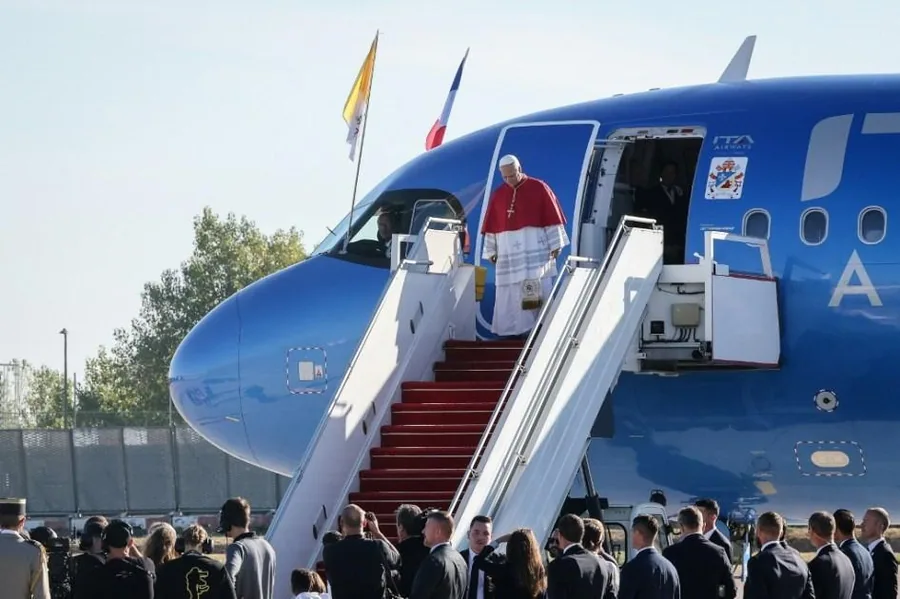
Responding to Pope Leo XIV’s call to “disarm AI”, this piece argues that the risk lies not in the technology but in the human system using it: well designed, AI can free up creative capacity.
NOTA-ECO-002 · Economy 5.0
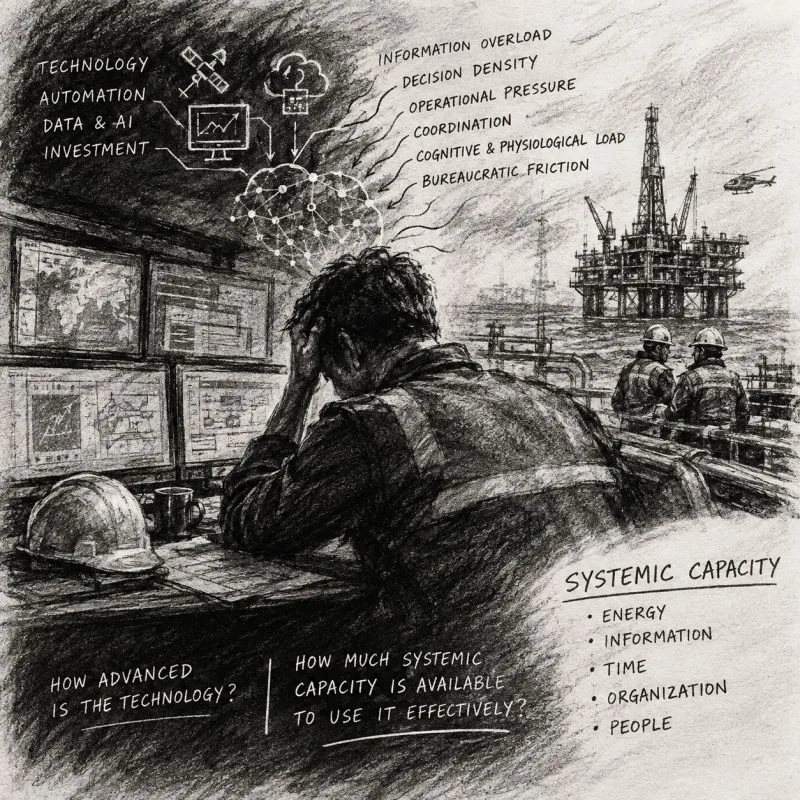
In Oil & Gas and other complex operations, more technology does not guarantee better decisions: this piece examines systemic capacity, how much a system can absorb and turn into action under pressure.
NOTA-ECO-003 · Economy 5.0
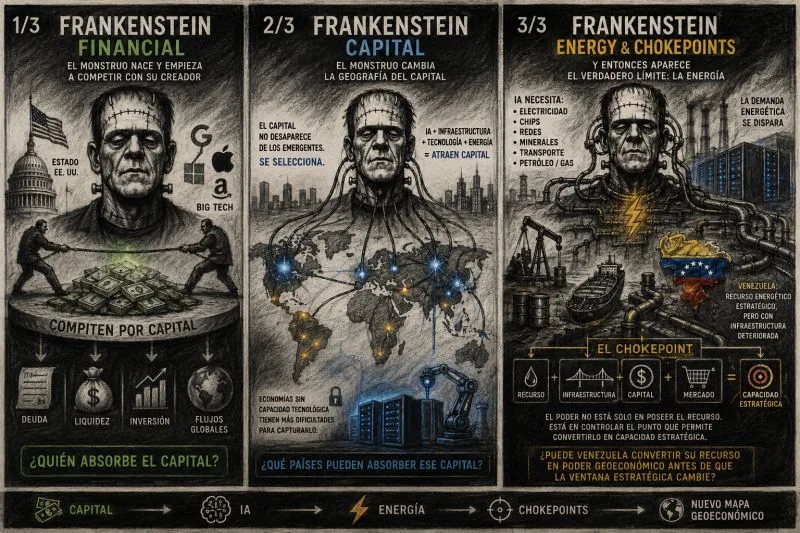
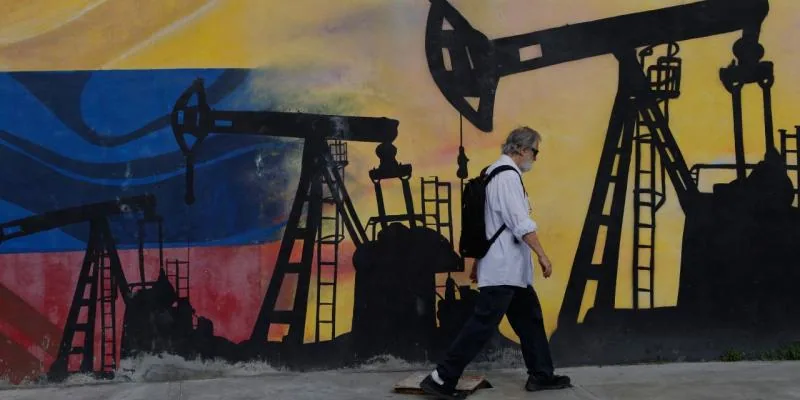
Third installment of the series: after tracing capital into AI and financial concentration, the next bottleneck comes into view, oil, and with it Venezuela returns to the geopolitical board.
NOTA-ECO-004 · Economy 5.0
Second of three parts: the State built the ecosystem that gave birth to Big Tech, and now the creature competes with its creator and redraws the world map of capital.
NOTA-ECO-005 · Economy 5.0
An analysis of the technological, financial and regulatory ecosystem the United States built for Big Tech, and of how those same companies now compete with the state that created them.
NOTA-BIO-004 · Bioenergetics
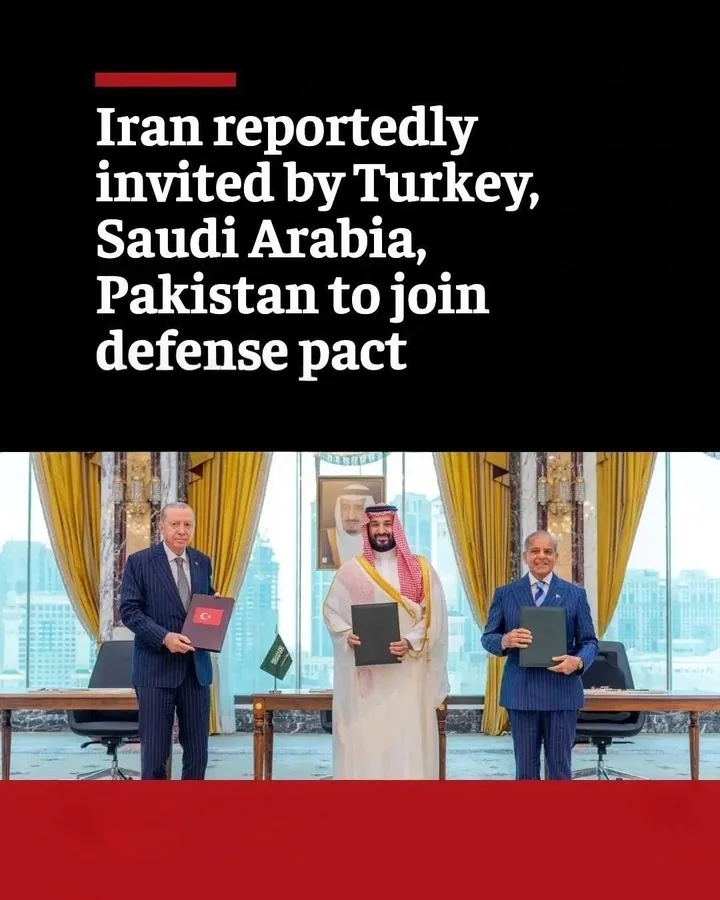
A reflection on the volatile mix of Gulf oil, Western protection, a new military alliance and an enemy that refuses to disappear, and on the impossible balance that holds the region together.
NOTA-ECO-006 · Economy 5.0
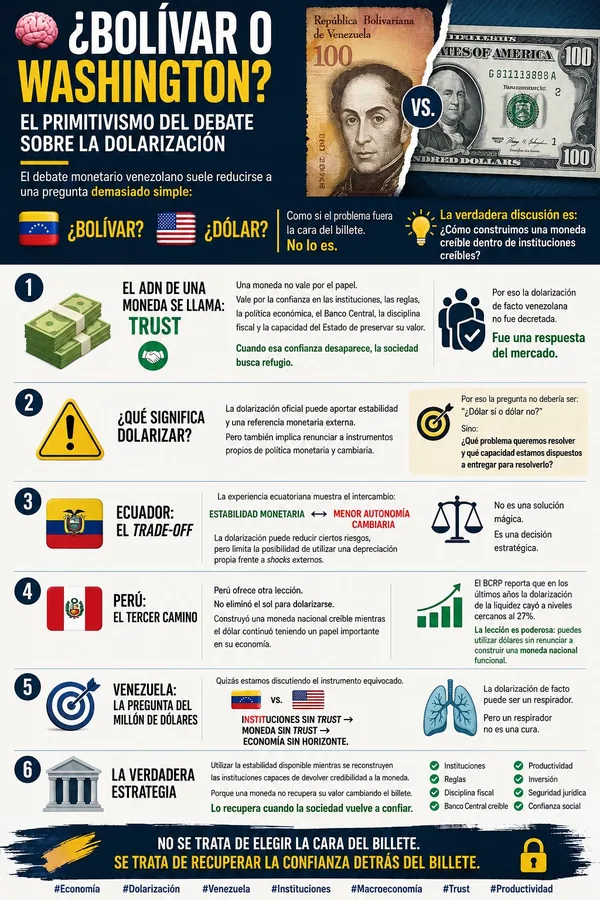
A rereading of Venezuela's monetary debate: the choice between the bolívar and the dollar hides the real issue, which is not the face on the banknote but the institutional architecture behind it.
NOTA-COH-001 · Coherence
A warning to the corporate and political world: storytelling cannot make up for a weak architecture. Without the structural trust that sustains it, any narrative loses its power.
NOTA-ECO-007 · Economy 5.0
A reflection on complex systems: abundance that exceeds the capacity to absorb it does not enrich but depletes. An economic reading of why excess without channels ends up drying out the system.
NOTA-ECO-008 · Economy 5.0
Venezuela's oil internationalization in the 1980s and 1990s was efficient on paper yet opaque from outside. The piece asks what happens when a system stops trusting its own architecture.
NOTA-ECO-009 · Economy 5.0
The second part of a series on ESG in Venezuela: after diagnosing institutional weakness and regulatory improvisation, it sets out how to move the transition from paper to practice.
NOTA-BIO-005 · Bioenergetics
For decades we designed human systems like machines: more output, more speed, more control. This piece explains why that logic erodes the bioenergetic coherence that actually sustains performance.
NOTA-ECO-010 · Economy 5.0
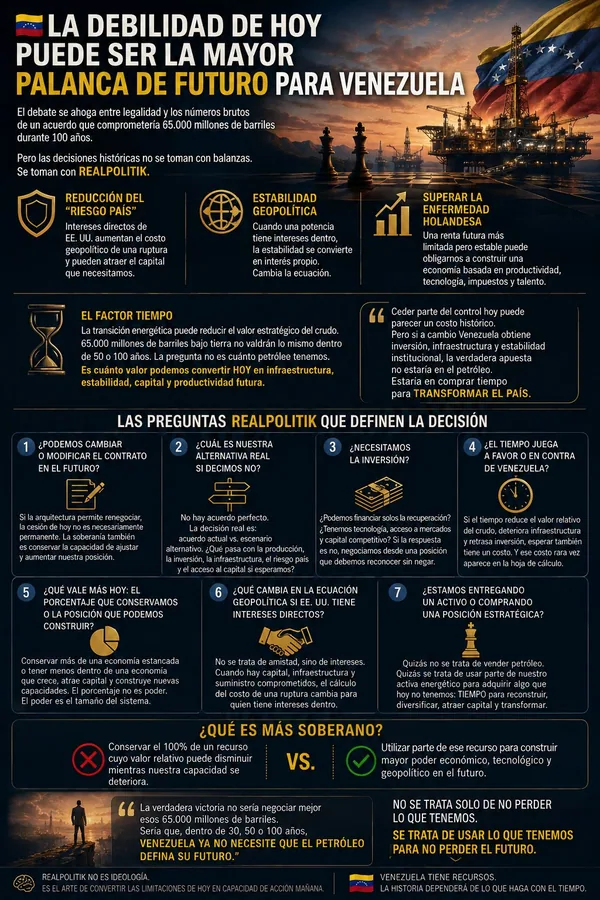
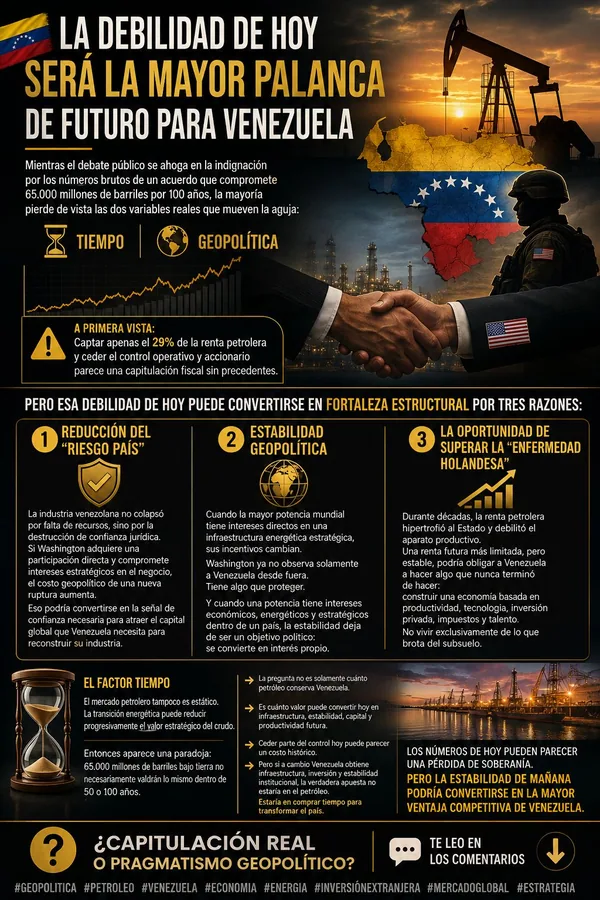
The debate over the agreement fixates on how much Venezuela gives up. This piece inverts the question and reads present weakness as the negotiating leverage the country has yet to activate.
NOTA-ECO-011 · Economy 5.0
A route from the start of the Chávez era, when Venezuela held extraordinary oil reserves, to 2026: the chain of decisions that explains the country of today.
NOTA-ECO-012 · Economy 5.0
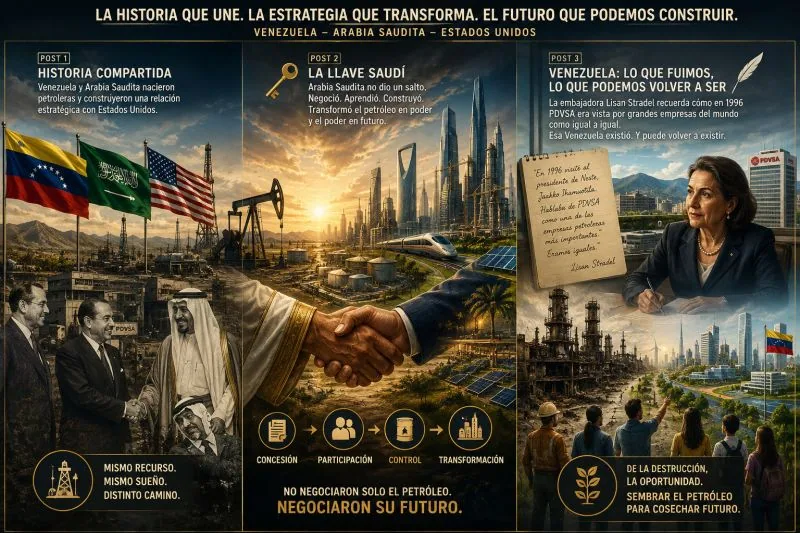
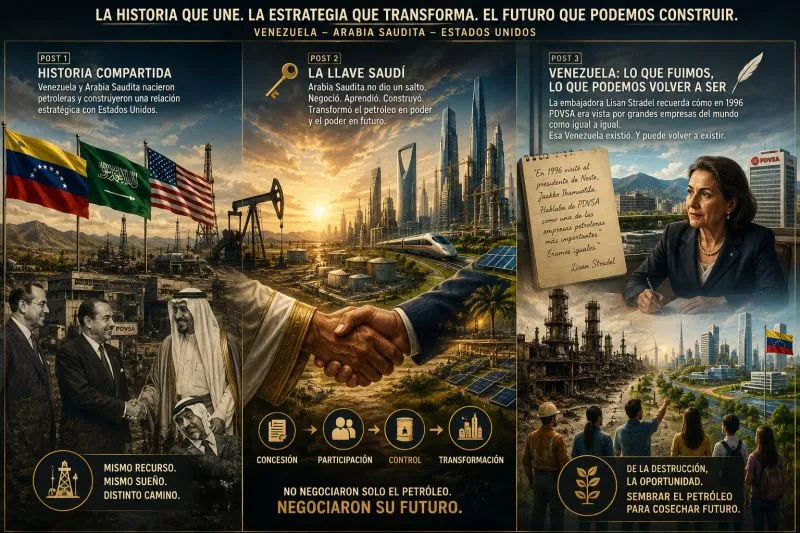
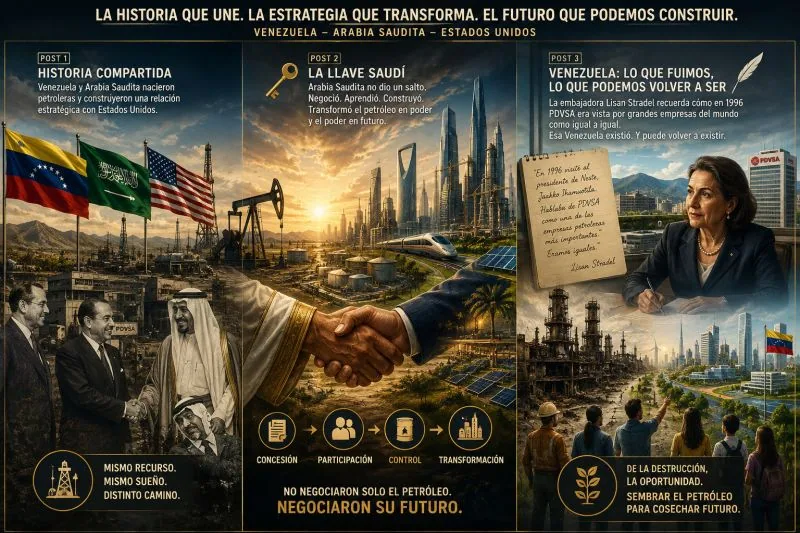
The closing part of the series draws on Ambassador Lisan Stradel's testimony to reconstruct what Venezuela once represented, and which parts of that capacity remain available today.
NOTA-ECO-013 · Economy 5.0
The second instalment asks how Saudi Arabia did it. The answer reaches far beyond Aramco, and it reveals what a petro-state can still choose when it stops negotiating barrels alone.
NOTA-ECO-014 · Economy 5.0
The opening piece of the series: two countries that began sharing far more than crude and ended up in opposite places. The comparison becomes a lens on today's geoeconomic board.
NOTA-ECO-015 · Economy 5.0
A hundred billion dollars of announced investment. The piece shifts the focus from who supplies the capital to who will control the vehicle, which is where the real power is decided.
NOTA-ECO-016 · Economy 5.0
In geoeconomics a contract defines rights and a border defines jurisdiction, yet neither tells the whole story. The piece asks what the Caribbean energy split really costs.
NOTA-ECO-017 · Economy 5.0
An analysis of how incomplete information shapes trust between the parties to the Venezuela–United States energy deal, and why transparency ultimately decides what the agreement is worth.