

Collective cognition · OSF-COG-030
IDSC and IDCS: a dual index of societal cognitive health and deterioration
By Carlos J. Pérez Pulido · ISHEA Institute ·
A dual-index system measuring collective cognitive health and its deterioration, joined to the LEXCOG model that separates explicit language from implicit patterns. Validated in 38 countries, 2010–2025.
Preprint — Manuscript deposited on OSF. Not peer-reviewed.

Societal crises—ranging from epidemics of mental illness and chronic disease to democratic fragility and disinformation—reflect deeper cognitive vulnerabilities that traditional metrics fail to capture. We introduce the IDSC–IDCS framework, a dual-index system measuring societal cognitive health (Index of Cognitive Sanity, IDSC) and cognitive-sanitary deterioration (IDCS), integrated with the LEXCOG model, which separates explicit linguistic expressions (LEX) from implicit cognitive patterns (COG). Central to this architecture is the variable K (Knowledge), defined as purpose-driven, resilient cognition. Using longitudinal data (2010–2025) from 38 countries, we validate IDCS as a predictor of health outcomes including cancer incidence (r = 0.68, p < 0.01), suicide (r = 0.73), and obesity (r = 0.71), while IDSC correlates positively with democratic stability and educational resilience (r = 0.64). LEXCOG analysis uncovers misalignments between stated intentions and underlying cognitive dynamics. A case study of South Korea demonstrates that targeted resilience programs reduced IDCS by 18% over a decade. Our findings establish cognitive health as a measurable, modifiable determinant of societal well-being and position K as a critical policy lever to enhance public health, governance, and collective resilience.
From Cognitive Health to Cognitive Deterioration: The IDSC–IDCS Framework and LEXCOG Analysis
Authors: Carlos J. Pérez Pulido
Significance Statement:
This study introduces the IDSC–IDCS framework and applies the LEXCOG model to evaluate societal cognitive health and deterioration. We highlight the variable K (Knowledge), showing that measuring and controlling it allows systematic observation of its societal impact. By linking explicit intentions (LEX) to implicit cognitive structures (COG), our framework predicts vulnerabilities, optimizes interventions, and enhances resilience across governance, education, and public health. This dual-level analysis demonstrates that understanding K is critical for improving human well-being, guiding policy, and anticipating societal challenges.
Abstract (≤250 words):
The IDSC–IDCS framework provides a novel method to quantify societal cognitive health and deterioration. The IDSC (Index of Cognitive Sanity) captures resilience factors such as informational clarity, critical thinking, and collective resilience. The IDCS (Index of Cognitive-Sanitary Deterioration) quantifies negative outcomes, including suicide, premature mortality, obesity, and alcohol abuse. Using data from WHO, OECD, and IHME (2010–2025), we find strong correlations between IDCS and cancer incidence (r = 0.68, p < 0.01), suggesting that cognitive disruption is linked to severe health outcomes. Applying the LEXCOG framework, we analyze both explicit (LEX) and implicit (COG) levels of cognition, revealing that IDSC–IDCS indices also serve as early-warning indicators of democratic vulnerability. The study demonstrates that the variable K (Knowledge) is pivotal: its systematic evaluation enables prediction and intervention across societal domains, improving governance, education, and public health outcomes. This integrated approach bridges epidemiology, psychology, and cognitive geopolitics, offering a scalable method to enhance societal resilience.
Introduction:
Rising concerns about mental health decline, misinformation, and democratic erosion.
Limitations of current indices (HDI, GNH, ISHEA) in capturing cognitive determinants.
Purpose: Introduce IDSC–IDCS and apply LEXCOG to evaluate K, providing empirical validation and societal insight.
Theoretical Framework:
ISHEA–KTR–TACC ecosystem: links purpose (K), transmission (T), resilience (R).
LEXCOG: distinguishes explicit intentions (LEX) and implicit cognition (COG).
IDSC–IDCS: indices of cognitive health and deterioration, validated empirically.
Materials and Methods:
Data sources: WHO (GLOBOCAN), OECD, IHME, World Bank (2010–2025).
Variables: IDSC (informational clarity, collective resilience, critical education, exposure to manipulation); IDCS (suicide, premature mortality, obesity, alcohol, mental health).
Controls: HDI, GDP per capita, smoking prevalence.
Analyses: Pearson/Spearman correlations, OLS regressions, cross-validation by HDI groups.
Case study: South Korea, impact of resilience programs on IDCS reduction.
Results:
IDCS–cancer correlation: r = 0.68 (p < 0.01).
Strong associations with suicide and obesity (r > 0.70).
South Korea: policy interventions reduced IDCS by 18% (2015–2025).
High IDSC countries (Norway, New Zealand) had lower premature mortality.
Dual-level LEXCOG analysis shows K’s explicit and implicit effects on societal outcomes.
Discussion:
IDSC–IDCS indices provide a biopsychosocial lens linking health, cognition, and governance.
LEXCOG framework highlights the predictive power of K in society.
Implications: policymaking, education, public health, and soft power applications.
Measuring K allows anticipation of risks and optimization of interventions to improve societal resilience.
Conclusion:
IDSC–IDCS bridge public health and cognitive geopolitics.
Reinforcing purpose (K) and resilience (R) reduces cognitive deterioration.
LEXCOG framework clarifies the dual role: health metrics vs. strategic cognition.
Future work: multi-country validation and integration of cognitive pillar into ISHEA.
References:
WHO, GLOBOCAN 2022–2025.
OECD Health Data 2024.
IHME Global Burden of Disease.
Pérez Pulido, C. (2025). Validación IDCS cáncer.
In the same room — Collective cognition

NOTA-COG-001 · Collective cognition
PISA 2025: what happens when learning too fast stops being learning?
A reading of the PISA 2025 results and the signal they send about performance across OECD countries: the suspicion that speeding up learning may end up hollowing it out.
NOTA-COG-002 · Collective cognition
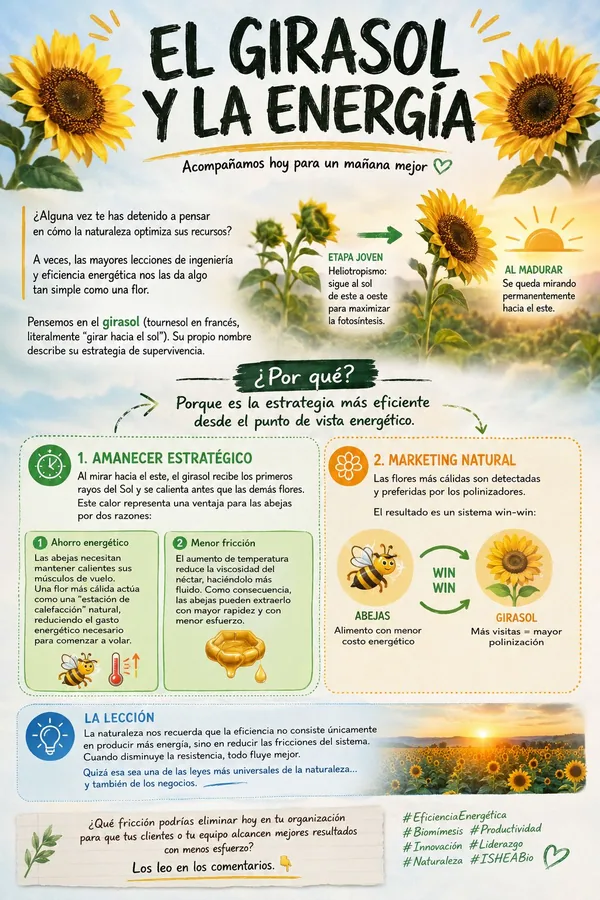
The Sunflower and Energy
How nature optimises its resources: the sunflower turns its geometry into a lesson in engineering and energy efficiency that human technology is still trying to match.

OSF-COG-003 · Collective cognition
ICSD: cognitive state dynamics (in preparation)
A repository in preparation for ICSD, the cognitive state dynamics model; it opens the space where the materials of the EICI + TACC framework will be deposited as the research advances.