

Collective cognition · OSF-COG-001
What If Energy, Information and Organization Are Deeply Connected? On Systemic Coherence
By Carlos J. Pérez Pulido · ISHEA Institute ·
A conceptual essay that treats energy, information and friction as three intertwined dimensions of how systems organize. It frames systemic coherence as an open question, without claiming a universal law.
Preprint — Manuscript deposited on OSF. Not peer-reviewed.
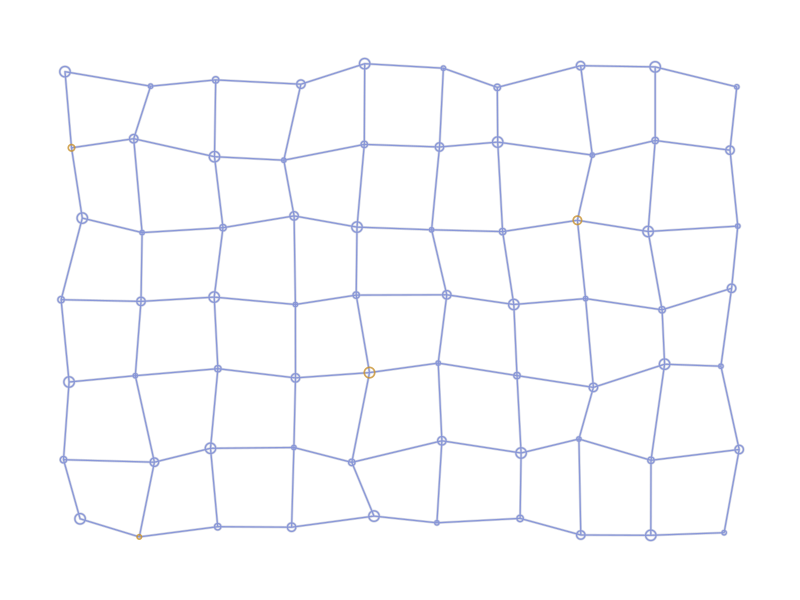
This conceptual essay explores the possible relationship between energy, information, friction and the emergence of organized structures. From the ISHEA perspective, it examines systemic coherence as an open scientific and philosophical question, proposing that understanding complex systems requires looking beyond isolated components and measurements to investigate the interactions, constraints and relationships through which systems organize, transform and maintain functional connections.
The essay introduces Energy, Information and Friction as three interrelated dimensions for exploring systemic behaviour. It does not claim to establish a universal law or an empirically validated model. Instead, it outlines a hypothesis-driven perspective intended to encourage further conceptual development, operationalization, empirical investigation and independent scientific examination.
Framework: ISHEA Framework Δ±1
Author: C.J. Pérez-Pulido
Institution: ISHEA Institute — International System for Human–Ecological Advancement.
Energy, Information, Organization and Systemic Coherence
- Project Overview
This project explores a fundamental question: What is the relationship between energy, information and the emergence of organized structures?
Developed within the conceptual perspective of the ISHEA Institute, this work examines systemic coherence as an open scientific and philosophical question.
It proposes looking beyond isolated components to investigate the interactions, relationships and constraints through which systems organize, transform and maintain functional connections.
- Conceptual Perspective
The exploration considers three interrelated dimensions:
- Energy: interactions, transfers and transformations within systems.
- Information: patterns, configurations and relationships through which organization is expressed.
- Friction: resistance, constraints, tensions and dissipation influencing systemic transformation.
These dimensions are complementary perspectives, not exhaustive descriptions or independent measures of systemic coherence.
- Central Research Question
Could systemic coherence emerge from the dynamic relationships between energy, information and friction?
This question guides the conceptual exploration and provides a starting point for developing more specific research propositions.
- Research Objectives
- Explore conceptual relationships between energy, information and organization.
- Examine how constraints and interactions influence systemic transformation.
- Clarify the meaning and possible scope of systemic coherence.
- Identify potential observable relationships for future investigation.
- Encourage interdisciplinary dialogue and independent scientific examination.
- Scope and Limitations
This project is conceptual and hypothesis-driven.
It does not establish a universal law, demonstrate a universal mechanism or claim empirical validation.
Its propositions require operational definitions, appropriate methodologies, observable evidence and independent assessment.
Cross-domain comparisons are intended to generate research questions, not to assume that different systems operate through identical mechanisms.
- Research Development
The project provides a conceptual foundation for further work within the ISHEA perspective.
Potential future developments include:
- Refinement of conceptual definitions.
- Identification of observable variables and proxies.
- Development of testable propositions.
- Exploration of relevant scientific literature.
- Independent evaluation and empirical investigation.
- Institutional Affiliation
ISHEA Institute
International System for Human–Ecological Advancement
Research areas: Energy Systems, Cognitive Economics and Human Resilience.
Author: C.J. Pérez-Pulido
Director of Research | ISHEA Institute
- Research Position
The purpose of this project is not to offer a final explanation of reality, but to open a structured field of inquiry into the relationships through which organized systems emerge and transform.
Not a final answer. A different way of asking.
In the same room — Collective cognition
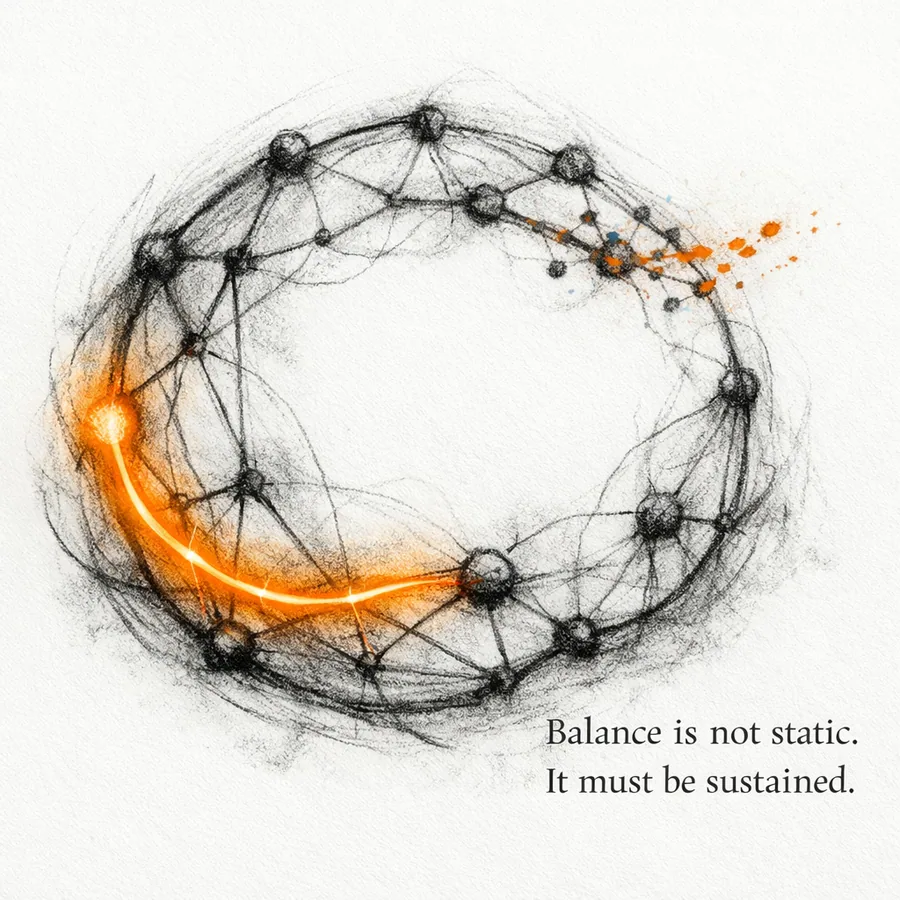
SN-COG-002 · Collective cognition
Biophysical Management: Coherence and Efficiency in Physical Labor
An exploratory study that introduces Biophysical Management (BPM) through a European logistics case, showing how biological energy, task design, rewards and systemic friction shape efficiency and worker behavior.
NOTA-COG-003 · Collective cognition
PISA 2025: what happens when learning too fast stops being learning?
A reading of the PISA 2025 results and the signal they send about performance across OECD countries: the suspicion that speeding up learning may end up hollowing it out.
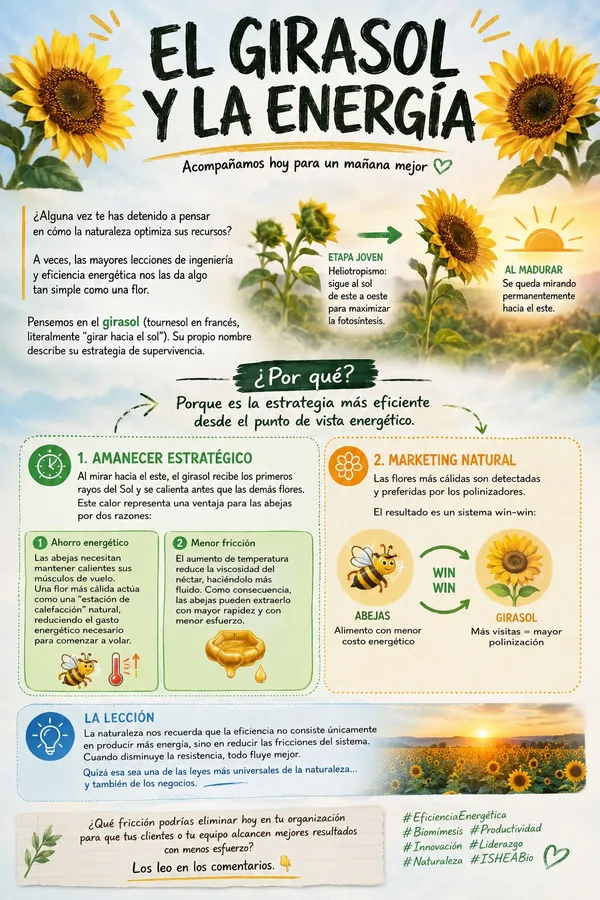
NOTA-COG-004 · Collective cognition
The Sunflower and Energy
How nature optimises its resources: the sunflower turns its geometry into a lesson in engineering and energy efficiency that human technology is still trying to match.