

Economy 5.0 · OSF-ECO-001
The Physical Limit of Capital: Energy, Infrastructure and Geopolitics
By Carlos J. Pérez Pulido · ISHEA Institute ·
The ISHEA Institute's premiere report examines how AI infrastructure, energy and mineral supply chains and maritime corridors set how much financial capital can become real economic activity.
Preprint — Manuscript deposited on OSF. Not peer-reviewed.
The Physical Limit of Capital: Energy, Infrastructure and Geopolitics in the New Resource Economy
ISHEA Premiere Report · Vol. 1, No. 1 · September 2026
This report examines the relationship between financial capital, physical resource availability, infrastructure resilience, and geopolitical risk in the global economy. It explores how the expansion of artificial intelligence infrastructure, the reconfiguration of energy and mineral supply chains, and the strategic transformation of maritime and logistics corridors are reshaping the conditions under which financial value can be converted into realizable economic activity.
Using an interdisciplinary analytical framework informed by biophysical accounting, bioenergetics, cognitive economics, complex systems, and resilience analysis, the report examines three interconnected dimensions: the physical infrastructure supporting AI-related investment; the strategic role of energy resources and logistics corridors in international capital allocation; and the implications of geopolitical disruption for asset valuation and business planning.
The report introduces an ISHEA analytical heuristic, Realizable Value, which considers financial value alongside physical availability, logistical resilience, and flow security. This formulation is presented as a diagnostic framework rather than a calibrated or empirically validated valuation model.
The report concludes with practical recommendations for business planning in 2026–2027, including physical-dependency audits, geographic and supplier redundancy, energy-risk assessment, and systemic stress testing.
Purpose: To contribute to interdisciplinary discussion on the relationship between financial valuation and the physical, infrastructural, and geopolitical conditions that sustain economic activity.
Author: Carlos J. Pérez Pulido
Institution: ISHEA Institute — International System for Human–Ecological Advancement
Keywords: Biophysical economics; financial capital; energy systems; artificial intelligence infrastructure; critical minerals; geopolitical risk; supply-chain resilience; infrastructure security; systemic risk; Economy 5.0.
Isheainstitute.org
The Physical Limit of Capital
The Physical Limit of Capital is an analytical report published by the ISHEA Institute in September 2026. It investigates how physical resource constraints, infrastructure capacity, and geopolitical conditions influence the realization of financial value in the global economy.
Overview
The report argues that financial capital alone cannot guarantee the productive capacity or operational continuity of an asset. Investment depends on the availability of energy, water, minerals, semiconductors, transportation networks, and other physical systems. Geopolitical developments can alter access to these resources, while infrastructure bottlenecks can constrain the conversion of financial investment into economic output.
Main analytical dimensions
- Artificial intelligence and physical infrastructure: Examines the relationship between AI investment, electricity demand, data centers, financing commitments, and grid capacity.
- Energy and geopolitics: Studies how energy flows, refinery compatibility, regulatory changes, and international market conditions influence strategic resource allocation.
- Critical infrastructure and logistics: Considers the strategic importance of maritime corridors, ports, supply chains, and infrastructure security.
- Resilience and asset valuation: Examines how supply concentration, physical constraints, and disruption risks can affect an asset's capacity to generate expected returns.
Realizable Value
The report proposes the following diagnostic heuristic:
Realizable Value = Financial Value × Physical Availability × Logistical Resilience × Flow Security
The factors are represented on a scale from 0 to 1, where 1 denotes an unconstrained condition. The multiplicative formulation emphasizes that a severe constraint in one dimension can limit the value that can practically be realized.
This expression is a proposed analytical heuristic, not an empirically calibrated financial model. Its predictive validity and practical application require further testing.
Relevance to Economy 5.0
Within the broader ISHEA research program, the report connects financial and economic activity to the physical systems that sustain production, infrastructure, and human–ecological systems. It contributes to the discussion of how economic performance should be assessed not only through nominal financial returns but also through resource availability, operational continuity, and systemic resilience.
Author and institution
Author: Carlos J. Pérez Pulido
Institution: ISHEA Institute — International System for Human–Ecological Advancement
Publication: ISHEA Premiere Report, Vol. 1, No. 1, September 2026.
Scope and limitations
The report combines documented data and reported events with the author's interpretations and proposed analytical frameworks. Its geopolitical interpretations and Realizable Value heuristic should be distinguished from independently established empirical findings. The report provides a basis for further research, operational assessment, and empirical testing.
In the same room — Economy 5.0
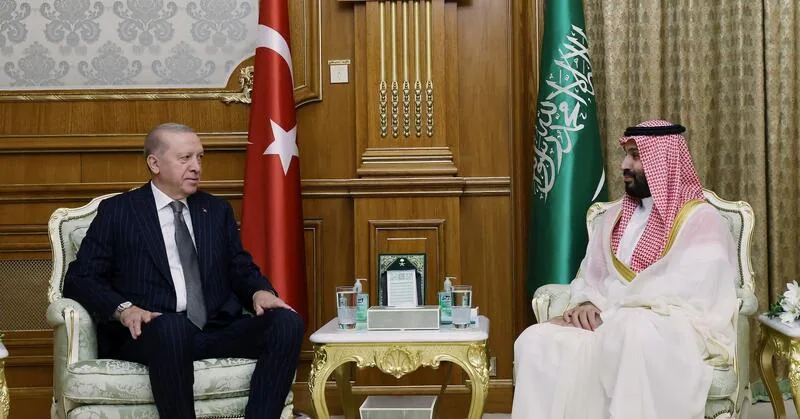
NOTA-ECO-002 · Economy 5.0
Two Sides of the Same Coin: LATAM and the Middle East
Fourth instalment of the series: after mapping the Latin American board, Carlos J. Pérez Pulido sets LATAM and the Middle East face to face, two seemingly distant regions that are sides of the same coin.
NOTA-ECO-003 · Economy 5.0
Brazil 2026: The Political Reality Show
An ex-president in prison, a former prisoner back in power and the first one's son challenging the second: Brazil's 2026 election read as a script even Netflix would find too far-fetched.
NOTA-ECO-004 · Economy 5.0
The Go Board in Latin America: Venezuela, Hinge of the New “Shield of the Americas
Second instalment of a series that reads Latin America as a Go board: Venezuela emerges as the hinge of the new “Shield of the Americas” and of Washington’s shifting strategy in the region.