

Economy 5.0 · NOTA-ECO-019
Venezuela–U.S. oil agreement 2026: another view
By Carlos J. Pérez Pulido · ISHEA Institute ·
First instalment of the series: 65 billion barrels, 100 billion dollars of private investment and a reading of the agreement in which oil is only the starting point of a much larger shift.
Note — Short piece published openly. Thinking in progress, not a result.
Original piece in Spanish.
🇻🇪🇺🇸 1. ACUERDO PETROLERO VENEZUELA–EE. UU. 2026: OTRA VISIÓN
El petróleo es solo el principio.
65.000 millones de barriles.
US$100.000 millones de inversión privada.
US$209.000 millones de ingresos fiscales proyectados.
Hasta 100 años de horizonte.
Pero la verdadera historia está detrás.
1️⃣ EL RECURSO
El acuerdo contempla 17 campos y 65.000 millones de barriles: aprox. 21,5% de las reservas venezolanas.
Para EE. UU.: strategic energy asset.
Para Venezuela:
CAPITAL → PRODUCCIÓN → CASH FLOW → INGRESOS.
Para Trump: ¿victoria energética = capital político rumbo a las midterms?
Para Delcy Rodríguez: ¿Realpolitik vs. Socialismo XXI = costo político?
2️⃣ EL CAPITAL: LA BATALLA QUE CASI NADIE MIRA
Se proyectan US$100.000 millones de inversión privada.
Conseguir ese capital no es sencillo.
McKinsey identifica la inversión como campo central de competencia: los países compiten por capital, tecnología y capacidad productiva.
EE. UU. ocupa una posición excepcional en los mercados globales de capital.
EL CAPITAL TAMBIÉN ES PODER.
Movilizar potencialmente US$100.000 millones hacia Venezuela no sería solo una decisión financiera.
DEMUESTRA EL VALOR ESTRATÉGICO QUE WASHINGTON ASIGNA A VENEZUELA.
La competencia es por:
CAPITAL + TECNOLOGÍA + EJECUCIÓN.
Reuters señala que atraer capital privado será clave para reconstruir una industria deteriorada, pero recuperar producción puede tomar años.
3️⃣ US$209.000 MILLONES Y EL TIEMPO ⏳
Venezuela proyecta US$209.000 millones en ingresos fiscales.
¿PERO CUÁNDO?
RESERVAS ≠ PRODUCCIÓN ≠ CASH FLOW.
El dinero distribuido durante décadas no tiene el mismo valor que recibirlo hoy.
TIEMPO + RIESGO + PRODUCCIÓN + PRECIO = VALOR REAL.
¿Quién garantiza que dentro de 10, 30, 50 o 100 años Venezuela y EE. UU. tendrán los mismos gobiernos, alianzas y reglas?
La historia venezolana demuestra que los contratos petroleros pueden cambiar cuando cambia el poder.
Washington también cambia de estrategia, aunque no necesariamente de política.
Monroe ayer. “Donroe” hoy.
4️⃣ LA PREGUNTA CLAVE 🎯
Más allá de la política, hay una pregunta práctica:
¿A QUÉ VELOCIDAD PUEDE VENEZUELA CONVERTIR SUS RESERVAS EN PRODUCCIÓN COMPETITIVA?
Venezuela tiene el recurso.
Pero necesita:
CAPITAL + TECNOLOGÍA + OPERADORES + EJECUCIÓN.
LA TESIS
EL RECURSO ES EL PUNTO DE PARTIDA.
EL CAPITAL Y LA TECNOLOGÍA LO CONVIERTEN EN PRODUCCIÓN.
EL TIEMPO DEFINE SU VALOR.
El activo no es solo el barril. 🛢️
ES LA CAPACIDAD DE LLEVARLO AL MERCADO.
Porque en la nueva competencia:
SE COMPITE POR CAPITAL.
SE COMPITE POR TECNOLOGÍA.
SE COMPITE POR VELOCIDAD.
🇻🇪🇺🇸🌎
MIENTRAS EL DEBATE SE CONCENTRA EN EL ACUERDO,
LA PREGUNTA ECONÓMICA ES OTRA.
TIEMPO + CAPITAL VALEN ORO CUANDO EL MERCADO CAMBIA.
Fuente Reuters: (https://reference-url-citation.invalid/0)
#Venezuela #EEUU #Petróleo #Geopolítica #Geoeconomía #Realpolitik #VenezuelaPower #EnergySecurity #Oil #ISHEA
In the same room — Economy 5.0

NOTA-ECO-001 · Economy 5.0
What if the variables we use to measure national success were completely backwards?
For decades, progress has been measured through GDP, productivity, growth and energy use. This piece argues those variables may be inverted and asks us to rethink what it means for a country to thrive.
NOTA-ECO-002 · Economy 5.0
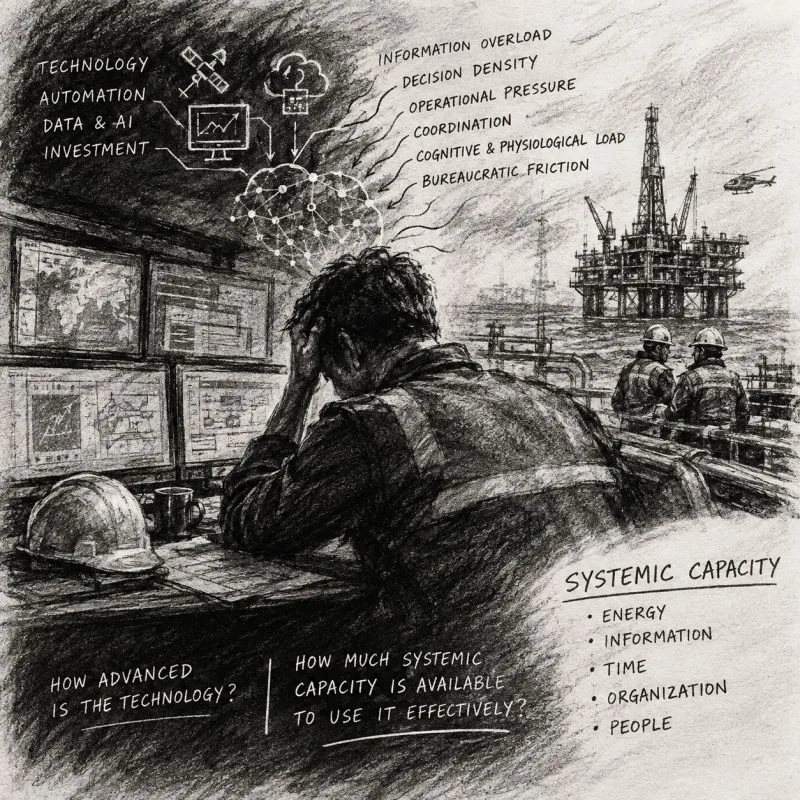
Why do highly engineered systems fail just when technology is most advanced?
In Oil & Gas and other complex operations, more technology does not guarantee better decisions: this piece examines systemic capacity, how much a system can absorb and turn into action under pressure.

NOTA-ECO-003 · Economy 5.0
Frankenstein and Oil: Why Does Venezuela Matter Geopolitically Again?
Third installment of the series: after tracing capital into AI and financial concentration, the next bottleneck comes into view, oil, and with it Venezuela returns to the geopolitical board.