

Economy 5.0 · NOTA-ECO-018
Venezuela–U.S. oil agreement 2026: time, capital and market
By Carlos J. Pérez Pulido · ISHEA Institute ·
Second instalment of the series: oil matters, but capital is what turns reserves into production. A look at the timelines, investment and market conditions that shape the agreement.
Note — Short piece published openly. Thinking in progress, not a result.
Original piece in Spanish.
🇻🇪🇺🇸 2. ACUERDO PETROLERO VENEZUELA–EE. UU. 2026: TIEMPO, CAPITAL Y MERCADO
«El petróleo importa, pero el capital convierte reservas en producción y poder económico.»
1️⃣ LA CRUDA REALIDAD
Los reportes identifican 17 campos en negociación; autoridades venezolanas han señalado una meta inicial de 1,5 millones bpd y una vigencia de 25 años. Los términos completos aún no son públicos.
La producción ronda 1,25 mbpd en agosto de 2026, pero infraestructura, energía y problemas operativos siguen condicionando la exportación.
Convertir reservas exige:
CAPITAL + TECNOLOGÍA + OPERADORES + DILUYENTES + ELECTRICIDAD + INFRAESTRUCTURA.
2️⃣ 65.000 MILLONES DE BARRILES
El acuerdo involucra más de 65.000 millones de barriles de reservas probadas.
Pero no son todas las reservas venezolanas.
La EIA estimó unas 303.000 millones de barriles.
RESERVAS ≠ CAPACIDAD ≠ PRODUCCIÓN ≠ CASH FLOW
3️⃣ COSTOS Y PRODUCCIÓN
Venezuela no vuelve a un mercado vacío.
La IEA proyecta 114,7 mbpd de capacidad mundial en 2030, frente a una demanda cercana a 105,5 mbpd.
Venezuela tiene reservas. El mundo construye producción.
🇺🇸 Permian: productividad y eficiencia.
🇬🇾 Guyana: producción offshore en rápida expansión; desarrollos de Stabroek reportan break-even estimados de US$25–35/barril Brent.
🇨🇦 Canadá: producción récord e infraestructura exportadora en expansión.
🇦🇷 Argentina: Vaca Muerta aumentando producción e inversión.
No son la misma geología ni mercado, pero siguen una lógica:
CAPITAL → INFRAESTRUCTURA → PRODUCCIÓN → EXPORTACIÓN
El capital compara:
COSTO + VELOCIDAD + RIESGO + RETORNO.
El desafío venezolano es producir barriles confiables, exportables y rentables.
4️⃣ DESPUÉS DE LOS US$100.000 MILLONES
Reuters reporta una inversión potencial cercana a US$100.000 millones para reconstruir y modernizar la industria.
Pasar de 1,5 a 3, 4 o 6 mbpd es un escenario de largo plazo, no una proyección automática del acuerdo.
Requeriría inversión secuencial en:
🛢️ Producción | 🧪 Diluyentes | 🏭 Mejoramiento | ⚡ Electricidad | 🔧 Mantenimiento | 🚢 Terminales | 🛢️ Almacenamiento
5️⃣ LA PREGUNTA KEY
¿CUÁNTO CAPITAL NECESITA VENEZUELA PARA CONVERTIR RESERVAS EN PRODUCCIÓN COMPETITIVA ANTES DE QUE CAMBIE EL MERCADO?
RESERVAS → CAPACIDAD → PRODUCCIÓN → CASH FLOW → REINVERSIÓN → ESCALA
La soberanía sobre el subsuelo es estratégica.
Convertir esa riqueza en producción competitiva es poder económico realizable.
La alianza con EE. UU. puede aportar:
CAPITAL + TECNOLOGÍA + OPERADORES + MERCADO.
Pero Venezuela no compite sola.
Guyana, Brasil, Canadá, Argentina y otros productores también mueven sus piezas.
El verdadero mapa energético continúa en cuencas, puertos, infraestructura, costos y mercados.
ISHEA | Agosto 2026
📌 Quick view estratégico; no sustituye un estudio técnico.
Fuentes: Reuters | IEA | EIA | Dallas Fed
#Venezuela #EEUU #Petróleo #Energía #Geoeconomía #Oil #EnergySecurity #Investment #ISHEA
In the same room — Economy 5.0

NOTA-ECO-001 · Economy 5.0
What if the variables we use to measure national success were completely backwards?
For decades, progress has been measured through GDP, productivity, growth and energy use. This piece argues those variables may be inverted and asks us to rethink what it means for a country to thrive.
NOTA-ECO-002 · Economy 5.0
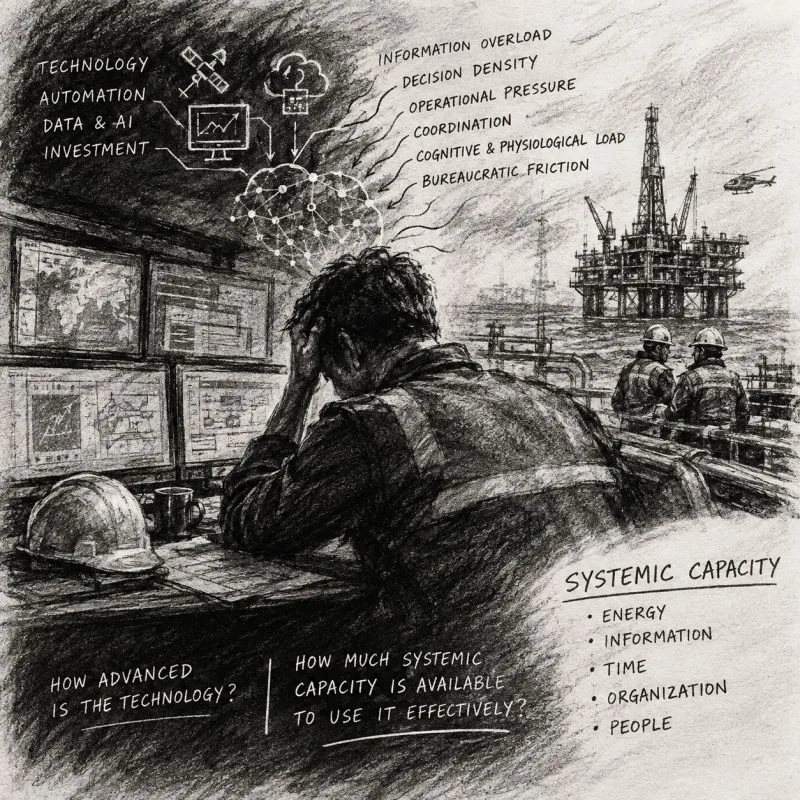
Why do highly engineered systems fail just when technology is most advanced?
In Oil & Gas and other complex operations, more technology does not guarantee better decisions: this piece examines systemic capacity, how much a system can absorb and turn into action under pressure.

NOTA-ECO-003 · Economy 5.0
Frankenstein and Oil: Why Does Venezuela Matter Geopolitically Again?
Third installment of the series: after tracing capital into AI and financial concentration, the next bottleneck comes into view, oil, and with it Venezuela returns to the geopolitical board.