

Economy 5.0 · SN-ECO-001
Economy 5.0: Beyond Energy and Carbon — Toward Systemic Coherence
By Carlos J. Pérez Pulido · ISHEA Institute ·
ISHEA's proposal for Economy 5.0: a human-centred economic framework that looks past energy, carbon and efficiency to systemic coherence, human capabilities and the capacity of economies to adapt and endure.
Research community — Published on Springer Nature Communities: peer-facing writing, not formally reviewed.
ECONOMY 5.0: BEYOND ENERGY AND CARBON — TOWARD SYSTEMIC COHERENCE
A Human-Centred Economic Framework for Functional Capacity, Resilience and Systemic Coherence
Carlos J. Pérez Pulido
Director of Research, ISHEA Institute
ORCID: 0009-0004-1822-4798
Abstract
Can an economic system be considered more advanced simply because it produces more, consumes less energy or emits less carbon?
These indicators are essential, but they do not fully describe whether a system can preserve its functional capacity when the conditions on which it depends begin to change.
This article introduces the ISHEA conceptual proposal for Economy 5.0: a human-centred economic framework that examines how human capabilities, information, energy and organizational structures interact to preserve, reorganize and regenerate systemic coherence under changing conditions.
The central argument is that economic progress cannot be adequately evaluated through output and resource efficiency alone. It must also consider whether the systems producing that output maintain the human, informational and organizational conditions necessary for their continuity.
The proposal distinguishes Economy 5.0 from Industry 5.0, defines systemic coherence as an additional structural dimension of economic analysis, and introduces a conceptual formulation linking energy, information and systemic friction. It also presents the TACC cycle — Think, Assimilate, Create and Check — as a model of adaptive knowledge processing.
The framework remains conceptual and requires operationalization, empirical replication and independent evaluation. It does not seek to replace established economic or environmental indicators. Rather, it proposes an additional dimension for examining the relationship between efficiency, human capacity and resilience.
Keywords: Economy 5.0; Systemic Coherence; Human-Centred Economy; ISHEA; Energy–Information–Friction; Resilience; Biophysical Management; TACC.
1. The question beyond efficiency
An economic system can become more efficient and, at the same time, more fragile.
A factory may reduce its energy consumption and carbon footprint while becoming increasingly dependent on a single supplier, a centralized algorithm or an infrastructure component with few alternatives. Its environmental indicators may improve even as its capacity to respond to disruption deteriorates.
This is not an argument against efficiency or decarbonization. It is a recognition that these measures describe different dimensions of system performance.
Industry 5.0 has promoted an important shift in industrial thinking by recognizing human-centredness, sustainability and resilience as central objectives. The ISHEA proposal extends this discussion beyond industrial production to the wider economic and human–ecological system.
The question is therefore:
Can an economy be considered more advanced if it becomes more efficient in resource consumption but less capable of preserving its human and organizational functions under changing conditions?
The ISHEA proposal for Economy 5.0 begins with this question. It argues that economic progress must be examined not only through what systems produce or save, but also through the functional capacities they preserve and the relationships that allow them to continue operating, adapt and reorganize.
2. Defining Economy 5.0: The ISHEA proposal
Economy 5.0 is a human-centred economic framework that evaluates economic progress beyond production, energy consumption and carbon emissions, examining the capacity of human, informational, energetic and organizational systems to preserve, reorganize and regenerate their functional coherence under changing conditions.
Its central premise is that economic progress should strengthen human capabilities and systemic resilience rather than transfer costs, constraints or degradation to people and the systems that sustain them.
Three distinctions are fundamental:
- The human being is not merely a production input or a variable in a productivity equation. Human capabilities, biological limits, knowledge and agency are central conditions of economic activity.
- Technology is an instrument that should support human capabilities and organizational functions, not become an objective that displaces them.
- Economic performance must also be examined through the relationships that allow a system to continue functioning, adapt and reorganize when its operating conditions change.
This article establishes the explicit definition and analytical scope adopted by ISHEA for Economy 5.0, distinguishing it from the industrial framework of Industry 5.0 and identifying systemic coherence as a central subject for further economic research.
3. From Industry 5.0 to Economy 5.0
Industry 5.0 focuses on the industrial transformation of production systems through human-centredness, sustainability and resilience (Breque et al., 2021).
Economy 5.0 extends the analytical scope to economic and human–ecological systems, including households, institutions, infrastructure, knowledge networks, energy systems and ecological conditions.
Consider, for example, a manufacturing organization whose production indicators remain stable while the cognitive and physical demands placed on its workforce progressively undermine the capacity to sustain those operations. The industrial system may appear efficient when assessed through output and resource consumption, while the human conditions supporting its continuity are deteriorating.
A similar distinction applies to information networks. Discontinuities, delays or distortions in information exchanged between suppliers, households, institutions and production facilities may affect coordination and decision-making across the wider economic system. The resulting constraints are not necessarily visible in the performance indicators of an individual industrial facility.
These examples illustrate why the analytical scope of Economy 5.0 extends beyond the factory itself. Industrial performance is embedded in wider human, informational and organizational relationships that can strengthen or constrain the continuity of economic activity.
The distinction is not a rejection of Industry 5.0. It is an extension of the question: how do the different components of an economy remain functionally coordinated when resources, information, incentives or environmental conditions change?
4. Systemic coherence as an economic dimension
The ISHEA framework uses systemic coherence to describe the capacity of interacting human, informational, energetic and organizational components to maintain or reorganize their functional relationships under changing conditions.
Coherence is not synonymous with efficiency, sustainability or resilience:
- Efficiency concerns the relationship between resources used and outputs produced.
- Sustainability concerns the capacity to maintain activity within relevant environmental and social limits.
- Resilience concerns the capacity to absorb disruption, adapt and recover.
- Systemic coherence concerns the functional relationships that allow interacting components to remain coordinated or reorganize when conditions change.
Within this framework, coherence is proposed as a structural dimension that may help explain why improvements in efficiency do not necessarily translate into improvements in resilience.
It is not assumed to be directly observable as a single universal quantity. Its evaluation requires indicators or proxies appropriate to the domain being studied.
Possible domain-specific proxies include information continuity, coordination quality, recovery time, capacity to reorganize tasks and resources, propagation of errors and preservation of essential human and organizational capabilities.
These indicators must be defined and measured in relation to the system under investigation. A proxy suitable for logistics cannot automatically be transferred to a biological system, a financial institution or an ecological network.
The objective is to investigate a common structural question without assuming identical measurements across different domains.
5. The energy–information–friction relationship
The ISHEA framework proposes that system performance cannot be understood through energy availability alone.
Energy provides the capacity to perform work. Information influences how that capacity is organized and directed. Friction represents constraints and resistance that interfere with the coordination and execution of system functions.
The framework distinguishes:
- E — Energetic component: available energetic capacity, normalized in relation to a relevant domain-specific reference or ceiling.
- I — Informational component: availability and organization of information required to coordinate system functions.
- F — Systemic friction: constraints, resistance and disruptions that reduce the capacity to maintain or reorganize system functions.
An earlier conceptual formulation expressed this relationship as:
EICI = (E × I) / F
However, this expression becomes unbounded as friction approaches zero. A revised conceptual formulation is therefore proposed:
C = tanh(E × I) − F
The hyperbolic tangent bounds the energetic–informational interaction and introduces a saturation effect: as E × I increases, additional increases produce progressively smaller changes in the function's output.
Depending on the relative scaling of the components, C may also take negative values when systemic friction exceeds the bounded energetic–informational contribution. Such values require an explicit interpretation and should not automatically be treated as measurement errors.
For this expression to be operationally meaningful, E, I and F must be explicitly defined, normalized and measured on compatible scales. Their selection, normalization and relationship must be justified for each domain of application.
The mathematical form alone does not establish empirical validity, predictive capacity or universal thresholds. The formulation is therefore a research proposal, not a calibrated law or validated universal index.
6. Why information matters beyond energy
Information does not simply increase the quantity of available resources. It changes how resources can be coordinated, allocated and reorganized.
A production system may have sufficient energy, equipment and personnel but still experience operational degradation because information is delayed, incomplete or disconnected between functions.
Conversely, improvements in information continuity may allow an organization to use existing resources more effectively without requiring an equivalent increase in material or energetic inputs.
This is not a claim that information can substitute for physical resources. It is a proposition that the organization of resources depends partly on the quality and continuity of information.
The economic significance of information therefore extends beyond efficiency. It also concerns the capacity to recognize changing conditions, coordinate responses and reorganize system functions.
7. TACC: A cycle of adaptive knowledge processing
The ISHEA framework describes adaptive knowledge processing through the TACC cycle:
Think → Assimilate → Create → Check
- Think: identify an anomaly, constraint or change in system conditions.
- Assimilate: integrate new information with existing knowledge, experience and operational boundaries.
- Create: develop a new configuration, response or way of organizing available resources.
- Check: evaluate whether the proposed change improves functional coordination and restores or strengthens coherence.
TACC is presented as a conceptual model, not an experimentally validated universal sequence of cognition.
Its relevance to Economy 5.0 lies in the relationship between information and action. Information that does not translate into decisions, and decisions that do not produce effective reorganization, may fail to improve system performance.
The central question is not simply whether information is available, but whether knowledge can be converted into effective adaptive action.
8. The biophysical dimension of economic organization
An economy is not independent of the biological and physical conditions of the people who sustain it.
Workers, consumers and decision-makers operate within biological systems with finite energetic capacity, cognitive limits and individual differences. Organizational structures can support or undermine these capacities through task design, information availability, incentives, environmental conditions and the distribution of operational friction.
The ISHEA approach incorporates this dimension through Biophysical Management (BPM), which examines the interaction between biological capacity and organizational conditions.
A qualitative exploratory study in a European logistics environment in the Netherlands provides an initial field context for this research programme.
Working paper: Biophysical Management in Physical Labor Environments: Automatism, Coherence, and the Neurobiological Failure of Efficiency-Penalizing Compensation Structures.
OSF DOI: https://doi.org/10.17605/OSF.IO/N7GY6
The study examines task structure, operational friction, incentives and worker behaviour through qualitative participant observation.
It is a single-domain exploratory case. It does not provide direct physiological or neurobiological measurements, establish causal relationships or empirically validate the proposed coherence formulation.
BPM should therefore be understood as an exploratory application area within the broader Economy 5.0 research agenda. Its contribution lies in examining how organizational conditions interact with human functional capacity in a real operational environment.
Independent replication and the development of measurable indicators remain necessary.
9. What Economy 5.0 does — and does not — claim
The ISHEA proposal does not seek to replace GDP, productivity indicators, energy accounting or carbon measurement. These indicators remain essential for evaluating economic activity and environmental impact.
Instead, Economy 5.0 introduces a complementary question:
How much functional capacity can an economic system preserve, reorganize or regenerate when the conditions on which it depends change?
Three levels must remain distinct:
- Conceptual framework: the definition and relationships proposed by ISHEA.
- Operational measurement model: the variables, proxies and protocols required to examine the framework in specific domains.
- Empirically validated instrument: a measurement approach whose reliability, validity and explanatory or predictive capacity have been independently evaluated.
The present article establishes the first level and outlines a pathway toward the second and third.
10. Research agenda: From conceptual definition to empirical evaluation
The proposed framework requires a progressive research programme.
First: Operationalization. Define domain-specific variables and proxies for energetic capacity, information and systemic friction. Establish normalization procedures, compatible measurement scales, reference ranges and explicit rules for interpreting results. Examine the sensitivity of the proposed formulation to changes in each variable, including the saturation behaviour of the hyperbolic tangent function and the contribution of systemic friction.
Second: Independent replication. Apply the Biophysical Management approach in a second, independent operational environment. Examine whether comparable patterns emerge under different organizational conditions.
Third: Cross-domain evaluation. Investigate whether the coherence proposition can be operationalized in selected economic, organizational and human–ecological systems without assuming identical underlying variables.
Fourth: Independent scrutiny. Make proxy methodologies and analytical assumptions available for criticism, replication and alternative interpretation.
Fifth: Comparison with established indicators. Test whether coherence-related proxies provide explanatory information beyond conventional measures of efficiency, energy consumption, emissions and recovery performance.
These steps are necessary before the framework can support claims of predictive validity or general applicability. The research programme must also remain open to the possibility that some proposed relationships may not be supported by empirical findings.
11. Conclusion: Economic progress as functional capacity
The central proposition of Economy 5.0 is that economic progress should not be evaluated exclusively through production, efficiency or resource consumption.
A system can produce more while becoming more fragile. It can consume less energy while increasing dependence on a limited number of critical components. It can improve its operational indicators while transferring costs or constraints to the people who sustain its activity.
These possibilities do not make efficiency or decarbonization less important. They demonstrate why those indicators cannot answer every question about economic performance.
The ISHEA proposal defines Economy 5.0 as a human-centred framework for examining the coherence of interacting human, informational, energetic and organizational systems.
Its central research question remains:
Is this system actually becoming more resilient, or simply more efficient?
Economic progress should not be measured only by what a system produces or saves, but also by what it remains capable of sustaining.
References
Breque, M., De Nul, L., & Petridis, A. (2021). Industry 5.0: Towards a sustainable, human-centric and resilient European industry. European Commission, Directorate-General for Research and Innovation. https://doi.org/10.2777/308407
Pérez Pulido, C. J. (2026). Biophysical Management in Physical Labor Environments: Automatism, Coherence, and the Neurobiological Failure of Efficiency-Penalizing Compensation Structures. Open Science Framework. https://doi.org/10.17605/OSF.IO/N7GY6
Author statement
Author: Carlos J. Pérez Pulido (publishes as C.J. Pérez Pulido)
Institution: ISHEA Institute
Position: Director of Research
ORCID: 0009-0004-1822-4798
AI-assisted tools were used for language editing and editorial refinement. The author reviewed the manuscript and takes responsibility for its conceptual framework, scientific content, references and final version.
Related work
- The Inverted Economy: When the State Serves the Individual — introduces the K-Model.
- Biophysics: The Limit of Humanity — explores bioenergetic coherence and systemic limits.
- Biophysical Limits of Human Systems: A Unified Energy–Information–Friction Framework of Wellbeing.
- Bioenergetic Coherence and Environmental Modulators.
ISHEA Institute
Research on human, cognitive and ecological systems.
In the same room — Economy 5.0
OSF-ECO-002 · Economy 5.0
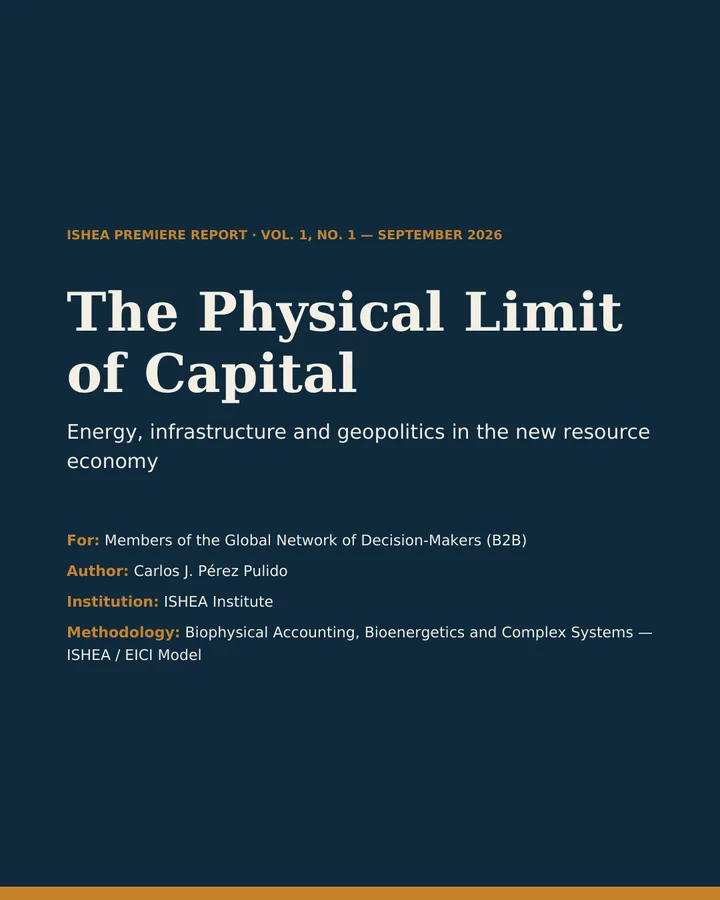
The Physical Limit of Capital: Energy, Infrastructure and Geopolitics
The ISHEA Institute's premiere report examines how AI infrastructure, energy and mineral supply chains and maritime corridors set how much financial capital can become real economic activity.
NOTA-ECO-003 · Economy 5.0
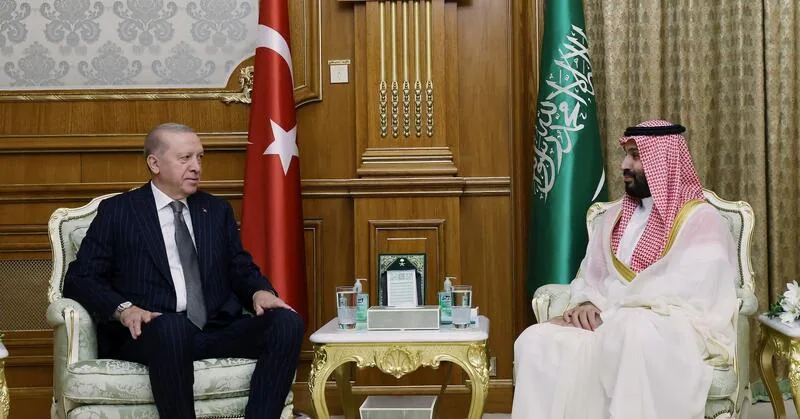
Two Sides of the Same Coin: LATAM and the Middle East
Fourth instalment of the series: after mapping the Latin American board, Carlos J. Pérez Pulido sets LATAM and the Middle East face to face, two seemingly distant regions that are sides of the same coin.
NOTA-ECO-004 · Economy 5.0
Brazil 2026: The Political Reality Show
An ex-president in prison, a former prisoner back in power and the first one's son challenging the second: Brazil's 2026 election read as a script even Netflix would find too far-fetched.