

Economy 5.0 · NOTA-ECO-123
What Is LEX? A Framework for Reading Collective Stress
By Carlos J. Pérez Pulido · ISHEA Institute ·
LEX is a conceptual framework for detecting patterns of stress within systems and tracking how that stress turns into political, social and economic action before it becomes a crisis.
Note — Short piece published openly. Thinking in progress, not a result.
🔎 What is LEX?
LEX is a conceptual framework for reading and acting on collective . It helps:
Detect patterns of stress in systems
Evaluate how translates into action (political, social, economic)
Assess whether variables strengthens resilience or contributes to collapse
🐝 Applied Example (Bees → Human Systems):
1. Input → Environmental shock (introduction of African bees in Brazil)
2. LEX Processing →
Biological swarms → defensive reaction
Human actors (beekeepers) → adapt practices, increase effort and costs
3. Output → A system under stress, with lower collective resilience
👉 Lesson: It’s not the shock itself, but how flow into decisions that determines resilience.
🌍 Why it matters today:
International policy: reveals whether states react defensively or act creatively
Organizations: shows if teams management with innovation or burnout
Individuals: gauges the ability to turn crises into learning opportunities
🌱 Conclusion:
LEX acts as a lens connecting data to resilience.
👉 It’s not enough to measure; understanding how shocks are translated into collective action is what matters.
💡 Question for reflection:
Is the world today using its “LEX” to react or to create?
#Resilience #SystemsThinking #CollectiveAction #Knowledge #Innovation #SocialSystems #Economy5_0
In the same room — Economy 5.0

NOTA-ECO-001 · Economy 5.0
What if the variables we use to measure national success were completely backwards?
For decades, progress has been measured through GDP, productivity, growth and energy use. This piece argues those variables may be inverted and asks us to rethink what it means for a country to thrive.
NOTA-ECO-002 · Economy 5.0
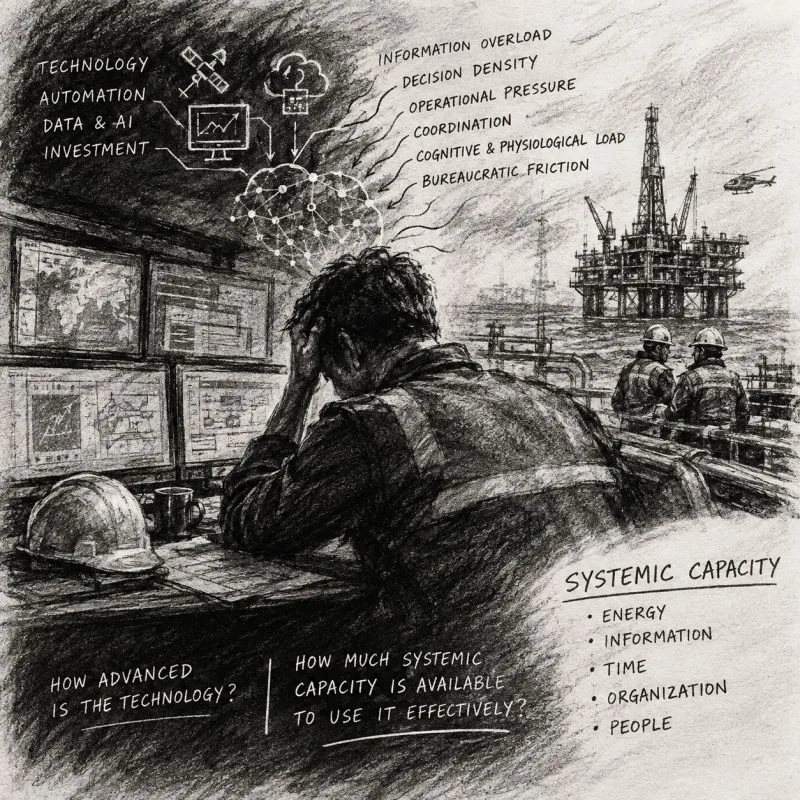
Why do highly engineered systems fail just when technology is most advanced?
In Oil & Gas and other complex operations, more technology does not guarantee better decisions: this piece examines systemic capacity, how much a system can absorb and turn into action under pressure.

NOTA-ECO-003 · Economy 5.0
Frankenstein and Oil: Why Does Venezuela Matter Geopolitically Again?
Third installment of the series: after tracing capital into AI and financial concentration, the next bottleneck comes into view, oil, and with it Venezuela returns to the geopolitical board.