

Economy 5.0 · NOTA-ECO-013
When the Water Overflows the Glass, the System Dries Up
By Carlos J. Pérez Pulido · ISHEA Institute ·
A reflection on complex systems: abundance that exceeds the capacity to absorb it does not enrich but depletes. An economic reading of why excess without channels ends up drying out the system.
Note — Short piece published openly. Thinking in progress, not a result.
Original piece in Spanish.
🌊 CUANDO EL AGUA SE DESBORDA DEL VASO, EL SISTEMA SE SECA
Parece una contradicción.
Pero en sistemas complejos, la abundancia también puede generar escasez cuando supera la capacidad de absorción.
El problema no siempre es cuánto recurso entra.
Es cuánto puede procesar, distribuir y sostener el sistema.
En ISHEA observamos esta dinámica a distintas escalas:
🧬 MICRO — BIOLOGÍA
El estrés sostenido puede mantener elevada la demanda energética y fisiológica. Durante un tiempo parece capacidad.
Pero si la demanda supera persistentemente la recuperación, disminuyen la eficiencia y la resiliencia.
No siempre faltan recursos: puede faltar capacidad para administrarlos.
🏢 MESO — ORGANIZACIONES
Una empresa puede aumentar ventas y beneficios mientras su infraestructura y capital humano se saturan.
Más ventas → más presión → más fricción → menor capacidad de respuesta.
El éxito puede terminar debilitando la capacidad de sostenerlo.
🌍 MACRO — ECONOMÍA
Una gran renta de recursos naturales puede generar prosperidad, pero también desplazar sectores productivos y crear dependencia.
Cuando el flujo disminuye, aparece la fragilidad.
No era necesariamente falta de recursos.
Era falta de arquitectura para convertir abundancia temporal en capacidad sostenible.
🧠 LA LECCIÓN
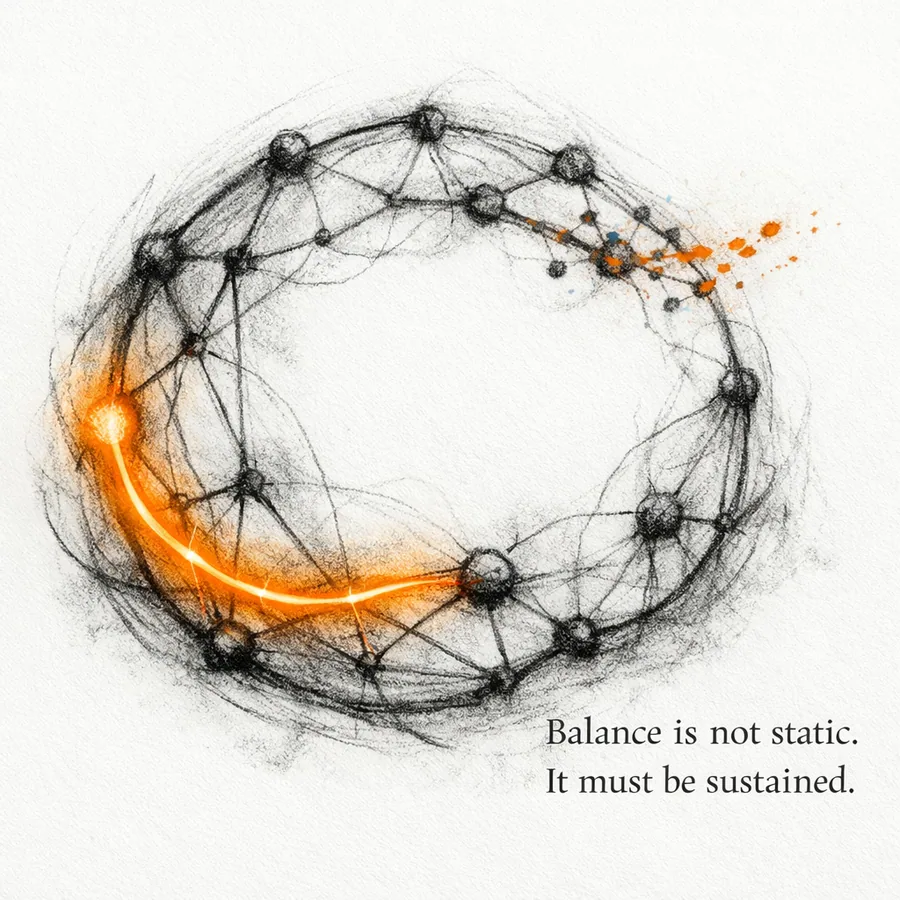
El problema no es el agua.
Es el vaso.
Economía 5.0 plantea una pregunta diferente:
¿Cuál es la capacidad de un sistema para transformar recursos en resiliencia duradera?
Más producción no siempre es más salud.
Más velocidad no siempre es más eficiencia.
Más ingresos no siempre son más resiliencia.
Gestionar la abundancia también requiere arquitectura sistémica.
Porque cuando el vaso no puede contener el flujo, el desborde puede parecer abundancia…
hasta que el sistema se queda seco.
🔗 isheainstitute.org
#ISHEA #Economy50 #SystemsThinking #ComplexSystems #Resilience #Bioenergetics
In the same room — Economy 5.0
SN-ECO-001 · Economy 5.0
Circular Economy Must Begin at the Design Stage: An ISHEA Perspective on Economy 5.0
The next step in the circular economy is not recovering more but designing to lose less. Economy 5.0 joins Digital Twins, biophysical management, circular design and sustainable finance to preserve systemic value.
SN-ECO-002 · Economy 5.0
Economy 5.0: Beyond Energy and Carbon — Toward Systemic Coherence
ISHEA's proposal for Economy 5.0: a human-centred economic framework that looks past energy, carbon and efficiency to systemic coherence, human capabilities and the capacity of economies to adapt and endure.
OSF-ECO-003 · Economy 5.0
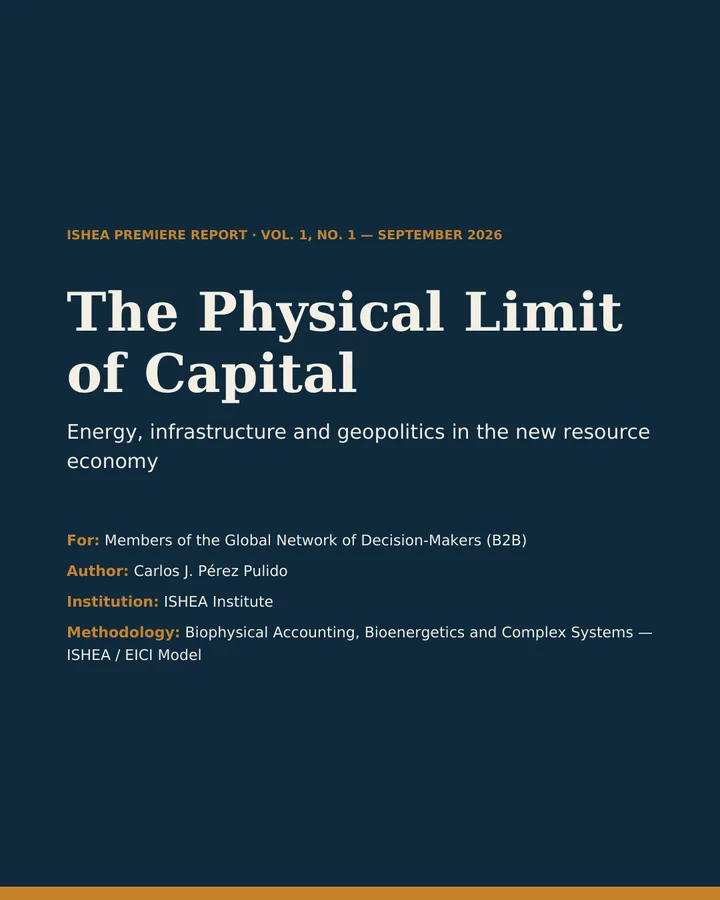
The Physical Limit of Capital: Energy, Infrastructure and Geopolitics
The ISHEA Institute's premiere report examines how AI infrastructure, energy and mineral supply chains and maritime corridors set how much financial capital can become real economic activity.