

Cognición colectiva · OSF-COG-034
Dosier 6 – Historia: imperios, guerras y globalización en ciclos de auge y colapso
Por Carlos J. Pérez Pulido · ISHEA Institute ·
De Roma y los mayas a las guerras mundiales y la globalización, las civilizaciones ascienden y caen según la alineación de propósito, transmisión y resiliencia, en ciclos largos leídos con ISHEA.
Preprint — Manuscrito depositado en OSF. Sin revisión por pares.
Pieza original en inglés.
This dossier examines how civilizations—from Rome and the Mayas to World Wars and the era of globalization—rise and fall according to the alignment or collapse of Purpose (K), Transmission (T), and Resilience (R). History validates ISHEA as a framework capable of explaining long-term systemic cycles across human societies.
📜 Dossier 6 – History: Empires, Wars, and Globalization
Historical Validation of ISHEA–KTR–TACC–IHC through Civilizational Rise and Collapse
Author: Carlos Pérez Pulido
Year: 2025
Overview
This dossier explores how civilizations rise, expand, and collapse through the lens of the ISHEA–KTR–TACC–IHC model. From Rome and the Mayas to the World Wars and the era of globalization, history shows that when Purpose (K) is fragmented, Transmission (T) is corrupted, and Resilience (R) is weakened, systemic collapse follows.
Conversely, when K, T, and R are aligned, societies achieve expansion, stability, and cultural flourishing.
Key Historical Insights
- Rome (27 BCE – 476 CE):
- Strong K (imperial mission and law).
- Stable T (roads, language, military organization).
- Resilience through adaptation.
-
Collapse began as K fragmented (loss of civic purpose), T corrupted (internal division), and R exhausted (economic/territorial overextension).
-
Mayan Civilization:
- K anchored in cosmology and ritual.
- T disrupted by ecological stress and elite conflict.
- R failed under drought and warfare.
-
Outcome: systemic collapse with fragmented city-states.
-
World Wars (20th Century):
- K fractured between nationalism and globalism.
- T collapsed (propaganda, mistrust, failed diplomacy).
- R overwhelmed by industrial-scale conflict.
-
Lesson: collapse emerges when KTR alignment is broken globally.
-
Globalization (20th–21st Century):
- Strong K in economic integration.
- T accelerated by digital communication.
- R questioned by inequality, ecological crises, and polarization.
- Outcome still in flux: IDCS suggests rising systemic fragility.
Hypotheses
- H21.1: Civilizations rise when K/T/R are aligned and collapse when they fragment.
- H21.2: Historical cycles validate that IDCS can be extended beyond health into macro-historical systems.
- H21.3: Globalization represents a new civilizational experiment, fragile under rising cognitive tension.
Results (Conceptual Validation)
- Rome and the Mayas confirm that fragmentation of purpose and transmission leads to collapse.
- The World Wars validate that global systems collapse when KTR fails simultaneously across nations.
- Globalization demonstrates that the ISHEA framework can predict vulnerabilities in modern systemic structures.
Conclusion
History validates ISHEA:
- K = Purpose of civilizations (mission, cosmology, ideology).
- T = Transmission through institutions, diplomacy, or communication.
- R = Resilience through adaptation, redundancy, or cultural flexibility.
The rise and fall of civilizations prove that the K–T–R cycle is not only biological or social but civilizational and global.
Files in this folder
- exp21_history_empires_wars_globalization.md
- exp21_history_dataset.csv
- exp21_history_analysis.py
- figures/exp21_civilizational_cycles.png
- figures/exp21_globalization_fragility.png
En la misma sala — Cognición colectiva
NOTA-COG-001 · Cognición colectiva
PISA 2025: ¿qué ocurre cuando aprender demasiado rápido deja de ser aprender?
Una lectura de los resultados de PISA 2025 y de la señal que dejan en el rendimiento de los países de la OCDE: la sospecha de que acelerar el aprendizaje puede terminar vaciándolo de contenido.
NOTA-COG-002 · Cognición colectiva
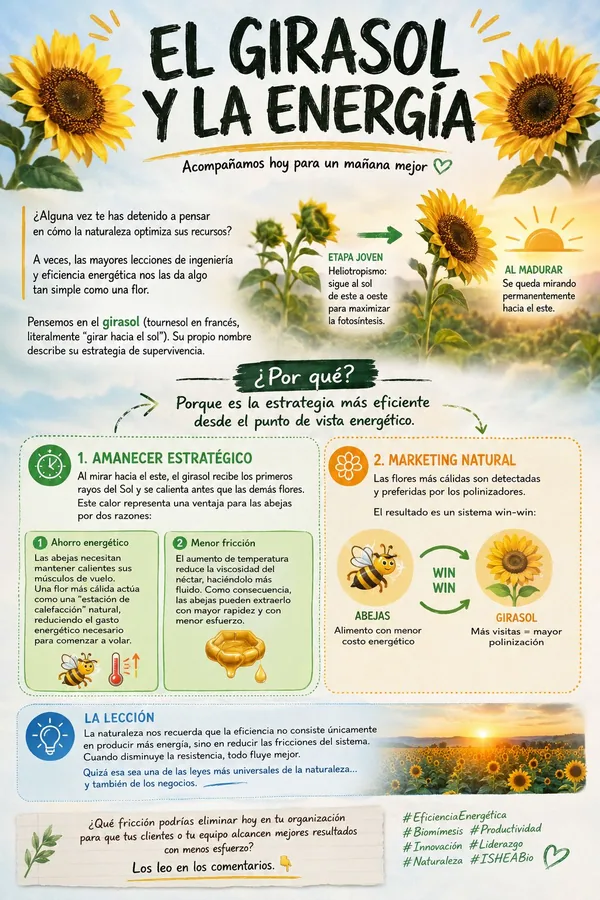
El girasol y la energía
Cómo la naturaleza optimiza sus recursos: el girasol convierte su geometría en una lección de ingeniería y eficiencia energética que la tecnología humana todavía intenta igualar.
OSF-COG-003 · Cognición colectiva
ICSD: dinámica de estados cognitivos (en preparación)
Repositorio en preparación del ICSD, el modelo de dinámica de estados cognitivos; abre el espacio donde se depositarán los materiales del marco EICI + TACC conforme avance la investigación.