

Cognizione collettiva · OSF-COG-034
Dossier 6 – Storia: imperi, guerre e globalizzazione nei cicli di ascesa e collasso
Di Carlos J. Pérez Pulido · ISHEA Institute ·
Da Roma e dai Maya alle guerre mondiali e alla globalizzazione, le civiltà salgono e cadono secondo l'allineamento di scopo, trasmissione e resilienza, in cicli lunghi letti con ISHEA.
Preprint — Manoscritto depositato su OSF. Senza revisione paritaria.
Opera originale in inglese.
This dossier examines how civilizations—from Rome and the Mayas to World Wars and the era of globalization—rise and fall according to the alignment or collapse of Purpose (K), Transmission (T), and Resilience (R). History validates ISHEA as a framework capable of explaining long-term systemic cycles across human societies.
📜 Dossier 6 – History: Empires, Wars, and Globalization
Historical Validation of ISHEA–KTR–TACC–IHC through Civilizational Rise and Collapse
Author: Carlos Pérez Pulido
Year: 2025
Overview
This dossier explores how civilizations rise, expand, and collapse through the lens of the ISHEA–KTR–TACC–IHC model. From Rome and the Mayas to the World Wars and the era of globalization, history shows that when Purpose (K) is fragmented, Transmission (T) is corrupted, and Resilience (R) is weakened, systemic collapse follows.
Conversely, when K, T, and R are aligned, societies achieve expansion, stability, and cultural flourishing.
Key Historical Insights
- Rome (27 BCE – 476 CE):
- Strong K (imperial mission and law).
- Stable T (roads, language, military organization).
- Resilience through adaptation.
-
Collapse began as K fragmented (loss of civic purpose), T corrupted (internal division), and R exhausted (economic/territorial overextension).
-
Mayan Civilization:
- K anchored in cosmology and ritual.
- T disrupted by ecological stress and elite conflict.
- R failed under drought and warfare.
-
Outcome: systemic collapse with fragmented city-states.
-
World Wars (20th Century):
- K fractured between nationalism and globalism.
- T collapsed (propaganda, mistrust, failed diplomacy).
- R overwhelmed by industrial-scale conflict.
-
Lesson: collapse emerges when KTR alignment is broken globally.
-
Globalization (20th–21st Century):
- Strong K in economic integration.
- T accelerated by digital communication.
- R questioned by inequality, ecological crises, and polarization.
- Outcome still in flux: IDCS suggests rising systemic fragility.
Hypotheses
- H21.1: Civilizations rise when K/T/R are aligned and collapse when they fragment.
- H21.2: Historical cycles validate that IDCS can be extended beyond health into macro-historical systems.
- H21.3: Globalization represents a new civilizational experiment, fragile under rising cognitive tension.
Results (Conceptual Validation)
- Rome and the Mayas confirm that fragmentation of purpose and transmission leads to collapse.
- The World Wars validate that global systems collapse when KTR fails simultaneously across nations.
- Globalization demonstrates that the ISHEA framework can predict vulnerabilities in modern systemic structures.
Conclusion
History validates ISHEA:
- K = Purpose of civilizations (mission, cosmology, ideology).
- T = Transmission through institutions, diplomacy, or communication.
- R = Resilience through adaptation, redundancy, or cultural flexibility.
The rise and fall of civilizations prove that the K–T–R cycle is not only biological or social but civilizational and global.
Files in this folder
- exp21_history_empires_wars_globalization.md
- exp21_history_dataset.csv
- exp21_history_analysis.py
- figures/exp21_civilizational_cycles.png
- figures/exp21_globalization_fragility.png
Nella stessa sala — Cognizione collettiva
NOTA-COG-001 · Cognizione collettiva
PISA 2025: che cosa succede quando imparare troppo in fretta smette di essere apprendimento?
Una lettura dei risultati di PISA 2025 e del segnale che lanciano sul rendimento dei Paesi OCSE: il sospetto che accelerare l'apprendimento possa finire per svuotarlo di senso.
NOTA-COG-002 · Cognizione collettiva
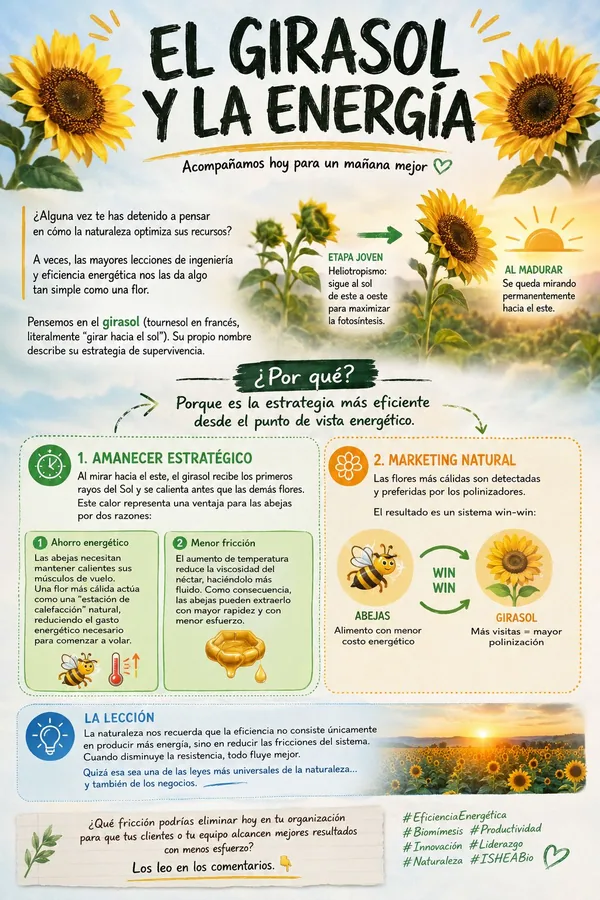
Il girasole e l'energia
Come la natura ottimizza le proprie risorse: il girasole trasforma la sua geometria in una lezione di ingegneria ed efficienza energetica che la tecnologia umana cerca ancora di eguagliare.
OSF-COG-003 · Cognizione collettiva
ICSD: dinamica degli stati cognitivi (in preparazione)
Repository in preparazione dell'ICSD, il modello di dinamica degli stati cognitivi; apre lo spazio in cui i materiali del quadro EICI + TACC saranno depositati con l'avanzare della ricerca.