

Collective cognition · OSF-COG-034
Dossier 6 – History: empires, wars and globalization as cycles of rise and collapse
By Carlos J. Pérez Pulido · ISHEA Institute ·
From Rome and the Maya to the world wars and globalization, civilizations rise and fall with the alignment of purpose, transmission and resilience, in long cycles read through ISHEA.
Preprint — Manuscript deposited on OSF. Not peer-reviewed.
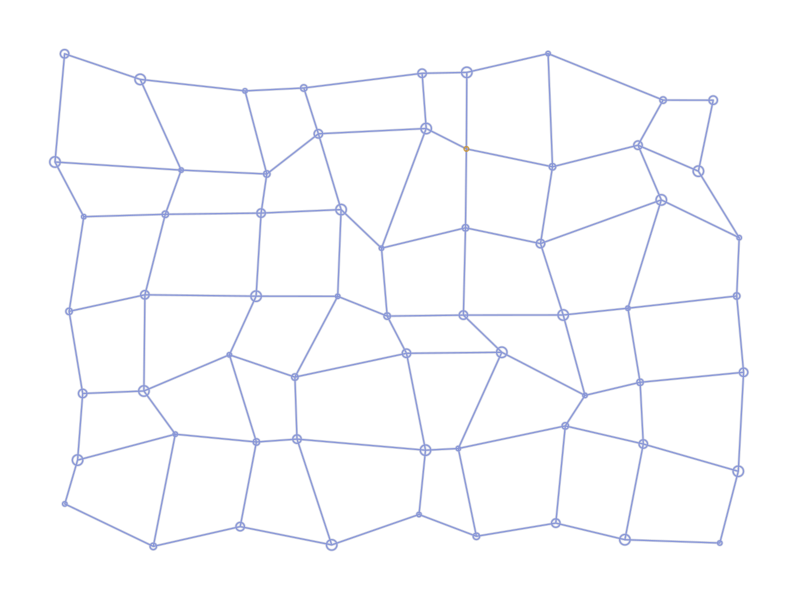
This dossier examines how civilizations—from Rome and the Mayas to World Wars and the era of globalization—rise and fall according to the alignment or collapse of Purpose (K), Transmission (T), and Resilience (R). History validates ISHEA as a framework capable of explaining long-term systemic cycles across human societies.
📜 Dossier 6 – History: Empires, Wars, and Globalization
Historical Validation of ISHEA–KTR–TACC–IHC through Civilizational Rise and Collapse
Author: Carlos Pérez Pulido
Year: 2025
Overview
This dossier explores how civilizations rise, expand, and collapse through the lens of the ISHEA–KTR–TACC–IHC model. From Rome and the Mayas to the World Wars and the era of globalization, history shows that when Purpose (K) is fragmented, Transmission (T) is corrupted, and Resilience (R) is weakened, systemic collapse follows.
Conversely, when K, T, and R are aligned, societies achieve expansion, stability, and cultural flourishing.
Key Historical Insights
- Rome (27 BCE – 476 CE):
- Strong K (imperial mission and law).
- Stable T (roads, language, military organization).
- Resilience through adaptation.
-
Collapse began as K fragmented (loss of civic purpose), T corrupted (internal division), and R exhausted (economic/territorial overextension).
-
Mayan Civilization:
- K anchored in cosmology and ritual.
- T disrupted by ecological stress and elite conflict.
- R failed under drought and warfare.
-
Outcome: systemic collapse with fragmented city-states.
-
World Wars (20th Century):
- K fractured between nationalism and globalism.
- T collapsed (propaganda, mistrust, failed diplomacy).
- R overwhelmed by industrial-scale conflict.
-
Lesson: collapse emerges when KTR alignment is broken globally.
-
Globalization (20th–21st Century):
- Strong K in economic integration.
- T accelerated by digital communication.
- R questioned by inequality, ecological crises, and polarization.
- Outcome still in flux: IDCS suggests rising systemic fragility.
Hypotheses
- H21.1: Civilizations rise when K/T/R are aligned and collapse when they fragment.
- H21.2: Historical cycles validate that IDCS can be extended beyond health into macro-historical systems.
- H21.3: Globalization represents a new civilizational experiment, fragile under rising cognitive tension.
Results (Conceptual Validation)
- Rome and the Mayas confirm that fragmentation of purpose and transmission leads to collapse.
- The World Wars validate that global systems collapse when KTR fails simultaneously across nations.
- Globalization demonstrates that the ISHEA framework can predict vulnerabilities in modern systemic structures.
Conclusion
History validates ISHEA:
- K = Purpose of civilizations (mission, cosmology, ideology).
- T = Transmission through institutions, diplomacy, or communication.
- R = Resilience through adaptation, redundancy, or cultural flexibility.
The rise and fall of civilizations prove that the K–T–R cycle is not only biological or social but civilizational and global.
Files in this folder
- exp21_history_empires_wars_globalization.md
- exp21_history_dataset.csv
- exp21_history_analysis.py
- figures/exp21_civilizational_cycles.png
- figures/exp21_globalization_fragility.png
In the same room — Collective cognition
NOTA-COG-001 · Collective cognition
PISA 2025: what happens when learning too fast stops being learning?
A reading of the PISA 2025 results and the signal they send about performance across OECD countries: the suspicion that speeding up learning may end up hollowing it out.
NOTA-COG-002 · Collective cognition
The Sunflower and Energy
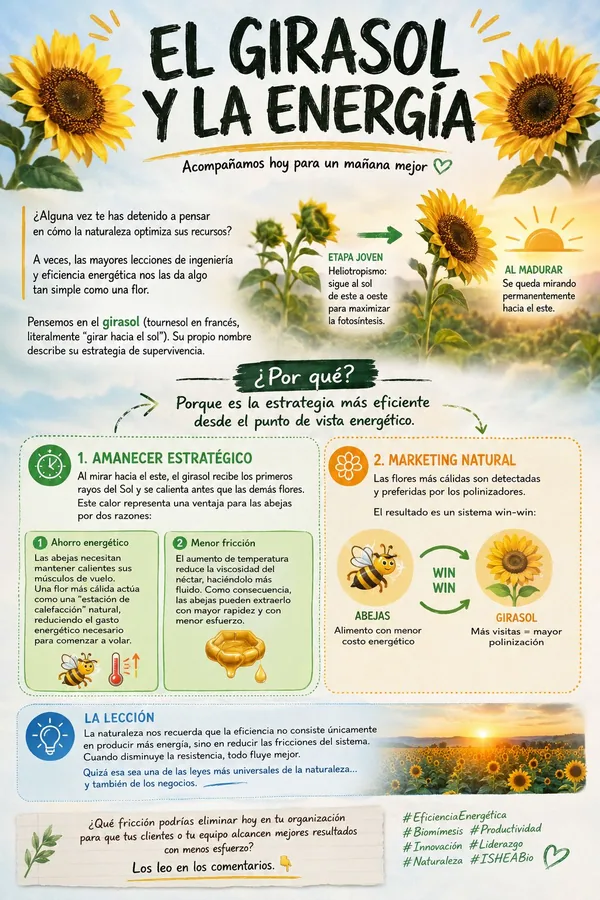
How nature optimises its resources: the sunflower turns its geometry into a lesson in engineering and energy efficiency that human technology is still trying to match.
OSF-COG-003 · Collective cognition
ICSD: cognitive state dynamics (in preparation)
A repository in preparation for ICSD, the cognitive state dynamics model; it opens the space where the materials of the EICI + TACC framework will be deposited as the research advances.