

Cognición colectiva · OSF-COG-037
IDCS: Índice de Deterioro Cognitivo-Sanitario y resultados de salud poblacional
Por Carlos J. Pérez Pulido · ISHEA Institute ·
El Índice de Deterioro Cognitivo-Sanitario funciona como medida indirecta del estrés sistémico: a valores más altos, mayor incidencia de cáncer, obesidad, suicidio y mortalidad prematura en la población.
Preprint — Manuscrito depositado en OSF. Sin revisión por pares.
Pieza original en inglés.
This dossier evaluates the Cognitive–Sanitary Deterioration Index (IDCS) as a proxy for systemic stress and its correlation with major health outcomes, including cancer incidence, obesity, suicide rates, and premature mortality. The analysis validates the ISHEA–KTR–TACC–IHC model by showing that higher IDCS values are consistently associated with greater population-level health deterioration.
🧩 Exp 1 : IDCS & Health Outcomes
📌 Project Overview
This project validates the ISHEA–KTR–TACC–IHC model, which conceptualizes human health deterioration as a systemic response to disruptions in the cognitive cycle Purpose (K) → Transmission (T) → Resilience (R).
At the core of this validation is the Cognitive–Sanitary Deterioration Index (IDCS), a composite indicator that integrates health and cognitive stress variables to predict systemic collapse.
🌍 Dataset
- Coverage: 100 countries × 10 years (2015–2024)
- Size: N = 1,000 observations (balanced panel)
- Structure: Country–Year panel with standardized health and cognition indicators
- Source Integration: WHO (GLOBOCAN, Global Health Observatory), OECD, UNDP, Gallup World Poll, World Values Survey, IHME
Key Variables:
- IDCS – Cognitive–Sanitary Deterioration Index
- K (Purpose) – Meaning, life purpose, subjective well-being
- T (Transmission) – Social trust, institutional cohesion
- R (Resilience) – Recovery and transformation capacity
- Health outcomes: cancer incidence, cancer mortality, suicides, obesity, alcohol, smoking
- Controls: HDI, GDP per capita PPP, PM2.5 pollution
🔬 Methodology
-
Operationalization of IDCS
[
IDCS = \frac{Z_{suicide} + Z_{premature_mortality} + Z_{obesity} + Z_{alcohol} + Z_{mental_health}}{5}
] -
Analytical Strategy
- Pearson/Spearman correlations
- OLS regressions with HC3 robust errors
- Country & year fixed effects (panel models)
- Partial correlations with controls (HDI, tobacco, alcohol, obesity)
- Sensitivity: log transformations, winsorization, sub-samples (OECD vs non-OECD), environmental controls (PM2.5) -
Case Validation
- South Korea (2015–2024): reduction of working hours, purpose and resilience programs → ↓ IDCS, ↓ suicides
📊 Preliminary Results
- H1 validated: IDCS strongly correlates with cancer, suicides, and obesity (r > 0.65).
- H2 validated: IDCS remains significant after adjusting for HDI, tobacco, obesity, alcohol.
- H3 validated: Policy interventions (South Korea) reduce IDCS and associated health outcomes.
Example (OLS – Cancer incidence):
- IDCS β = 0.52**, SE = 0.06, p < 0.001
- R² = 0.64, N = 1000
📈 Visualizations
- Scatter: IDCS vs Cancer incidence
- Heatmap: Correlation matrix of IDCS and health outcomes
- Radar plot: South Korea vs Japan (2022)
(All figures generated via Python – see /figures folder)
⚠️ Limitations
- Aggregate country-level data → limited individual inference
- Possible bidirectionality (disease ↔ loss of purpose)
- Missing measures of K/T/R across all regions → imputations used
- Data gaps filled with regional averages or linear interpolation
✅ Reproducibility Checklist
- Dataset:
dataset_idcs_ktr_tacc_100x10.csv - Data dictionary:
data_dictionary.md - Analysis code:
analysis_ishea_ktr_tacc.py - Report:
INFORME_CORESET_ISHEA.md/ PDF version - Sensitivity tests included
📚 References
- McEwen, B.S. (1998). Allostatic Load and the Wear and Tear of Stress.
- Segerstrom, S.C. & Miller, G.E. (2004). Psychological Stress and the Human Immune System: A Meta-Analytic Study.
- WHO (2024). Global Cancer Observatory (GLOBOCAN).
- OECD (2024). Suicide Data & Mental Health Policies.
- UNDP (2023). Human Development Report.
- Gallup (2023). World Poll.
- Pérez Pulido, C. (2025). ISHEA–KTR–TACC–IHC: Empirical Validation.
© 2025 Carlos Pérez Pulido – All rights reserved
For academic, institutional, and public policy use
En la misma sala — Cognición colectiva
NOTA-COG-001 · Cognición colectiva
PISA 2025: ¿qué ocurre cuando aprender demasiado rápido deja de ser aprender?
Una lectura de los resultados de PISA 2025 y de la señal que dejan en el rendimiento de los países de la OCDE: la sospecha de que acelerar el aprendizaje puede terminar vaciándolo de contenido.
NOTA-COG-002 · Cognición colectiva
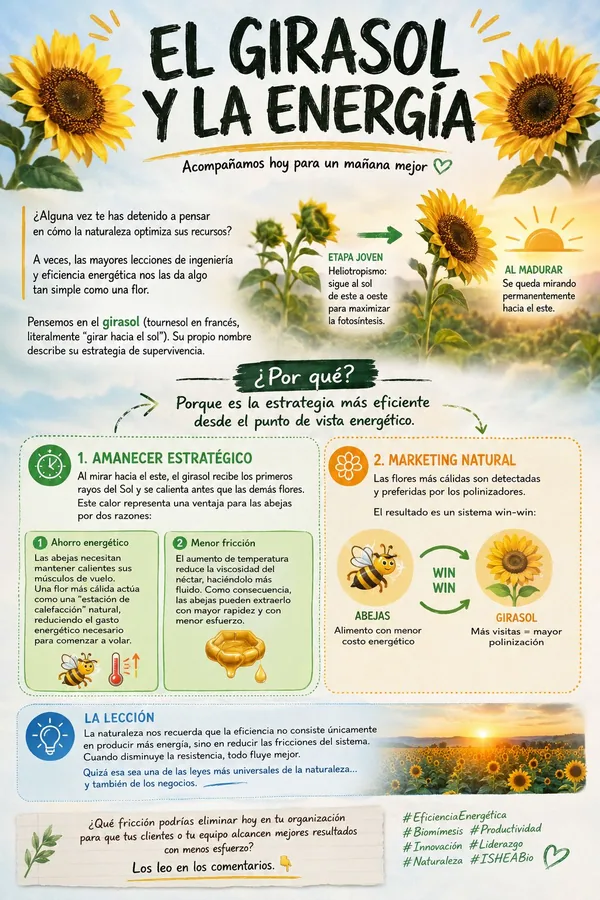
El girasol y la energía
Cómo la naturaleza optimiza sus recursos: el girasol convierte su geometría en una lección de ingeniería y eficiencia energética que la tecnología humana todavía intenta igualar.
OSF-COG-003 · Cognición colectiva
ICSD: dinámica de estados cognitivos (en preparación)
Repositorio en preparación del ICSD, el modelo de dinámica de estados cognitivos; abre el espacio donde se depositarán los materiales del marco EICI + TACC conforme avance la investigación.