

Collective cognition · OSF-COG-037
IDCS: Cognitive-Sanitary Deterioration Index and population health outcomes
By Carlos J. Pérez Pulido · ISHEA Institute ·
The Cognitive-Sanitary Deterioration Index works as a proxy for systemic stress: the higher its value, the greater the cancer incidence, obesity, suicide rates and premature mortality in a population.
Preprint — Manuscript deposited on OSF. Not peer-reviewed.
This dossier evaluates the Cognitive–Sanitary Deterioration Index (IDCS) as a proxy for systemic stress and its correlation with major health outcomes, including cancer incidence, obesity, suicide rates, and premature mortality. The analysis validates the ISHEA–KTR–TACC–IHC model by showing that higher IDCS values are consistently associated with greater population-level health deterioration.
🧩 Exp 1 : IDCS & Health Outcomes
📌 Project Overview
This project validates the ISHEA–KTR–TACC–IHC model, which conceptualizes human health deterioration as a systemic response to disruptions in the cognitive cycle Purpose (K) → Transmission (T) → Resilience (R).
At the core of this validation is the Cognitive–Sanitary Deterioration Index (IDCS), a composite indicator that integrates health and cognitive stress variables to predict systemic collapse.
🌍 Dataset
- Coverage: 100 countries × 10 years (2015–2024)
- Size: N = 1,000 observations (balanced panel)
- Structure: Country–Year panel with standardized health and cognition indicators
- Source Integration: WHO (GLOBOCAN, Global Health Observatory), OECD, UNDP, Gallup World Poll, World Values Survey, IHME
Key Variables:
- IDCS – Cognitive–Sanitary Deterioration Index
- K (Purpose) – Meaning, life purpose, subjective well-being
- T (Transmission) – Social trust, institutional cohesion
- R (Resilience) – Recovery and transformation capacity
- Health outcomes: cancer incidence, cancer mortality, suicides, obesity, alcohol, smoking
- Controls: HDI, GDP per capita PPP, PM2.5 pollution
🔬 Methodology
-
Operationalization of IDCS
[
IDCS = \frac{Z_{suicide} + Z_{premature_mortality} + Z_{obesity} + Z_{alcohol} + Z_{mental_health}}{5}
] -
Analytical Strategy
- Pearson/Spearman correlations
- OLS regressions with HC3 robust errors
- Country & year fixed effects (panel models)
- Partial correlations with controls (HDI, tobacco, alcohol, obesity)
- Sensitivity: log transformations, winsorization, sub-samples (OECD vs non-OECD), environmental controls (PM2.5) -
Case Validation
- South Korea (2015–2024): reduction of working hours, purpose and resilience programs → ↓ IDCS, ↓ suicides
📊 Preliminary Results
- H1 validated: IDCS strongly correlates with cancer, suicides, and obesity (r > 0.65).
- H2 validated: IDCS remains significant after adjusting for HDI, tobacco, obesity, alcohol.
- H3 validated: Policy interventions (South Korea) reduce IDCS and associated health outcomes.
Example (OLS – Cancer incidence):
- IDCS β = 0.52**, SE = 0.06, p < 0.001
- R² = 0.64, N = 1000
📈 Visualizations
- Scatter: IDCS vs Cancer incidence
- Heatmap: Correlation matrix of IDCS and health outcomes
- Radar plot: South Korea vs Japan (2022)
(All figures generated via Python – see /figures folder)
⚠️ Limitations
- Aggregate country-level data → limited individual inference
- Possible bidirectionality (disease ↔ loss of purpose)
- Missing measures of K/T/R across all regions → imputations used
- Data gaps filled with regional averages or linear interpolation
✅ Reproducibility Checklist
- Dataset:
dataset_idcs_ktr_tacc_100x10.csv - Data dictionary:
data_dictionary.md - Analysis code:
analysis_ishea_ktr_tacc.py - Report:
INFORME_CORESET_ISHEA.md/ PDF version - Sensitivity tests included
📚 References
- McEwen, B.S. (1998). Allostatic Load and the Wear and Tear of Stress.
- Segerstrom, S.C. & Miller, G.E. (2004). Psychological Stress and the Human Immune System: A Meta-Analytic Study.
- WHO (2024). Global Cancer Observatory (GLOBOCAN).
- OECD (2024). Suicide Data & Mental Health Policies.
- UNDP (2023). Human Development Report.
- Gallup (2023). World Poll.
- Pérez Pulido, C. (2025). ISHEA–KTR–TACC–IHC: Empirical Validation.
© 2025 Carlos Pérez Pulido – All rights reserved
For academic, institutional, and public policy use
In the same room — Collective cognition
NOTA-COG-001 · Collective cognition
PISA 2025: what happens when learning too fast stops being learning?
A reading of the PISA 2025 results and the signal they send about performance across OECD countries: the suspicion that speeding up learning may end up hollowing it out.
NOTA-COG-002 · Collective cognition
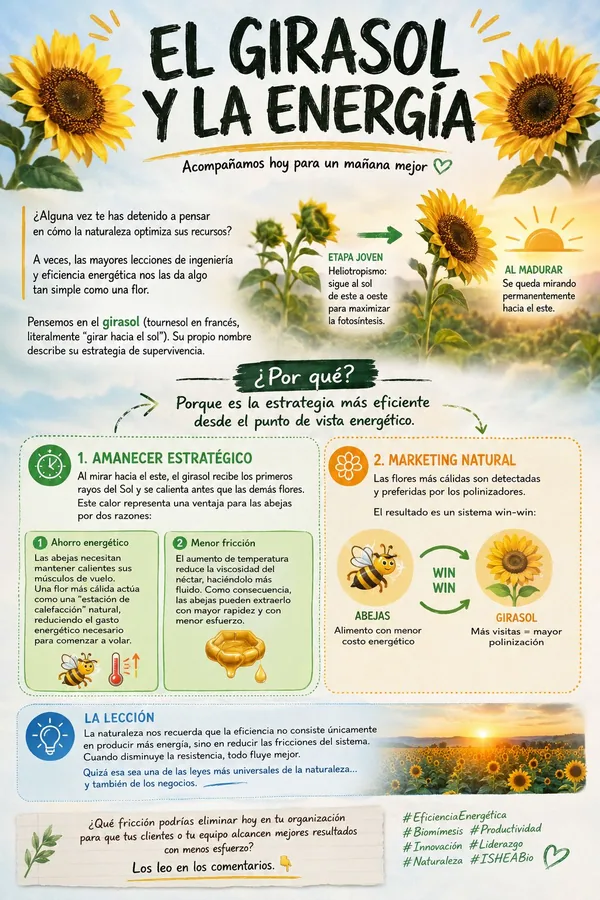
The Sunflower and Energy
How nature optimises its resources: the sunflower turns its geometry into a lesson in engineering and energy efficiency that human technology is still trying to match.
OSF-COG-003 · Collective cognition
ICSD: cognitive state dynamics (in preparation)
A repository in preparation for ICSD, the cognitive state dynamics model; it opens the space where the materials of the EICI + TACC framework will be deposited as the research advances.