

Economia 5.0 · NOTA-ECO-045
La nuova era dei creatori riguarda in realtà il tempo
Di Carlos J. Pérez Pulido · ISHEA Institute ·
Creare, inventare e innovare non sono la stessa cosa: la creazione nasce dall'osservazione e dalla curiosità. Qui i tre verbi vengono distinti e ciò che è davvero in gioco è il tempo.
Nota divulgativa — Testo breve pubblicato in aperto. Pensiero in corso, non risultato.
Opera originale in inglese.
🧠 The New Era of Creators Is Actually About Time
We often use creation, invention, and innovation as if they meant the same thing. They are not.
Creation begins with observation and curiosity.
It asks: Why? How? What if? It expands the boundaries of knowledge without knowing where the answer will lead.
Invention comes later.
It takes those discoveries and transforms them into practical solutions with clear objectives, measurable outcomes, and real-world applications.
This distinction matters more than ever.
For centuries, humanity's greatest advances started with people who simply observed and questioned the world. They were not trying to build a product—they were trying to understand reality. Those acts of creation eventually opened the door to inventions that changed civilization.
Today, generative AI is compressing the time required to produce content, code, and designs. As production becomes nearly instantaneous, execution alone is no longer a competitive advantage.
The scarce resource is no longer information.
The scarce resource is human time—and, more importantly, how we invest our cognitive time.
In this new era:
- Creation requires time to explore.
- Invention requires time to converge.
- Innovation requires time to be adopted and create value.
Perhaps the next competitive advantage will not belong to those who produce the most, but to those who ask the questions that nobody else thought to ask.
The future belongs not only to faster creators, but to deeper thinkers.
#ArtificialIntelligence #Creativity #Innovation #FutureOfWork #Leadership #CognitiveScience #TimeEconomy #ISHEA #carlosjperezpulido #kmodel
Nella stessa sala — Economia 5.0
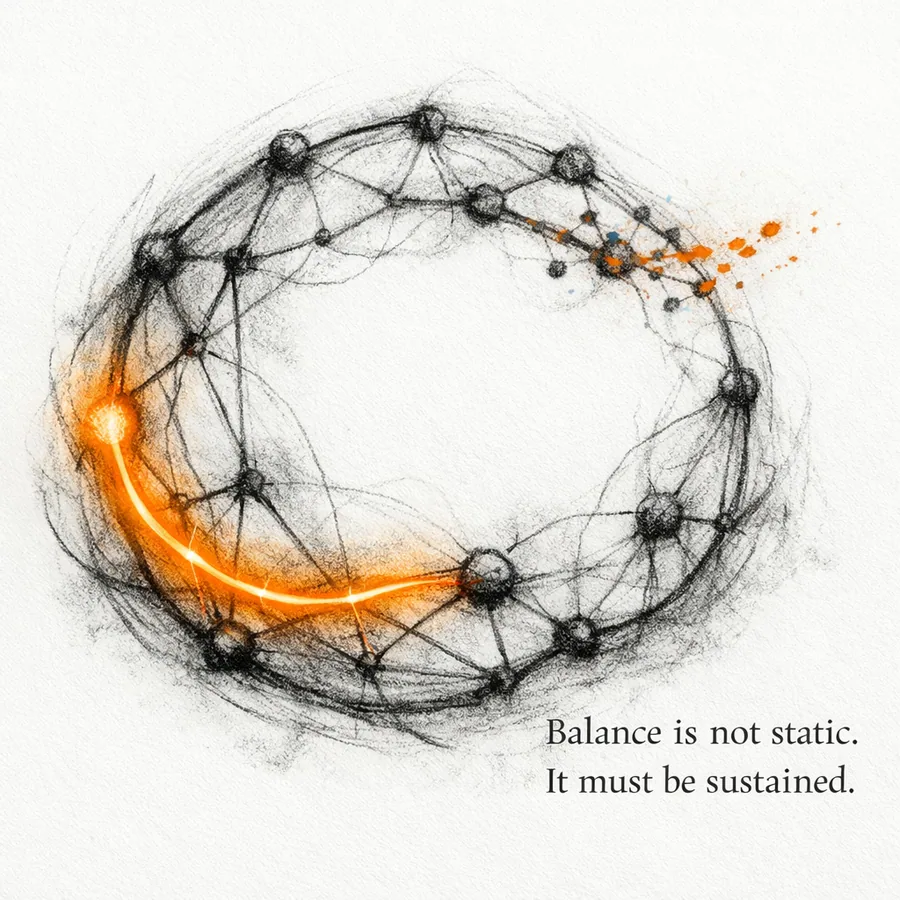
SN-ECO-001 · Economia 5.0
L'economia circolare deve partire dalla progettazione: una prospettiva ISHEA sull'Economy 5.0
L'economia circolare non deve solo recuperare di più, ma progettare per perdere meno. L'Economy 5.0 unisce gemelli digitali, gestione biofisica, design circolare e finanza sostenibile per tutelare il valore sistemico.
SN-ECO-002 · Economia 5.0
Economy 5.0: oltre l'energia e il carbonio, verso la coerenza sistemica
La proposta di ISHEA per Economy 5.0: un quadro economico incentrato sulla persona che, oltre a energia, carbonio ed efficienza, esamina la coerenza sistemica, le capacità umane e la resilienza dei sistemi.
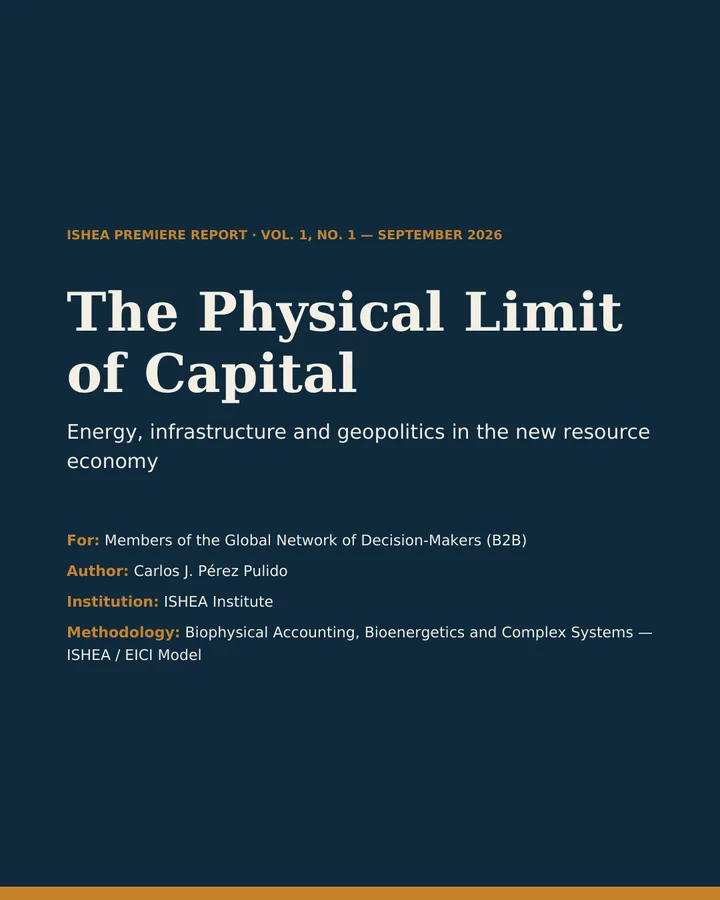
OSF-ECO-003 · Economia 5.0
Il limite fisico del capitale: energia, infrastrutture e geopolitica
Il primo rapporto dell'ISHEA Institute esamina come l'infrastruttura dell'IA, le filiere di energia e minerali e i corridoi marittimi stabiliscano quanto capitale finanziario possa tradursi in economia reale.